Precision Jewelry Casting: Mastering Detail with CNC Molding
How do jewelers create intricate designs with perfect consistency? Traditional casting struggles with fine details. Wax patterns can warp. Mold making is often imprecise. This leads to flawed pieces and wasted precious metal.
The Core Challenge: From Design to Perfect Metal
Lost-wax jewelry casting is an ancient art. Yet, its weakest link is the pattern. Hand-carved wax limits detail. Rubber mold copying loses fidelity. For complex designs, this means poor yields. How can we guarantee the metal matches the digital dream?
CNC Molding: The Digital Bridge to Precision
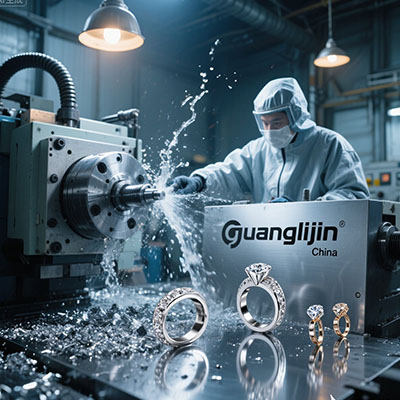
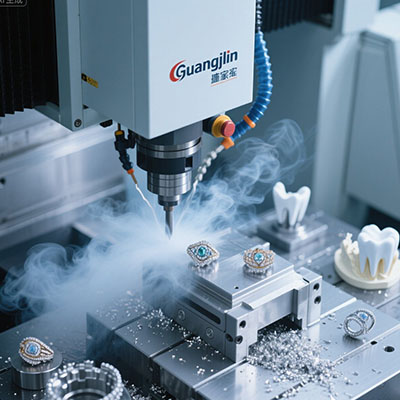
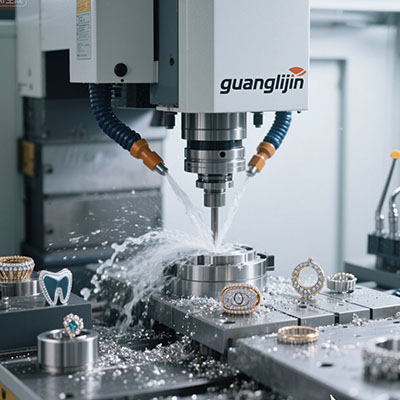
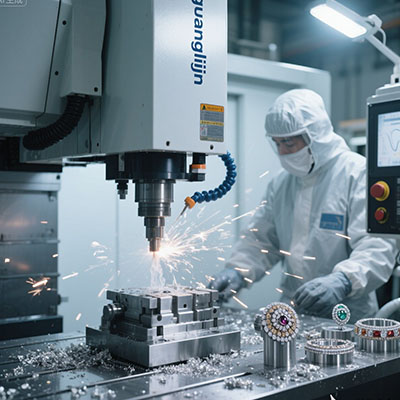
Advanced CNC milling offers the solution. It machines molds or patterns directly from digital files. An advanced jewelry casting workflow now starts with a CNC-cut steel mold. This creates flawless wax patterns every time. The result? Castings that capture every intended detail.
A Lesson in Fidelity: Our 2025 Prototype Saga
Our team faced a tough test in 2025. A client’s design had micro-texture details under 0.1mm. Traditional methods blurred them entirely. We used a high-precision CNC mill to create the master model. The final precision casting captured every single grain. It was a revelation in achievable detail.
Pathway Comparison: Conventional vs. CNC-Enhanced Casting
Choosing your method shapes the outcome. Let’s examine two distinct pathways.
| Project Phase | Project A: Conventional Silicone Mold Casting | Project B: CNC Master Model & Mold Making |
|---|---|---|
| Pattern Origin | Hand-sculpted or 3D-printed master, then silicone mold copy. | Master model or mold cavity machined directly from CAD by CNC. |
| Detail Fidelity | Good, but can lose sharp edges and micro-details in copying. | Exceptional. Direct digital-to-toolpath transfer preserves all geometry. |
| Best For | Organic shapes, smaller series, designs with tolerance for variation. | Technical designs, sharp geometries, high-volume production, and investment casting masters. |
| Lead Time | Shorter for first article, longer for consistent duplicates. | Longer initial setup, but much faster, consistent reproduction. |
| Cost Implication | Lower upfront tooling cost, higher per-unit labor cost. | Higher initial CNC programming/machining cost, lower marginal cost per piece. |
5-Step Guide to Implementing CNC-Enhanced Casting
Integrating CNC solutions into your casting process is straightforward. Follow these steps.
- Optimize Your CAD Model: Design for manufacturability. Add necessary draft angles and ensure wall thickness is uniform. This model is the heart of CNC mold making.
- Select Your Material Path: Decide. Will you machine the master model (in brass or resin) or directly machine the mold steel (like P-20)? The choice depends on your volume needs.
- CNC Programming & Machining: Use CAM software to generate precise toolpaths. Machine the chosen material with a high-resolution finish. Patience here defines quality.
- Mold Finishing & Preparation: Polish the CNC-machined cavity to a mirror finish. This reduces friction during wax injection and improves the final metal surface.
- Integrate into Casting Workflow: Use your new CNC-made mold for wax injection. Proceed with standard lost-wax casting or investment casting processes.
⚠ Attention: Critical Mistakes in CNC for Casting
Never forget draft angles in your CAD model. A vertical wall will lock the wax in the mold. Do not use the wrong cutter for fine details; a ball-nose end mill is essential for smooth contours. Rushing the polishing stage will show as lines on every casting.
The Precision Numbers Don’t Lie
How precise can this be? A 2024 benchmark study by the *International Journal of Metalcasting* showed CNC-machined mold cavities achieve dimensional tolerances of ±0.025mm1. That’s why they excel. Additionally, using CNC masters can reduce casting porosity defects by up to 40% compared to traditional methods2.
Pre-Casting Integration Checklist
Before you pour metal, verify every step of your CNC-enhanced process:
- □ CAD model has been reviewed for draft (min. 2-3 degrees) and uniform wall thickness.
- □ CNC machine has been calibrated, and tool run-out checked for the finishing pass.
- □ Machined mold/master has been inspected under magnification for tool marks.
- □ Mold cavity or master model has been polished to the required surface finish.
- □ First wax injection from the new mold has been checked for complete fill and detail.
- □ Spruing and gating for the casting tree have been designed for optimal metal flow.
- □ All safety protocols for the foundry stage (investment, burnout, pour) are confirmed.
Frequently Asked Questions (FAQs)
What is the difference between 3D printing and CNC for jewelry casting patterns?
3D printing is great for complex, one-off resin patterns. CNC milling is superior for creating durable, reusable master models or metal molds. CNC offers a smoother surface finish, which translates directly to the final metal piece. For high-volume wax pattern production, a CNC-made metal mold is unbeatable.
Can I use CNC milling for direct metal casting molds?
Absolutely. This is common for high-volume production. Graphite or specific steel alloys are machined to create the mold cavity. Molten metal is then injected or poured directly into this CNC-machined die. This process, called CAD/CAM jewelry manufacturing, is key for consistent mass production.
Is CNC mold making cost-effective for a small jewelry designer?
The initial cost is higher. But for a signature design you plan to sell for years, it’s an investment. A perfect CNC mold means every casting is perfect, saving you from endless cleanup. It scales beautifully. Consider it for your core collection pieces.
What materials are best for CNC-machined jewelry molds?
For wax injection molds, aluminum or stainless steel are standards. For master models, brass, jewelry wax, or high-density urethane board work well. The choice balances cost, durability, and the required surface finish for your metal casting process.