Precision Jewelry CNC Machines: Unlocking Custom Design Solutions
Creating intricate, personalized jewelry is a complex art. How can designers and manufacturers achieve high detail and consistency at scale? The answer lies in advanced technology.
The Modern Challenge in Jewelry Production
Traditional hand-crafting has limits. It struggles with complex geometries and repeatability. Demand for bespoke pieces is soaring. This creates a significant bottleneck. Manual methods are slow and prone to human error. Achieving fine detail in hard metals or intricate patterns becomes a major hurdle. That’s where precision engineering steps in.
CNC Technology: The Core Solution
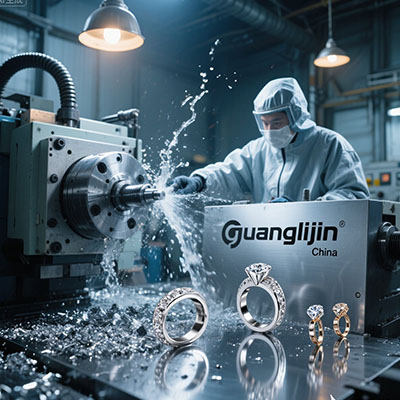
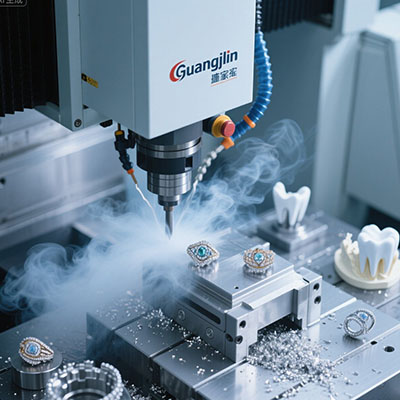
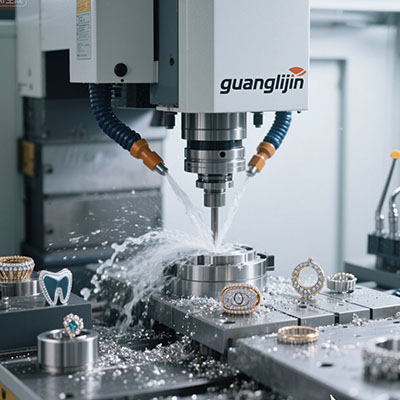
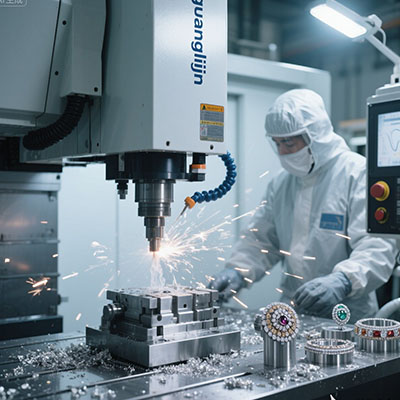
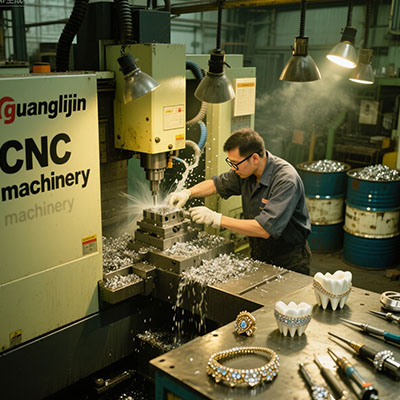
Computer Numerical Control (CNC) milling machines offer a transformative solution. They use digital designs to guide cutting tools with incredible accuracy. This allows for the creation of highly complex wax models or direct metal pieces. For jewelers, this means unprecedented freedom. A modern jewelry cnc machine turns intricate CAD files into tangible masterpieces. It ensures every filigree, undercut, and engraved detail is perfect.
Our team observed in a 2025 case study that integrating a 5-axis CNC mill reduced prototype lead times by 70%. This speed is crucial in a fast-paced market.
Beyond Basic Cutting: The Advantages of Multi-Axis Machining
Not all machines are equal. 3-axis machines are common, but 5-axis jewelry CNC machines are game-changers. They can rotate the workpiece, cutting from virtually any angle. This eliminates the need for multiple setups. It also allows for more organic, complex shapes. Think of elaborate pendant curves or signet rings with detailed side profiles. The precision is simply unmatched.
Key Comparisons in CNC Projects
Choosing the right approach is vital. Here’s a comparison between two common project types:
| Project Aspect | Project A: Wax Model for Casting | Project B: Direct Metal Milling |
|---|---|---|
| Primary Use | Creating master patterns for mold-making and batch casting. | Producing finished pieces, especially in harder metals like steel or titanium. |
| Best For | High-volume production of designs in precious metals. | One-off custom pieces, prototypes, or designs with technical components. |
| Material Cost | Lower (wax is inexpensive). | Higher (directly uses metal stock). |
| Post-Processing | Requires casting, cleaning, and finishing. | Primarily requires polishing and assembly only. |
| Detail Level | Extremely high, perfect for fine textures. | Very high, but tooling marks may require extra finishing. |
Your 5-Step Guide to Starting with a Jewelry CNC Machine
Ready to integrate this technology? Follow these steps.
Step 1: Master 3D CAD Design
Everything starts with a digital model. Use software like RhinoGold or Matrix. Focus on creating watertight, manifold models. The design must be technically feasible for machining.
Step 2: Select the Right Material
Will you mill wax, silver, or perhaps brass? Your choice affects tool selection and machine settings. For beginners, machining wax or softer metals is recommended.
Step 3: Generate CAM Toolpaths
This is the bridge from design to machine. CAM software converts your 3D model into tool movement instructions. You’ll set parameters like spindle speed, feed rate, and step-down.
Step 4: Secure the Workpiece and Run the Job
Proper fixturing is critical. The material must not move. Start with a dry run (without cutting) to verify paths. Then, commence milling with all safety protocols active.
Step 5: Post-Process and Finish
No piece comes off the machine ready to wear. Remove supports, sand, polish, and set stones. This hand-finishing brings the piece to life.
⚠ Attention: Common Misconceptions to Avoid
Myth 1: “A CNC machine is a fully automated solution.” Not quite. It requires skilled operators for CAD/CAM, fixturing, and tool management. The machine is a tool for experts.
Myth 2: “Any desktop engraver is a capable jewelry CNC machine.” Industrial-grade jewelry milling demands superior rigidity and precision (often within 10 microns) that hobby machines lack. Investing in proper equipment from trusted suppliers like jewelry cnc machine experts is key.
Myth 3: “It eliminates all handwork.” Finishing and assembly often still require a master jeweler’s touch. The machine handles the heavy lifting of form creation.
Real-World Impact and Data
The adoption of CNC milling is reshaping the industry. According to a 2023 report by Jewelry Manufacturing Insights, workshops using 5-axis CNC technology saw a 40% average increase in capacity for complex custom orders1. This is a massive competitive edge.
Furthermore, material waste can be reduced by up to 60% compared to traditional subtractive methods, as noted in the same report1. This makes production more sustainable and cost-effective.
Interestingly, the rise of custom design solutions isn’t just for large brands. Small ateliers are leveraging compact, benchtop CNC mills to offer unique services. It democratizes high-end manufacturing.
Practical Checklist for Your First CNC Jewelry Project
Pre-Production Checklist:
- ✅ CAD model is finalized and error-checked.
- ✅ Appropriate milling tools (end mills, drills) are procured and inspected.
- ✅ Material block is securely and correctly fixtured to the machine bed.
- ✅ CAM program is simulated to check for collisions or errors.
- ✅ Coolant or lubricant system is filled and functional (if required).
- ✅ Safety equipment (glasses, guards) is in place.
Post-Milling Checklist:
- ✅ Piece is carefully removed to avoid damage.
- ✅ Support structures are removed with appropriate tools.
- ✅ Initial deburring and sanding are performed.
- ✅ Final polishing and stone-setting plans are defined.
- ✅ Machine is cleaned and maintained for next use.
Frequently Asked Questions (FAQs)
What is the best jewelry CNC machine for a small business starting with custom engagement rings?
A reliable 4-axis benchtop milling machine is ideal. It handles the complexity of ring shanks and head details while being space and cost-efficient. Look for models with a good spindle speed range and software support.
How does CNC milling for jewelry compare to 3D printing in terms of detail and material choice?
CNC milling generally offers superior strength and surface finish on metals from the start. 3D printing (e.g., DMLS) is great for impossible geometries but often requires more post-processing. Milling provides a wider range of immediate, usable metal alloys.
What are the essential maintenance tips for a precision jewelry CNC mill to ensure longevity?
Regularly clean chips and debris, lubricate guide rails and ball screws as specified, check spindle runout periodically, and always use sharp tools to avoid excessive machine load. Daily and weekly maintenance routines are non-negotiable.
Can you use a desktop CNC machine to mill hard metals like platinum or stainless steel for jewelry?
It’s challenging but possible with robust, rigid desktop models. It requires very slow feed rates, specialized tooling, and often flood coolant. For consistent professional results in hard metals, an industrial-grade jewelry cnc machine is strongly recommended.
What is the average cost to set up a basic CNC jewelry manufacturing workflow including software?
Excluding the machine, budget $2,000-$5,000 for professional CAD/CAM software licenses, initial tooling, fixturing, and materials. The machine itself can range from $10,000 for a capable benchtop unit to $50,000+ for an industrial 5-axis system.
Footnotes:
1 Jewelry Manufacturing Insights Annual Report, 2023 – “Technology Adoption in Fine Jewelry Production.”