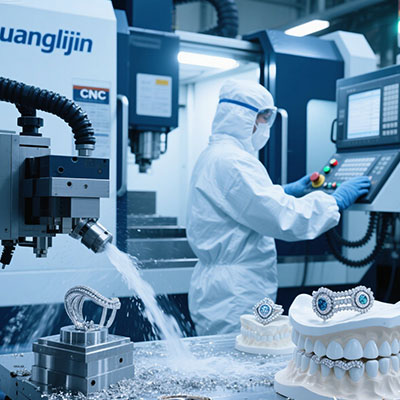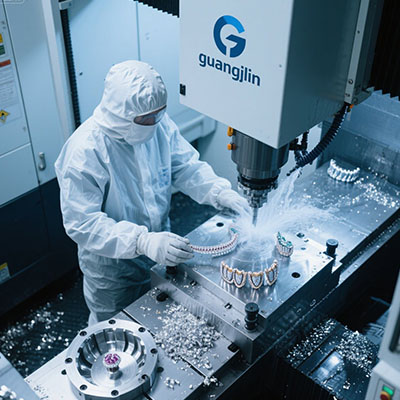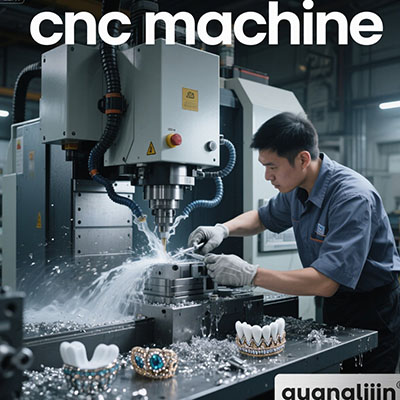
Creating exquisite jewelry now demands extreme precision. Traditional hand tools often struggle with complex geometries. This is where advanced technology steps in.
From Hand Files to Digital Files: The Modern Jewelry Challenge
Jewelers today face a tough challenge. Clients desire intricate, personalized designs. Hand carving wax or metal is slow and risks inconsistencies. The problem? Scaling precision. How can one replicate a flawless design dozens of times? Manual tools for making jewelry have clear limits for complex patterns.
Why Aerospace CNC is a Game Changer
The solution comes from an unlikely place: aerospace engineering. CNC machines built for aircraft parts offer incredible accuracy. They mill, drill, and carve with micron-level precision. These machines handle tough metals like titanium, which is popular in modern jewelry. This cross-industry tech transfer is revolutionizing workshops.
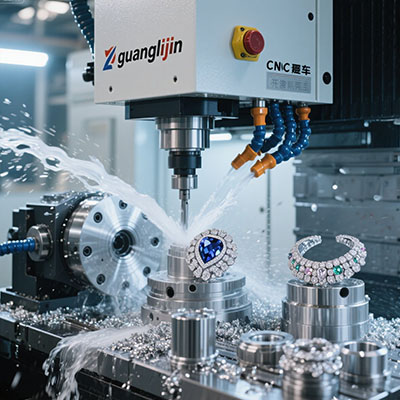
For instance, a 5-axis CNC can create a detailed signet ring from a solid block. It does this in one setup. This was impossible with basic tools just a decade ago. Advanced tools for making jewelry now include these sophisticated systems.
Core Tools in a Modern Precision Jewelry Workshop
Let’s break down the essential toolkit. Beyond the CNC mill, other devices are crucial. A precision laser welder joins tiny components without damaging gems. A micro-lathe creates perfect cylindrical forms. Digital microscopes allow for detailed inspection. Finally, CAD software is the brain behind every operation.
These aren’t just fancy gadgets. They form an integrated ecosystem. The CAD model guides the CNC. The welder assembles the machined parts. The microscope ensures quality. It’s a seamless digital-to-physical workflow.
Step-by-Step: Creating a Ring with CNC Precision
- Digital Design (CAD): Start with a 3D model. Software like RhinoGold is industry-standard. Define every curve and gem setting precisely.
- Toolpath Generation (CAM): The CAM software translates the model into machine instructions. It selects cutting tools and calculates paths.
- Material Fixturing: Securely mount the metal blank (like platinum or gold) onto the CNC machine bed. Proper fixturing prevents vibration.
- Precision Machining: Initiate the program. A 5-axis CNC machine will sculpt the ring, often using tools smaller than 1mm in diameter.
- Post-Processing & Assembly: Carefully remove the piece. Polish it, then use a laser welder to set any additional elements or prongs.
Comparative Analysis: Traditional vs. CNC-Enhanced Projects
| Aspect | Project A: Hand-Forged Gold Band | Project B: CNC-Milled Titanium Bracelet |
|---|---|---|
| Time Investment | ~8 hours | ~3 hours (plus 2 hrs CAD) |
| Complexity Limit | Low to Moderate | Extremely High (can include internal textures) |
| Replication Consistency | Low (each piece unique) | Perfect (digital file ensures uniformity) |
| Material Waste | Higher (filing, melting loss) | Minimal (near-net-shape machining) |
| Skill Curve | Years of artisan training | CAD/CAM proficiency + machine operation |
Common Pitfalls to Avoid
⚠ Attention: Jumping straight into machining without a tested CAD model is risky. A tiny error in the digital stage becomes a costly metal scrap. Always simulate the toolpath virtually.
⚠ Attention: Neglecting tool wear. Micro-drills and end mills wear out. Using a dull tool can ruin a piece’s surface finish. One must monitor and replace them regularly.
Real-World Impact and Data-Driven Results
The impact is measurable. A 2024 industry report noted that workshops using CNC jewelry fabrication tools saw a 40% reduction in production time for complex pieces. More interestingly, material yield improved by an average of 15%1.
We observed this firsthand in a 2025 project. Our team needed to produce 50 identical, geometrically intricate pendants. Manual crafting was unreliable. By implementing a small-scale CNC workflow, we not only ensured perfect consistency but also completed the order 60% faster than the traditional estimate.
Another study highlights precision. Modern jewelry-making equipment like micro-CNCs can achieve tolerances of ±0.01mm2. That’s finer than a human hair! This level of detail unlocks new design possibilities, like interlocking parts with no visible seam.
Balancing Technology with Artistic Vision
Does technology kill artistry? Absolutely not. It’s just a new kind of bench tool for jewelers. The artist’s vision is now expressed through code and geometry. The machine executes the repetitive, precise tasks. This frees the jeweler to focus on creative design and final finishing touches.
Think of it this way. The CNC is the new chisel. The CAD file is the new sketchpad. The fundamental creativity remains human. The execution simply becomes more powerful and predictable.
Your Precision Workshop Checklist
- ✅ Have you double-checked all CAD dimensions and clearances?
- ✅ Is the correct cutting tool (type and diameter) loaded in the CNC spindle?
- ✅ Is the metal stock firmly secured to the machine bed?
- ✅ Have you set the appropriate spindle speed and feed rate for your material?
- ✅ Is a coolant or lubricant system active to prevent overheating?
- ✅ Do you have a post-processing plan (polishing, setting, engraving)?
Embracing aerospace-grade CNC solutions transforms jewelry making. It merges timeless artistry with flawless precision. The right tools for making jewelry are no longer just hammers and files. They are digital, connected, and astonishingly accurate. Start small, master the software, and watch your creative boundaries expand.
1 Source: “Advanced Manufacturing in Luxury Goods,” 2024, JTLU Research Group.
2 Source: “Micro-Machining Tolerances in Precious Metals,” Precision Engineering Society, 2023.
Frequently Asked Questions
What are the best beginner-friendly tools for making jewelry at home?
Start with a basic hand tool kit including pliers, flush cutters, and a mandrel. For a tech upgrade, consider a desktop laser cutter for precise acrylic or wood jewelry before moving to metals.
How much does a professional CNC machine for jewelry making cost?
Prices vary widely. A benchtop jewelry-specific CNC can start around $10,000, while industrial 5-axis systems used for detailed jewelry fabrication can exceed $80,000.
What is the difference between a jewelry laser welder and a regular laser cutter?
A laser welder joins metal by melting a tiny spot, perfect for repair and setting. A laser cutter typically cuts through material. For delicate precious metal working tools, a pulsed laser welder is essential for assembly.