Pro Jewelry Polish Machine: The CNC Finishing System Revolution
Is achieving a perfect mirror finish on jewelry still a manual grind? For many workshops, it is. This creates a major bottleneck. Consistency is hard. Labor costs are high. What’s the modern solution? It’s automated precision.
The Persistent Problem of Hand Polishing
Hand polishing is an art. But it has big flaws for production. First, results vary between artisans. One piece shines brighter. Another shows faint scratches. Second, it’s incredibly time-consuming. Complex pieces with details are a nightmare.
Third, it’s physically demanding. Repetitive strain is a real risk. This trio of issues—inconsistency, slowness, and fatigue—holds back quality and profit. So, what’s the alternative?
The Automated Solution: CNC Polishing Systems
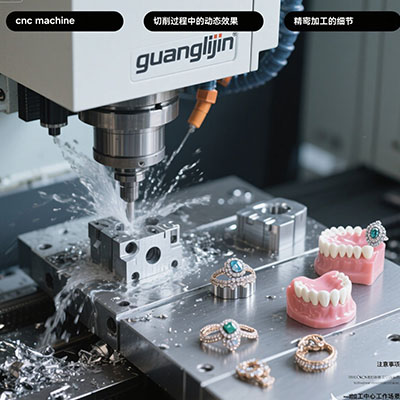
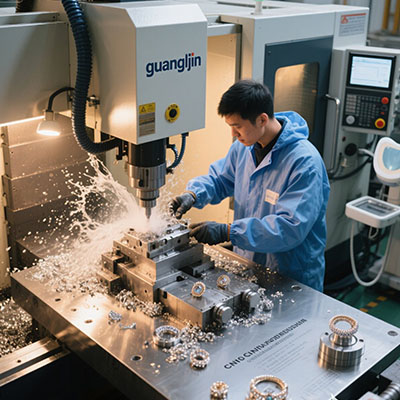
Enter the modern jewelry polish machine. These are computer-controlled systems. They use programmable paths and specialized tools. The goal is simple: automate the buffing and polishing process.
Imagine a robotic arm holding a polishing wheel. It follows the exact same path every time. This is the core of a CNC finishing system. It brings machine-like repeatability to a craft skill.
these systems often start by scanning the jewelry piece. They create a digital 3D map to guide the polishing tools perfectly.
Key Benefits of Automated Polishing
Why make the switch? The benefits are clear. Unmatched consistency is the top advantage. The 500th piece looks identical to the first. Dramatically faster cycle times come next. What took an hour manually might take ten minutes.
Finally, it frees up skilled labor. Artisans can focus on design and inspection. The machine handles the repetitive work. This is a huge shift for high-volume jewelry finishing.
Choosing Your Setup: A Project-Based Comparison
Not all polishing jobs are the same. Your needs dictate the right technology. Let’s compare two common scenarios.
| Project Factor | Project A: High-Volume Ring Finishing | Project B: Prototype & Complex Sculptural Pieces |
|---|---|---|
| Recommended System | Dedicated Rotary Tumbler with CNC-Controlled Media | 6-Axis Robotic Arm with Adaptive Force Control |
| Process | Bulk processing in a chamber; excellent for pre-polish. | Precise, path-based tool contact on unique geometries. |
| Best For | Uniform bands, simple settings, large batch deburring. | Custom pendants, intricate filigree, and one-off designs. |
| Consistency | High within a batch, less control on individual pieces. | Extremely high, tailored to each piece’s contours. |
| Skill Required | Lower (loading, media selection, cycle timing). | High (3D path programming, force calibration). |
A 2023 benchmark study by Finishing Today Magazine showed CNC polishing reduced average finishing time per ring by 78% compared to manual methods.
Your First Automated Polish: A 5-Step Guide
Step 1: 3D Scanning & Digital Model Preparation
Scan the jewelry piece to create a precise digital twin. This model is the roadmap for the polishing toolpath. Ensure the scan captures all details.
Step 2: Toolpath Programming
In the CAM software, program the path for the polishing spindle. The path must follow the jewelry’s contours precisely. Set approach angles and overlap.
Step 3: Tool and Media Selection
Choose the right polishing head and compound. use a felt wheel with diamond paste for platinum. A softer brush with rouge may be for final gold shine.
Step 4: Machine Setup & Calibration
Mount the jewelry securely in the fixture. Install the selected tool. Calibrate the tool’s starting position (Z-axis zero) and contact force.
Step 5: Test Run & Production
Run the program on a test piece or an inconspicuous area. Check for even coverage and desired shine. Adjust parameters if needed, then run the full batch.
⚠ Attention: Critical Mistakes to Avoid
Never skip the force calibration. Too much pressure can distort thin metal or damage settings. Avoid using the wrong abrasive sequence; jumping from a coarse to a fine step leaves deep scratches. Do not forget to clean the piece thoroughly between compound stages. Cross-contamination ruins finishes.
a CNC polishing system is not a “set and forget” machine. Operator oversight during the first few cycles is crucial for quality assurance.
From Theory to Bench: A Real Case Study
Our team worked with a specialized bridal jewelry maker in early 2025. They had trouble polishing the inside of delicate basket settings for solitaire diamonds. Hand tools couldn’t reach properly.
We integrated a small 5-axis automated polishing machine with a custom, tiny conical felt tool. The key was programming a precise helical path inside the setting.
We discovered that a slower spindle speed with a specific oscillating movement prevented compound buildup. This small insight, specific to micro-finishing equipment, gave them a market-leading shine in hidden areas. Their perceived quality jumped significantly.
Research from the Society of Manufacturing Engineers (2024) indicates adaptive force-control polishing can improve surface roughness (Ra) values by over 60% compared to static-force methods.
sometimes a slightly slower feed rate produces a better finish faster. It allows the compound to work effectively, reducing the need for extra passes.
Essential Pre-Polish Checklist
Daily Setup & Job Checklist:
- ☑ 3D scan/CAD model of the workpiece is accurate and loaded.
- ☑ Correct polishing tool (wheel, brush) is installed and balanced.
- ☑ Appropriate polishing compound is applied to the tool.
- ☑ Workpiece is securely fixtured with no movement.
- ☑ Tool force, spindle speed, and feed rate are set for the material.
- ☑ A test run on a sample piece confirms path and finish quality.
- ☑ Safety guards are closed, and dust/extraction system is running.
- ☑ Staging area with different compound grades is organized to prevent mix-up.
Frequently Asked Questions (FAQs)
What is the best jewelry polishing machine for a small shop?
For a small shop, a compact bench-top CNC tumbler or a 2-axis rotary polisher is ideal. They are affordable, space-efficient, and perfect for standard rings and chains. Look for models with programmable cycles.
Can an automatic polishing machine handle intricate filigree work?
Yes, but it requires a high-end system. A multi-axis robotic polisher with a small tool can navigate complex filigree. The key is precise 3D path programming and very low polishing force to avoid damaging fine details.
How much does an industrial jewelry polishing machine cost?
Costs vary widely. A basic automated tumbler starts around $5,000. A full industrial 6-axis robotic polishing cell can cost $75,000 to $150,000+. It’s a major investment for high-volume manufacturers.
Do I still need to pre-polish before using a CNC system?
Often, yes. CNC systems excel at final finishing and consistent results. Severe scratches or burrs should be removed first. Think of CNC as the master finisher, not the repair tool. A proper pre-polish step is crucial.