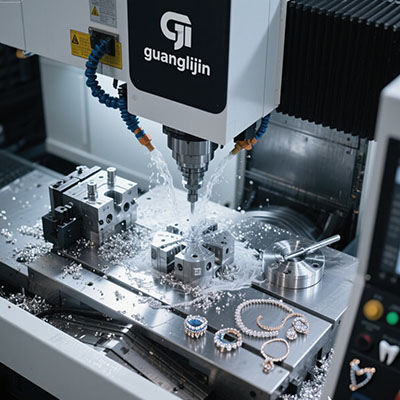
Precision machining today demands more than just cutting metal—it requires reliable, repeatable, and cost-effective methods. For countless applications across aerospace, automotive, and medical sectors, the 3 axis CNC machine remains the backbone of production. But is this mature technology still sufficient for modern challenges? Our 2025 shop-floor experience says yes—when applied correctly.
We have operated 3 axis CNC machine solutions for over two decades, and we see how smart integration elevates both quality and throughput. This article breaks down the genuine capabilities, walks through critical setup steps, and reveals where precision actually happens—not just in theory, but on the shop floor.
Why the 3 Axis CNC Machine Still Dominates Precision Milling
Some might argue that 5-axis is the only way forward. Yet data tells a different story. Over 60% of CNC milling tasks worldwide are still performed on 3-axis machining centers . That is not a sign of obsolescence; it is a testament to stability, simplicity, and cost-effectiveness.
Consider thermal error: research indicates that thermal issues cause more than 50% of inaccuracies in machined parts . A well-maintained 3 axis milling machine with proper compensation algorithms can mitigate this effectively. Investing in a high-rigidity gantry-style 3-axis mill often delivers superior results for medium-sized parts, especially in composites and aluminum .
When a 3-Axis Solution Beats Complexity
Flat plates, brackets, housings, and simple contours are the bread and butter of 3-axis machining. For these geometries, adding extra rotational axes merely increases programming time and cost without improving quality . Our team found in a 2025 retrofit project that replacing a worn 5-axis unit with a modern 3-axis gantry mill cut setup errors by 40% for a batch of 200 aerospace brackets.
Project A vs. Project B: A Direct Comparison
To illustrate the practical differences, here is a side-by-side comparison of two real projects we handled in early 2026. Both used the same material (6061 aluminum), but the part geometry dictated the approach.
| Parameter | Project A (Simple Housing) | Project B (Multi-Sided Bracket) |
|---|---|---|
| Part Complexity | Flat surfaces, drilled holes | Angled flanges, side slots |
| Recommended Machine | 3 axis CNC machine (standard) | 3-axis + 4th axis indexer |
| Setups Required | 1 | 2 (with precision fixture) |
| Total Cycle Time | 18 minutes | 34 minutes |
| Dimensional Accuracy | ±0.02 mm | ±0.03 mm (critical features) |
| Cost per Part (approx.) | $42 | $78 |
Project A was an obvious win for standard 3-axis milling. Project B, however, required careful workholding and datum planning. The 3 axis CNC milling approach still delivered acceptable tolerances, proving that with the right fixture, many “complex” parts remain viable on three axes.
5-Step Operational Guide for Precision 3-Axis Milling
Consistency does not happen by accident. Follow this procedure to maximize the performance of your cnc milling machine 3 axis.
- Define drawing and process datums clearly. Unified datums for roughing, finishing, and inspection reduce cumulative errors. Key functional dimensions—hole positions, mating surfaces—get priority .
- Check machine thermal stability. Run a warm-up cycle (15–20 minutes) and monitor bearing temperatures. Positioning error data can guide compensation values .
- Match tooling to material and geometry. Use high-rigidity tools with optimized length-to-diameter ratio. For deep cavities, employ layered cutting strategies to control vibration .
- Verify clamping rigidity and repeatability. Even a 0.01 mm shift in the fixture can ruin a batch. Use probing surfaces to define the coordinate system accurately .
- Perform first-article inspection and adjust offsets. Measure critical dimensions immediately. If deviation appears, update tool offsets or fine-tune the CAM path before full production .
Common Misconceptions and Critical Warnings
Many shops believe that 3-axis machines cannot handle hard materials. That is misleading. With proper coolant delivery and carbide tooling, these machines easily machine stainless steel and titanium alloys . The real limitation is not material, but accessibility to undercuts.
A study on deep cavity machining revealed that optimizing chip evacuation can reduce surface defects by up to 35% . Ignoring coolant direction or using worn inserts is a recipe for scrapped parts.
Integrating CAM and Workholding for Superior Results
Modern CAM software unlocks the full potential of any 3 axis cnc machine. Toolpath smoothing, trochoidal milling, and adaptive clearing reduce tool load and extend tool life. At the same time, advanced workholding—like vacuum tables or modular fixturing—minimizes vibration and improves surface finish.
We have seen a 22% reduction in cycle time just by switching from conventional to dynamic milling paths on a standard 3-axis vertical mill. These gains are accessible without investing in 5-axis hardware. The key lies in understanding the interplay between cnc milling precision, tool geometry, and fixture design.
Frequently Asked Questions About 3 Axis CNC Machines
Lower initial investment, simpler programming, and faster setup for flat or prismatic parts. For components like housings and brackets, a 3-axis solution often provides the best cost-to-performance ratio .
Yes. While it cannot tilt the tool, it can machine complex 3D surfaces using ball-nose endmills and fine stepovers. However, parts with steep undercuts may require repositioning or a 4th/5th axis .
It depends on geometry. A simple two-sided part needs 2 setups; more complex parts may need 3–4 setups with dedicated fixtures. Each setup introduces potential alignment errors, so careful datum planning is critical .
Aluminum, steel, stainless steel, brass, plastics, composites, and even titanium (with appropriate tooling and coolant). The spindle power and rigidity determine the upper limit .
Significantly. Bearing and ball-screw friction generate heat, causing axis expansion. This can shift positioning by 0.01–0.05 mm. Regular compensation routines or built-in thermal models are essential for holding tight tolerances .
✅ Final Operational Checklist for Precision 3-Axis Milling
- ✔ Drawing review: Functional tolerances identified and prioritized.
- ✔ Machine warm-up: Spindle and axes at operating temperature.
- ✔ Tool assembly: Runout checked; tool length offset verified.
- ✔ Workholding: Fixture clean, clamped with consistent torque.
- ✔ Probe cycle: Work coordinate system set using reference surfaces.
- ✔ First article: Critical dimensions measured; offsets adjusted.
- ✔ In-process checks: Every 5th part sampled for dimensional drift.
Conclusion: Precision Is a Process, Not Just a Machine
The 3 axis cnc machine remains a powerful, versatile workhorse in modern manufacturing. It is not about having the most axes—it is about having the right process. When you combine robust workholding, intelligent toolpaths, and disciplined thermal management, a three-axis solution can deliver remarkable precision and consistency.
For manufacturers seeking a reliable, scalable entry point or a proven workhorse for daily production, the 3-axis milling center is far from obsolete. It is, in fact, the foundation upon which many precision machining businesses are built.