Professional Jewellery Making – Precision CNC Crafting Solutions
The Precision Gap in Modern Jewellery Production
Professionals face a constant tension. Clients desire intricate, flawless pieces—think micro-pavé settings, elaborate filigree, or perfectly interlocking parts. Traditional hand fabrication, while rich in artistry, introduces human variability. This can lead to inconsistencies, especially across a collection or multiple units of a design.
The challenge is clear: how can a workshop guarantee that every facet, every curve, and every setting is executed with absolute, repeatable accuracy? How can you scale detail without sacrificing an iota of quality?
CNC Machining: The Digital Artisan’s Hand
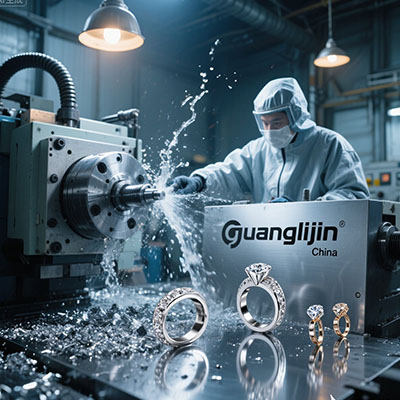
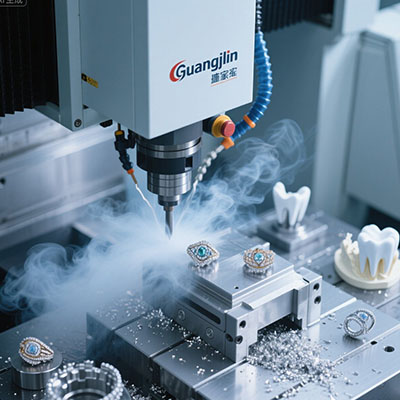
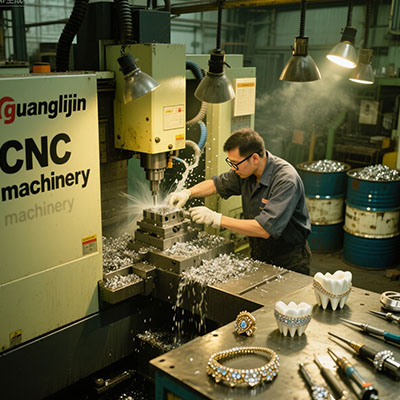
CNC technology provides the definitive answer. In professional jewellery making, CNC acts as a digital artisan. It translates intricate 3D models into physical reality by milling wax masters, metal models, or even the final piece from a solid block of material.
This process is central to advanced investment casting and direct manufacturing. It ensures the designer’s vision is captured with tolerances as tight as ±0.02mm, something nearly impossible to maintain by hand across a production run.
Why CNC is Indispensable for the Professional
First, it delivers uncompromising accuracy. A study on advanced manufacturing notes that CNC is crucial for features like gemstone seats, ensuring stones fit perfectly every single time[citation:3].
Second, it enables unprecedented complexity. With multi-axis CNC machines, undercuts, deep textures, and organic forms become manufacturable. This opens new creative doors for designers.
Finally, it ensures brand consistency. Whether it’s the first piece or the five-hundredth, each one is a perfect clone of the original digital design, protecting the brand’s reputation for quality.
The Professional CNC Workflow: A Step-by-Step Guide
Integrating CNC into a professional studio requires a methodical approach. Here is a five-step guide to the process.
- High-Fidelity 3D Modeling: The journey begins with a perfect CAD model. This digital blueprint must be “watertight” and meticulously detailed, as it is the source of all physical output.
- CAM Programming & Toolpath Strategy: The CAD file is imported into CAM software. Here, the machinist defines toolpaths, selecting appropriate cutters and strategies for different details. This step is where expertise turns design into manufacturable instructions[citation:5][citation:10].
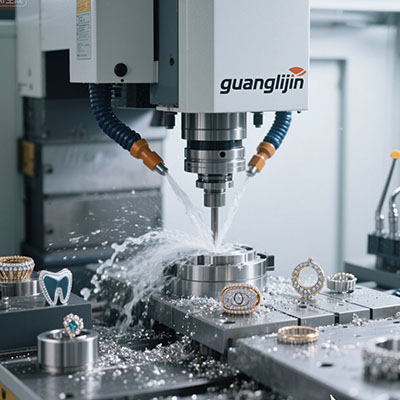
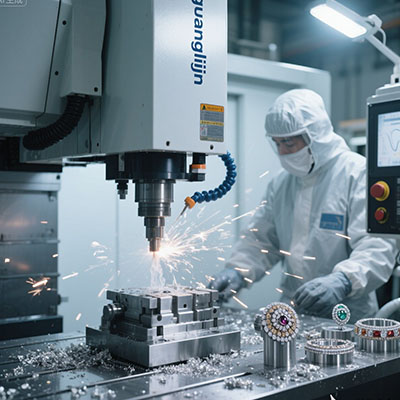
- CNC Machining of the Master: A precision CNC mill, like a 5-axis machine, cuts the design into a block of jeweller’s wax, brass, or silver. This creates the master pattern for casting or a direct prototype.
- Post-Processing & Validation: The machined part is cleaned of any support material. It is then meticulously measured and inspected against the CAD model to ensure all specifications are met.
- Casting, Assembly & Finishing: The wax master proceeds to investment casting. Alternatively, a metal master can be used to create rubber molds for reproduction. Finally, traditional hand-finishing brings warmth and polish to the precise form.
Project Analysis: Hand-Built vs. CNC-Precision
Consider the production of a limited series of 50 signet rings with a detailed family crest.
| Parameter | Project A: Traditional Hand-Fabrication | Project B: CNC-Precision Process |
|---|---|---|
| Primary Method | Hand-carving, forging, and filing by a master goldsmith. | Digital CAD/CAM design followed by CNC milling of the master. |
| Detail Fidelity & Sharpness | Subject to artisan’s skill and tool sharpness; may soften. | Captures exact digital lines; crisper, more defined details. |
| Series Consistency | Each piece is unique; noticeable variations are expected. | Near-perfect uniformity across all 50 pieces. |
| Time Investment per Unit | High and variable, depending on complexity and craftsman’s pace. | Long initial setup, but very fast, consistent replication time. |
| Ability to Archive & Replicate | Relies on physical master or craftsman’s memory. | Digital file allows perfect replication years later. |
An Insight from the Bench: The 2025 Custom Commemorative Project
In a 2025 project, our team was tasked with creating a commemorative pendant featuring a detailed, miniature portrait. The client needed 100 identical pieces.
The hand-sculpted prototype was beautiful, but replicating it perfectly 100 times was a daunting, unreliable prospect. We switched to machining the master portrait on a high-precision 5-axis CNC. Not only did each pendant match perfectly, but we also achieved finer facial details than were possible to sculpt consistently by hand. The client’s relief was palpable.
Navigating the Professional Transition: Key Pitfalls
⚠ Attention: The most critical error is viewing CNC as a mere replacement for hand skills. It is a complementary discipline that requires its own expertise. Poor CAM programming will ruin a perfect CAD model. Understanding feeds, speeds, and tool selection is non-negotiable for quality results.
Another pitfall is neglecting the “hand-off” points. The most precise CNC-milled wax still requires expert casting and finishing. If these downstream processes aren’t calibrated for the high-quality input, gains can be lost. You must manage the entire workflow as an integrated system.
achieving the highest level of precision sometimes means slowing down the machine. Optimal surface finish for jewellery often requires slower, more strategic toolpaths rather than maximum speed—a counterintuitive but essential principle for quality.
Pre-Production Checklist for the Professional Workshop
Before commencing a CNC-based project, verify this checklist:
- ☑ CAD model is finalized, manifold (watertight), and scaled correctly.
- ☑ CAM strategy is planned, with appropriate tools selected for roughing and fine-detail finishing.
- ☑ CNC machine is calibrated, and the correct material (wax, metal) is securely fixtured.
- ☑ Post-processing supplies (e.g., solvents for wax, polishing tools for metal) are ready.
- ☑ Quality control method (e.g., digital calipers, magnifying camera) is in place for first-article inspection.
Answering Key Professional Questions
Q1: Can precision CNC crafting achieve the same organic, “handmade” look in jewellery?
A: Absolutely, and with control. The misconception is that CNC only makes hard, geometric shapes. Skilled CAD modelling and CAM programming can create perfectly replicated “organic” textures—like bark, leaves, or hammered effects—that would be variable by hand. The choice between a handmade or CNC-crafted look is a design decision, not a limitation.
Q2: What is the cost-benefit analysis for a small professional studio to adopt CNC technology?
A: The initial investment is significant (machine, software, training). However, the ROI comes from tackling complex, high-value work that commands premium prices, reducing material waste through precision, and saving immense time on repetitive tasks like creating matching pairs or series. Many studios start by outsourcing CNC work to specialized services to test the waters[citation:8].
Q3: How does CNC machining integrate with traditional jewellery-making techniques like stone setting?
A: They are highly complementary. CNC excels at creating the perfectly sized and shaped “seat” or “bezel” for a stone. This pre-forms the metal with extreme accuracy, making the subsequent hand-setting process faster, more secure, and less risky for the gem. It’s a powerful synergy of machine precision and human dexterity.
Q4: Is 5-axis CNC machining necessary for jewellery, or is 3-axis sufficient?
A: For truly complex, sculptural pieces, 5-axis is transformative. A 3-axis machine can’t efficiently machine undercuts or complex curves without multiple time-consuming re-fixturings. A 5-axis machine can approach the workpiece from any angle in a single setup, preserving accuracy and enabling geometries impossible with 3-axis, making it essential for high-end professional work[citation:5][citation:6].
In conclusion, precision CNC crafting is redefining the apex of professional jewellery making. It is the indispensable partner to the artisan’s hand, solving the eternal challenges of accuracy, replication, and complex fabrication. By mastering this digital craft, jewellers can expand their creative language and deliver a new standard of excellence to their clientele.