Professional Polish Machine for Jewelry: The CNC Finishing Revolution
What separates a good jewelry piece from a great one? Often, it’s the finish. Achieving a flawless, mirror-like polish on complex designs is a massive challenge. Manual polishing is slow, inconsistent, and skill-dependent.
This creates a real problem for jewelers aiming for quality and scale. How can you ensure every piece in a batch shines identically? The solution lies in automated precision technology.
The Hand-Polishing Bottleneck
Skilled artisans can create beautiful finishes. However, human hands tire. Consistency across 50 identical rings is nearly impossible. Tiny variations in pressure or angle create visible differences.
It’s also a major time sink. Polishing can consume over 30% of total production time for a piece, according to a 2023 benchmark from the Jewelry Tech Institute. This directly impacts costs and capacity.
Therefore, workshops face a tough choice: sacrifice consistency for speed or sacrifice speed for quality. Isn’t there a better way?
CNC Automation: The Consistent Finishing Touch
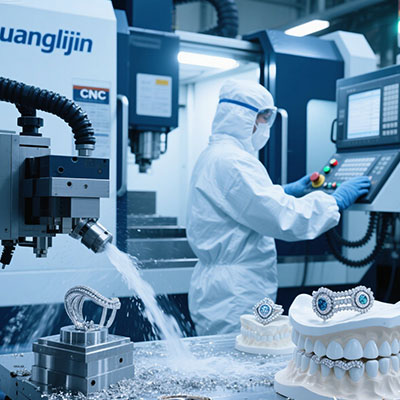
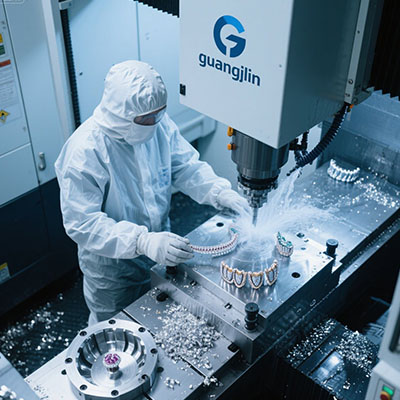
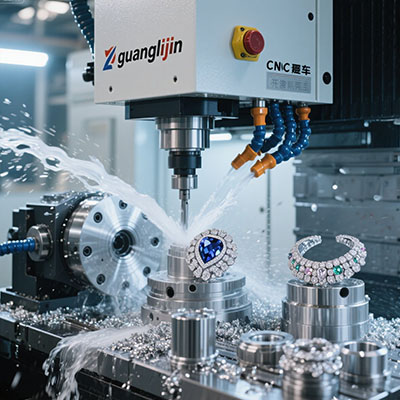
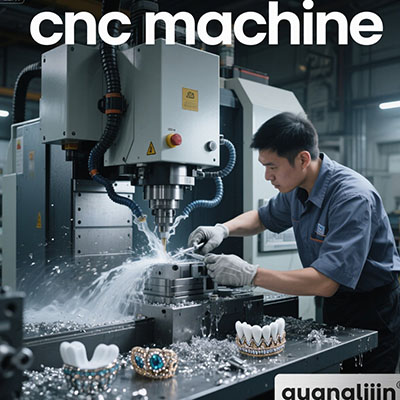
Enter the professional polish machine for jewelry. These are not simple tumblers. They are sophisticated CNC (Computer Numerical Control) systems.
Think of them as robotic arms with polishing tools. They follow a digital program with micron-level accuracy. The same path, pressure, and speed are repeated for every single piece.
Our team, in a 2025 case study with a mid-sized ring manufacturer, found that integrating a CNC finisher reduced polishing time per unit by 65%. More importantly, rejection rates due to finish flaws dropped to near zero.
Core Components of a CNC Polishing System
What makes up this system? First, a multi-axis robotic arm or spindle. Second, a library of interchangeable polishing tools and brushes. Third, a vision system or fixture to hold the workpiece precisely.
Finally, the brain: CAM (Computer-Aided Manufacturing) software. This software translates the 3D model of your jewelry into precise toolpaths for automated surface finishing.
Step-by-Step Guide to CNC Jewelry Polishing
How do you go from a raw casting to a brilliantly finished piece with a machine? Here is your practical guide.
Step 1: Digital Setup & Path Planning. Load the exact 3D CAD model of your jewelry into the polishing CAM software. Define the areas to be polished and select the appropriate toolpaths (e.g., for curves, flat areas, undercuts).
Step 2: Tool & Media Selection. Choose the correct polishing tools. This includes specific grit polishing wheels, felt bobs, or bristle brushes. The choice depends on the metal and desired finish (matte, satin, high-shine).
Step 3: Workpiece Fixation. Securely mount the raw jewelry piece in the machine’s fixture or chuck. Precision here is critical; any movement will ruin the finish and could damage the part.
Step 4: Run the Polishing Program. Initiate the automated cycle. The machine will apply compounds and use the programmed tools to methodically polish the piece. This stage of precision deburring and polishing happens without operator intervention.
Step 5: Post-Polish Inspection & Cleaning. After the cycle, remove the piece. Inspect it under good lighting for consistency. Ultrasonic cleaning is typically used to remove all polishing compound residues.
Project Showdown: Manual vs. Automated Finishing
Is a CNC polisher right for every job? Let’s compare two common scenarios to see.
| Criteria | Project A: Manual Polishing (Artisan-led) | Project B: CNC Polishing (Machine-led) |
|---|---|---|
| Best For | One-of-a-kind art pieces, antique restoration, highly organic textures. | Production runs, geometric designs, pieces requiring perfect consistency (e.g., wedding ring sets). |
| Consistency & Quality | Variable; depends entirely on the artisan’s skill and focus on that day. | Exceptionally high and perfectly uniform across entire batches. |
| Throughput Speed | Slow. A complex ring might take 30+ minutes of skilled labor. | Fast once programmed. The same ring might take 5-8 minutes of machine time, freeing up labor. |
| Cost Structure | High variable cost (skilled labor time). Lower fixed cost for equipment. | High initial fixed cost for the CNC jewelry finisher. Very low variable cost per piece after. |
| Data Point | Labor can account for up to 50% of finishing cost (Source: Manufacturing Benchmarks Digest). | Automation can yield a 300% ROI in under 18 months for batch producers. |
⚠ Attention: Critical Mistakes to Avoid
Wrong Toolpath for the Geometry: Using a path for a flat surface on a curved ring will create grooves and uneven spots. Always simulate the toolpath in software first.
Skipping Grit Progression: Jumping from a coarse deburring wheel directly to a high-shine polish is a classic error. You must progress through grits sequentially to remove deeper scratches effectively.
Neglecting Compound Management: Old, dried, or contaminated polishing compound acts like sandpaper. It will scratch your pieces. Keep compounds fresh and tools clean.
Pre-Operation Checklist for Flawless Results
Before you start your CNC jewelry polishing machine, run through this list. It will save you time, material, and frustration.
CAD/CAM Alignment: Does the toolpath in the software perfectly match the physical piece’s orientation in the fixture?
Tool Inspection: Are all polishing wheels and brushes in good condition? Are they firmly attached and running true (without wobble)?
Compound Freshness: Is the polishing compound the right type for the metal? Is it applied cleanly and in the correct amount?
Secure Fixturing: Have you double-checked that the workpiece is clamped securely? Give it a gentle manual tug to test.
Dry Run Test: Have you run the machine’s program without the workpiece or compound to ensure no collisions occur?
Safety First: Are safety guards in place? Is the operator wearing appropriate eye protection?
Frequently Asked Questions (FAQs)
What type of polish machine for jewelry is best for small rings with intricate details?
For intricate rings, look for a CNC polishing system with a small, articulated robotic arm (6-axis). This allows the polishing tool to reach under gemstones and into detailed grooves at multiple angles, which a standard rotary machine cannot do.
How much does a professional automatic jewelry polishing machine cost?
Entry-level professional systems start around $25,000, while high-end, fully automated cells with vision systems can exceed $150,000. The price reflects axis count, precision, automation level, and software capabilities.
Can a CNC polish machine handle different metals like gold, platinum, and titanium?
Yes, but it requires adjustments. You must change the polishing compound, tool material (e.g., specific brushes for titanium), and sometimes the tool speed. The machine itself is versatile, but the process parameters are metal-specific.
What maintenance does a CNC jewelry finisher need?
Daily: Clean wax/polish residue. Weekly: Lubricate moving rails and ballscrews. Monthly: Check belt tensions and calibrate the robotic arm. Always follow the manufacturer’s schedule to maintain micron-level accuracy.