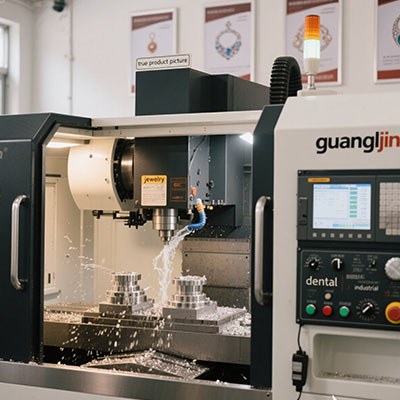
Aerospace buyers asking about a 6 axis cnc machine price usually expect a clean number. The market does not cooperate. A stripped base quote can differ from a production-ready configuration by hundreds of thousands of dollars. Worse, the options that make six-axis capability useful are often missing from the first number. This guide breaks down what drives cost, which specifications aerospace work actually demands, and how to budget without surprises.
Why Six-Axis Pricing Is Not a Single Number
The first trap is definition. Many machines sold as “six-axis” are actually 5+1 designs. Five axes interpolate simultaneously. The sixth axis only indexes between cuts. True simultaneous six-axis motion is rarer and costs significantly more[citation:7].
Aerospace work usually falls into the mill-turn category. These platforms combine turning and five-axis milling in one footprint. The sixth axis typically appears as a second C-axis on a sub-spindle or lower turret[citation:1]. That architecture eliminates secondary setups on rotationally symmetric parts like turbine casings and hydraulic manifolds.
Therefore the price question becomes a capability question. Are you buying indexed positioning or continuous multi-face contouring? The gap between those answers drives the budget.
Our team reviewed an aerospace quote in 2025 where the base price looked competitive. The production-ready configuration added high-pressure coolant, a larger tool magazine, and sub-spindle contouring. The final number landed 38% above the initial figure. That pattern is common.
Project A vs Project B: Aerospace Platform Comparison
Two suppliers evaluated six-axis platforms for structural and engine components. Project A focused on entry price. Project B specified for titanium roughing and deep-cavity milling. Their configured costs diverged sharply.
| Factor | Project A — Entry Configuration | Project B — Aerospace Production Build |
|---|---|---|
| Base platform type | 5+1 indexed sixth axis | True six-axis mill-turn |
| Typical configured price | $150,000–$400,000[citation:7] | $550,000–$850,000+[citation:1][citation:12] |
| Coolant pressure | 20–30 bar standard | 70–150 bar HPC required[citation:1] |
| Tool magazine | 24–40 tools | 80+ tools for multi-operation parts[citation:1] |
| Sub-spindle capability | Positioning only | Full C-axis contouring[citation:1] |
| Best fit | Prototyping, simple multi-face parts | Turbine components, manifolds, structural parts |
Project A delivered acceptable results on aluminum brackets with moderate complexity. Project B handled titanium deep-cavity work without recutting or tool failure. However, Project B required a foundation and power infrastructure upgrade that Project A did not. The comparison forces a practical question: what does your hardest alloy actually demand?
Five Steps to Budget a Six-Axis Aerospace Machine
Do not accept a base quote. Do not compare platforms without normalizing the option list. Run this sequence before releasing a budget figure.
Step 1: Define True Simultaneous vs 5+1 Requirement
Review your part drawings. If the geometry requires continuous reorientation during the cut, you need true six-axis motion. If the sixth axis only flips the part between operations, a 5+1 machine saves significant capital[citation:7]. Aerospace engine components often demand true simultaneous capability. Structural brackets may not.
Step 2: Specify Coolant Pressure for Your Alloy
Standard flood coolant fails in deep-cavity titanium and Inconel milling. Gravity cannot evacuate chips from pockets. High-pressure coolant at 70 bar minimum, with 150 bar preferred, prevents recutting and catastrophic tool failure[citation:1]. This option adds cost. Skipping it adds scrap.
Step 3: Size the Tool Magazine for Your Operation Count
A mill-turn center consumes tooling rapidly. Roughing and finishing turning tools, boring bars, and a full suite of five-axis milling cutters add up quickly. A 40-tool magazine runs out during complex aerospace cycles. Budget for an 80+ tool magazine upgrade, which can add $35,000 to $50,000[citation:1].
Step 4: Verify Sub-Spindle Contouring Capability
Ask whether the sub-spindle offers full C-axis contouring or only positional indexing. Contouring enables helical interpolation and off-center drilling on the back side of the part without a secondary operation[citation:1]. Indexing forces a second setup. Confirm the capability in writing.
Step 5: Factor Thermal Management and Programming Talent
Six-axis mill-turn platforms generate heat in the B-axis milling head. Thermal growth shifts the tool tip. Ask how the machine compensates. Then assess your programming team. Six-axis programming requires advanced CAM skills and collision simulation. Budget for training or turnkey programming support if the expertise is not in-house[citation:12].
Common Mistakes in Aerospace Six-Axis Budgeting
⚠Attention: Do not compare a 5+1 indexed machine against a true six-axis platform as if they are equivalent. The capability gap is real, and the price gap reflects it. Match the platform type to your geometry first[citation:7].
⚠Attention: Do not budget the base machine price and ignore the options. High-pressure coolant, tool magazine capacity, and sub-spindle contouring are not luxuries on aerospace mill-turn work. They are requirements for the cycle time the machine promises[citation:1].
⚠Attention: Never skip the infrastructure check. Six-axis mill-turn machines often require 250+ square feet of floor space and power drops exceeding 100 amps. Foundation work and coolant system upgrades belong in the total budget[citation:12].
Another quiet error involves programming time. A poorly optimized six-axis program can run slower than a well-optimized five-axis one. Software alone does not guarantee speed gains. The savings appear only when the programmer understands the machine’s kinematics and the part’s critical features.
Frequently Asked Questions
What is the price range for a 6 axis CNC machine for aerospace?
Entry-level 5+1 indexed platforms start around $150,000–$400,000. True six-axis mill-turn machines configured for aerospace production run $550,000–$850,000 or more. High-end platforms with 120 kW spindles and 500+ tool capacity exceed $1.8 million[citation:7][citation:1][citation:9].
What is the difference between 5+1 and true 6-axis machining?
A 5+1 machine interpolates five axes simultaneously and indexes the sixth between cuts. True six-axis machines move all six axes together during the cut. The latter handles continuous multi-face contouring but costs significantly more[citation:7].
Why is high-pressure coolant necessary for aerospace six-axis machining?
Deep-cavity milling in titanium and Inconel traps chips where gravity cannot clear them. Standard coolant fails to evacuate the pocket. High-pressure coolant at 70–150 bar prevents recutting and tool failure[citation:1].
What tool magazine capacity does aerospace mill-turn work require?
Aerospace programs often consume 80 or more tools across turning, milling, and drilling operations. A 40-tool magazine forces manual intervention. Budget for an 80+ tool capacity upgrade on production configurations[citation:1].
How much does programming a six-axis machine add to the total cost?
If your team lacks six-axis CAM experience, budget $30,000 to $50,000 annually for specialized training or turnkey programming support. Collision simulation and post-processor customization are essential and time-consuming[citation:12].
Pre-Purchase Checklist
- ☐ Part geometry classified: true six-axis vs 5+1 requirement
- ☐ Hardest alloy and deepest cavity identified
- ☐ Coolant pressure specified at 70 bar minimum
- ☐ Tool magazine sized for 80+ tools on production builds
- ☐ Sub-spindle contouring capability confirmed in writing
- ☐ Thermal compensation on B-axis head reviewed
- ☐ Configured price includes all required options
- ☐ Floor space and power infrastructure verified
- ☐ Programming talent and training budget assessed
- ☐ CAM post and collision simulation validated
- ☐ Service access and spare spindle lead time confirmed
- ☐ Total cost of ownership calculated beyond base price
Six-axis pricing is a configuration exercise, not a list price lookup. Start with your hardest geometry, normalize the option list across suppliers, and budget for the infrastructure the machine demands. The number that matters is the production-ready total, not the base quote.