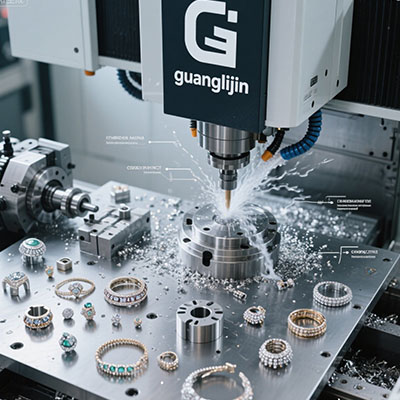
Most first-time buyers focus on the wrong question. They ask how many axes the machine has. They should ask what the fifth axis actually does under load. That difference decides whether a purchase becomes a production asset or a service headache. This guide gives you a starting framework. We cover how to evaluate a 5th axis cnc machine, which design choices matter most, and how to validate one with a live test before money changes hands.
What the Fifth Axis Really Adds
The fifth axis rotates the tool or the workpiece around an additional plane. That extra motion lets the cutter reach compound angles in a single setup. Undercuts become possible. Curved surfaces finish smoother. Setup count drops.
However, the axis only earns its cost when it moves continuously during the cut. Indexed positioning between cuts is a different capability. Buyers often confuse the two. A machine that indexes is useful. A machine that interpolates is transformative.
Therefore the first question is not axis count. It is whether the control supports simultaneous motion with tool-center-point management. Without RTCP, the fifth axis tilts but the tool tip drifts. The feature fails inspection.
Our team reviewed a purchase in 2025 where the buyer assumed simultaneous capability. The quote listed a five-axis head. The control license covered only 3+2 indexing. The gap surfaced at the first complex part . That mistake is common and expensive.
Project A vs Project B: Rotary Design Comparison
Two shops bought machines in the same quarter. Project A chose a worm-gear rotary table. Project B selected a direct-drive trunnion. Their part families differed, and so did their maintenance burden.
| Factor | Project A — Worm-Gear Rotary | Project B — Direct-Drive Trunnion |
|---|---|---|
| Backlash | Requires periodic adjustment | Near-zero mechanical backlash |
| Stiffness | Good at moderate cutting force | High torsional stiffness |
| Maintenance | Lubrication and wear inspection | Sealed, fewer wear parts |
| Thermal behavior | Gearbox warms with duty cycle | Motor cooling manages heat |
| Entry cost | Lower | Higher |
| Best fit | Mixed work, cost-sensitive programs | Tight-tolerance continuous five-axis |
Project A delivered solid results with disciplined probing. Project B held tolerance longer with less intervention. However, Project B demanded better thermal planning. The comparison forces a practical question: how long is your longest continuous five-axis cycle?
Five Steps to Validate Before You Buy
Do not accept a short demo. Do not trust a static certificate. Run this sequence with your material and your geometry.
Step 1: Confirm the Control License Covers Simultaneous Five-Axis
Ask for the option list attached to the quote. Confirm the simultaneous five-axis license appears as a line item. Then ask for sample G-code from a real part. Look for simultaneous rotary and linear commands. Indexed output disguised as multi-axis will not hold complex surfaces .
Step 2: Demand a Live Cut on Your Hardest Material
Provide a test file with a compound angle and a tight radius. Watch the tool tip on the control display. It should track without hesitation. Listen for load spikes as the head tilts. Measure surface finish afterward. A machine that cuts your material well in a demo is a safer bet than one that only cuts aluminum .
Step 3: Measure Rotary Backlash and Repeatability
Approach a feature from both directions and measure the difference. That lost motion is backlash. Then repeat the same move twenty times and measure spread. Small backlash can be compensated. Poor repeatability cannot. Aerospace and medical work depend on repeatability, not just accuracy.
Step 4: Check Thermal Behavior Over Several Hours
Run the machine at production load for four hours. Measure the same feature at the start and the end. A stable machine holds size. A drifting machine reveals itself over time. Thermal compensation and drive cooling both matter. Confirm the warm-up routine before first article.
Step 5: Audit Workholding, Probing, and Training
Five-axis cutting changes force direction constantly. A fixture that held a flat part may slip on a tilted surface. Review the probing routine and the training plan. One champion per shift should own setup, probing, and first-article checks. Without that discipline, the machine underperforms its spec.
Common Mistakes First-Time Buyers Make
⚠Attention: Do not assume a five-axis head equals simultaneous five-axis capability. Check the control license and the CAM post. A machine that indexes only will not hold complex geometry .
⚠Attention: Do not buy for your average part. Buy for your hardest part and your tightest tolerance. A machine that passes a soft-material demo may struggle on your production alloy.
⚠Attention: Never skip the rotary axis records. Ask for backlash and repeatability data on the A and C axes. A certificate covering linear axes alone tells you nothing about the fifth axis.
Another quiet error involves the post-processor. A capable machine with a weak CAM post produces weak surfaces. Test the post with your own geometry before purchase. This step is often skipped and rarely forgiven.
Frequently Asked Questions
What should I look for when buying a 5th axis CNC machine?
Confirm simultaneous five-axis capability, rotary axis repeatability, and CAM post compatibility. Request a live cut on your material. A machine that indexes only is not the same as one that interpolates continuously .
How much does a 5th axis CNC machine cost?
Entry-level five-axis platforms start around $60,000–$90,000. Mid-range production machines run $120,000–$200,000. Large gantry and aerospace-class machines exceed $250,000. Price tracks envelope, spindle, and control options.
What is the difference between 3+2 and simultaneous 5-axis machining?
3+2 positions the rotary axes and then cuts with three linear axes. Simultaneous five-axis moves all axes together during the cut. Simultaneous motion is needed for complex curves and undercuts .
Do I need RTCP for five-axis machining?
Yes, for simultaneous work. RTCP keeps the tool tip on its programmed path while the rotary axes move. Without it, compound-angle features drift and free-form surfaces fail inspection .
How long does it take to learn a 5th axis CNC machine?
Operators with three-axis experience typically need two to four weeks of focused training. Programming simultaneous toolpaths takes longer. Plan for one champion per shift who owns probing and first-article checks .
Pre-Purchase Checklist
- ☐ Part envelope and annual volume documented
- ☐ Hardest material and tightest tolerance identified
- ☐ Simultaneous five-axis license confirmed on quote
- ☐ Live cut observed on your material
- ☐ Rotary backlash measured from both directions
- ☐ Rotary repeatability tested over twenty cycles
- ☐ Thermal behavior checked over a four-hour run
- ☐ CAM post verified for simultaneous output
- ☐ Workholding plan sketched for tilted cuts
- ☐ Probing routine and first-article process defined
- ☐ Service access and spare rotary parts lead time confirmed
- ☐ Operator training plan covers probing and maintenance
Buying a fifth-axis machine starts with your geometry, survives a live cut test, and ends with a checklist on the floor. The machine that holds tolerance through a full shift is the one worth buying. Everything else is brochure noise.