SEO Description: Find the best 5 axis CNC for complex parts. Expert buying guide with real data, comparison tables, and step-by-step selection.
You need to machine a part with five angled faces, deep pockets, and a surface finish that refuses to hide. Your three-axis machine can do it—in three setups, with two fixture changes, and a tolerance stack that keeps you awake at night. This is exactly where the search for the best 5 axis cnc solutions begins. The question is not whether five-axis capability helps. It is which configuration, control system, and support structure actually deliver on the promise without draining your capital budget.
Why the Best 5 Axis CNC Is Not a Single Machine
Walk through any major trade show and you will see dozens of five-axis platforms. Each claims to be the best. The reality is more nuanced. The best 5 axis cnc for a medical shop running titanium implants differs from the best choice for an aerospace supplier cutting aluminum structural ribs. Machine structure, rotary axis design, and control intelligence matter far more than brochure spindle speeds.
Consider the horizontal machining center approach. DMG Mori’s DMU 65 H monoBLOCK 2 achieves continuous accuracy of up to 5 µm in standard configuration, with acceleration reaching 8.5 m/s² [citation:1]. That level of thermal stability comes from a rigid cast iron bed and symmetrical design. For heavy-duty cutting on large workpieces, this architecture outperforms lighter vertical platforms. However, it occupies more floor space and demands a different fixturing strategy.
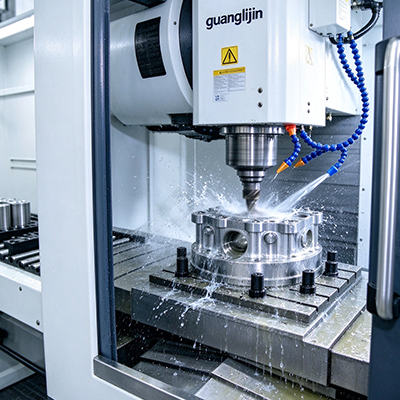
Vertical machining centers like Mazak’s Variaxis i-700 NEO take a different path. The AI-driven vibration detection system automatically adjusts cutting conditions to protect surface finish—even when a less experienced operator is at the control [citation:1]. That is a meaningful advantage for shops facing a skilled labor shortage. Yet the trade-off is workpiece size and chip evacuation efficiency compared to horizontal designs.
So which is the best 5 axis cnc for your floor? The answer depends on part geometry, batch size, and the skills of the people who will run the machine every day.
Five-Axis vs. Three-Axis: The Real Cost Equation
Three-axis machining remains the workhorse of precision manufacturing. It is cheaper to buy, easier to program, and perfectly adequate for prismatic parts machined from fixed directions [citation:5]. The limitations appear when part geometry demands multi-sided access. Each additional setup introduces positioning error, fixture wear, and labor time.
Five-axis machining reduces setups. A part that requires four operations on a three-axis mill can often be completed in one cycle. The savings compound: less handling, fewer fixtures, tighter true-position tolerances. However, the investment is substantial. Global five-axis machining center shipments reached approximately 34,000 units in 2025, with prices ranging from roughly $200,000 to $600,000 depending on configuration and brand .
We worked with a job shop in the Midwest last year that faced this exact decision. They were machining aluminum hydraulic manifolds with angled cross-drilled ports. The three-axis process required three setups and a custom fixture that cost $18,000 to design and build. Scrap rate hovered around 7% because of datum shift between operations. After moving to a compact five-axis vertical machining center with a trunnion table, setup time dropped from 2.5 hours to 35 minutes. Scrap fell below 1.5% within the first month. The machine cost $285,000. The payback calculation was straightforward once rework and fixture costs entered the equation.
Comparison: Two Five-Axis Approaches for Different Realities
| Specification | Project A: Compact VMC for Job Shop | Project B: Horizontal HMC for Production |
|---|---|---|
| Typical Configuration | Trunnion table, 40-taper spindle, vertical | Swivel rotary table, HSK-A100, horizontal |
| Best For | Multi-face small/medium parts, high mix | Heavy chips, large workpieces, long cycles |
| Workpiece Capacity | Up to ~ø500 mm, 300 kg | Up to ~ø840 mm, 600 kg [citation:1] |
| Setup Flexibility | Excellent for quick changeovers | Strong with pallet automation |
| Chip Evacuation | Adequate; gravity works against you | Superior; gravity assists |
| Floor Space | Moderate | High |
| Typical Investment Range | $180k–$350k | $350k–$650k+ |
| Ideal Batch Size | 10–500 pieces | 50–5,000+ pieces |
Project A suits a shop that wins diverse work. Project B rewards manufacturers with stable, high-volume contracts. Neither is universally superior. The best 5 axis cnc decision hinges on which column your order book resembles.
Step-by-Step: Selecting Your Five-Axis Solution
- Map Your Part Geometry First. List every feature that currently requires a second or third setup. Measure the angular ranges involved. If most features fall within ±30° of a primary direction, a 3+2 positional five-axis machine may deliver most of the benefit at lower cost and programming complexity [citation:11].
- Calculate the True Cost of Setups. Track setup hours per part number for one month. Multiply by your fully burdened labor rate. Add fixture design and maintenance costs. This number becomes the baseline your five-axis investment must beat.
- Evaluate Rotary Axis Drive Type. Worm gear drives cost less but wear and develop backlash over time. Direct-drive (DD) motors offer zero backlash and higher acceleration but cost more upfront. For high-precision work with tight tolerance on contoured surfaces, DD on the tilt axis is worth the premium.
- Demand RTCP Accuracy Data. Rotational Tool Center Point compensation is the灵魂 of five-axis contouring. Without accurate RTCP, simultaneous motion produces scrap. Ask for measured RTCP deviation across the working envelope, not a catalog number [citation:15].
- Verify Post-Processor Availability. A five-axis machine without a proven post for your CAM system is a very expensive three-axis mill. Confirm that the builder or reseller provides a tested post-processor for your specific CAM software and machine kinematics before signing.
- Inspect the Service Network. Five-axis machines are complex. When a rotary axis encoder fails or a spindle develops runout, downtime costs multiply. Check local parts inventory and average response time. A slightly more expensive machine with excellent local support beats a bargain model three time zones away.
Common Mistakes That Undermine Five-Axis Investments
⚠ Attention: Avoid simultaneous five-axis programming on day one unless your team has prior experience. Start with 3+2 positioning to build confidence and prove the machine’s accuracy. Graduate to full simultaneous motion after establishing reliable post-processor behavior and operator familiarity.
Another frequent error involves fixture design. Engineers accustomed to three-axis work sometimes design five-axis fixtures that block rotary axis travel or create collision risk. The rotary table must rotate freely through its full range with the workpiece clamped. Verify this in your CAM simulation before cutting metal.
Tooling selection also trips up new five-axis users. Longer tools required to reach angled features deflect more under cutting pressure. The best 5 axis cnc cannot compensate for poor tooling practice. Invest in shrink-fit holders and balanced tool assemblies rated for the spindle’s maximum rpm.
Frequently Asked Questions
Q: What is the best 5 axis CNC machine for small shops with limited floor space?
A: Compact vertical machining centers with integrated trunnion tables offer the smallest footprint. Look for machines with work envelopes under 500 mm in diameter and footprint dimensions below 3 meters squared. Brother and similar compact platforms are designed specifically for space-constrained shops entering five-axis work.
Q: How much does a simultaneous 5 axis CNC cost in 2026?
A: Entry-level simultaneous five-axis vertical machining centers start around $180,000 to $250,000. Mid-range production machines with pallet changers and higher-spec spindles run $350,000 to $550,000. Large horizontal and gantry configurations exceed $650,000. Price depends heavily on rotary axis construction, control options, and automation integration.
Q: Do I need simultaneous 5 axis or is 3+2 machining enough?
A: Most multi-face parts with angled holes and planar features at various orientations machine perfectly well with 3+2 positioning. Simultaneous five-axis is essential for contoured surfaces that require continuous tool orientation changes—impellers, turbine blades, complex molds, and medical implants with organic geometry.
Q: What should I check before buying a used 5 axis CNC machine?
A: Inspect rotary axis backlash with a precision indicator on a test bar. Check guideway wear patterns for asymmetry that suggests overload history. Verify that RTCP compensation tables are intact and that the control retains parameter backups. Used five-axis machines can offer exceptional value, but only after mechanical and control verification.
For manufacturers ready to move beyond three-axis limitations, the path forward requires matching machine architecture to part family, verifying control intelligence, and building the programming and fixturing competency that five-axis work demands. The best 5 axis cnc solutions are not the most expensive or the most heavily marketed. They are the platforms that fit your parts, your people, and your production reality.
✅ Five-Axis CNC Selection Checklist
- Part geometry mapped: list features requiring angular access beyond ±30°
- Setup time baseline documented for current three-axis process
- Rotary axis drive type specified (worm gear vs. DD) based on precision needs
- RTCP measured accuracy data requested from builder
- Post-processor availability confirmed for your CAM software
- Local service response time and spare parts inventory verified
- Floor space and power requirements measured against available infrastructure
- Fixture design reviewed for rotary axis clearance and collision risk
- Operator training plan established for 3+2 first, simultaneous later
- Tooling upgrade budget included (balanced holders, shorter gauge lengths)
- Financing or lease options compared against cash purchase ROI
Data sources: Gear Technology (July 2026) [citation:1]; YH Research five-axis market report (2026) ; industry buying guides and technical documentation.