Industrial machine purchases carry different stakes than job-shop upgrades. The machine must run multiple shifts. It must survive operator turnover. It must meet safety standards that protect people and the company. A 5 axis cnc milling machine for sale labeled “industrial” should deliver all three. Many do not. This guide covers what industrial buyers should verify, what the offers actually include, and where the purchase decisions go wrong.
What Separates Industrial 5-Axis Equipment from Shop-Grade Machines
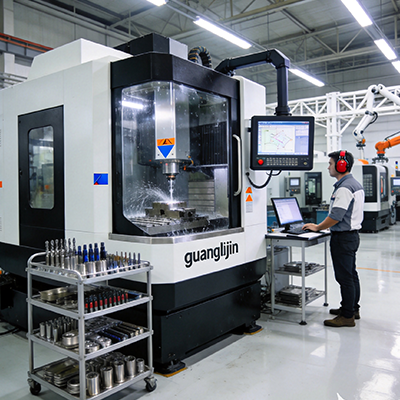
Industrial equipment is built for continuous operation. The frame mass is higher. The spindle is rated for duty cycles, not peak cuts. The safety systems meet formal standards.
ISO 16090-1 governs machining center safety, including 5-axis milling machines. The standard covers protective measures, control system reliability, and monitoring of axis movement limits . A machine without compliant guarding and emergency stop architecture is not industrial equipment. It is a liability on the balance sheet.
The global machine tool market reflects this shift toward multi-axis capability. The CNC machine tools market was estimated at USD 92.6 billion in 2026, growing at 6.2% CAGR toward USD 168.4 billion by 2036 . Industrial buyers are driving a meaningful share of that growth. They are buying capability and uptime, not just spindle speed.
We audited an industrial buyer’s 5-axis purchase in 2025. The machine met the cycle time requirement in the demo. In production, the rotary axis overheated after six hours of continuous operation. The supplier had rated the rotary table for intermittent duty. The offer looked industrial. The duty cycle was not. That distinction cost the buyer three weeks of downtime and a retrofit.
Project A vs Project B: Intermittent vs Continuous Duty Rating
Two industrial configurations look similar on paper. The duty rating tells the real story.
| Factor | Project A: Intermittent Duty Rotary | Project B: Continuous Duty Rotary |
|---|---|---|
| Rated duty cycle | 40–60% (rest required between cycles) | 100% (continuous operation) |
| Typical application | Job shop with varied work | Production line running fixed parts |
| Thermal behavior | Heats during long runs; requires cooldown | Stable under sustained load |
| Uptime risk | Higher during multi-shift production | Lower; designed for continuous use |
| Service interval | Frequent inspection for heat damage | Scheduled maintenance intervals |
| Best fit | High-mix, low-volume production | Dedicated production cell |
Intermittent duty rotary tables suit shops that run varied work with breaks between cycles. Continuous duty tables suit production lines that run the same part family for hours. The purchase decision hinges on production model, not machine specification alone.
Where Industrial Buyers Get the Offer Wrong
⚠ Attention: Duty cycle rating is the most commonly overlooked specification in industrial 5-axis purchases. A machine that meets cycle time in a short demo may overheat in a multi-shift run.
Safety compliance is the second gap. An industrial 5-axis machine must meet ISO 16090-1 requirements for guarding, control reliability, and axis monitoring . A machine sold without compliance documentation is a risk, not an asset. Request the risk assessment before signing.
Spare parts availability is the third. Industrial uptime depends on service response. A proprietary rotary encoder with a 12-week lead time is a production risk. Ask for the spare parts list and lead times before purchase. A machine down for a quarter is not an industrial asset.
Post-processor validation is the fourth. A 5-axis machine with an unvalidated postprocessor is a crash waiting to happen. Industrial buyers should demand proof that the CAM post matches the machine’s kinematics before the machine lands on the floor.
Step-by-Step: Evaluating an Industrial 5-Axis Purchase
- Define the production model before evaluating machines. Write down the number of shifts, the parts per shift, and the expected duty cycle. A machine rated for 40% duty cycle will fail in a three-shift operation. The production model drives the machine specification.
- Verify duty cycle ratings for the rotary axes and spindle. Request the manufacturer’s duty cycle documentation. Confirm the rating matches your production model. A machine that meets cycle time in a demo may overheat under continuous load.
- Review ISO 16090-1 compliance documentation. Request the machine’s risk assessment. Confirm perimeter guarding, emergency stop category, and axis limit monitoring are included . A machine without compliance documentation is not industrial equipment.
- Confirm spare parts lead times for critical components. Ask for the spare parts list for rotary drives, encoders, and spindle units. A proprietary component with a 12-week lead time is a production risk. Industrial uptime depends on service response.
- Validate the postprocessor with your CAM system. Load your CAM post for the specific controller. Simulate a full 5-axis toolpath with machine kinematics. Check rotary limits, tool center point management, and collision zones. A post mismatch discovered after delivery costs production time.
- Run the machine under production load for a full shift. Thermal drift and duty cycle limits appear over hours, not minutes. Request a full-shift runoff with dimensional inspection at start and end. A short demo proves nothing about continuous operation.
- Confirm operator training and maintenance schedules. Industrial equipment requires trained operators and scheduled maintenance. Verify that the supplier provides training on the specific controller and that the maintenance schedule is documented.
Applications That Justify Industrial 5-Axis Investment
Aerospace structural components combine contoured surfaces with tight positional tolerances. Industrial 5-axis machines hold these tolerances across multi-shift production. The geometry is the easy part. The consistency depends on duty cycle capability and thermal stability.
Automotive tooling and mold work with deep cavities and complex angles benefit from the industrial platform’s rigidity and continuous duty rating. The machine capability translates to reduced EDM and polishing labor.
Medical device manufacturing demands surface finish and form accuracy across production runs. Industrial 5-axis machines maintain these specifications without operator intervention.
For factories quoting this work, an industrial 5 axis cnc milling machine for sale with verified duty cycle ratings and compliance documentation turns production from a series of demos into a repeatable process. The capital cost is real. The uptime must be real too.
Frequently Asked Questions
What duty cycle rating should an industrial 5 axis cnc milling machine for sale have?
The duty cycle rating must match your production model. A shop running three shifts requires a machine rated for 100% continuous duty. An intermittent-duty machine rated at 40–60% will overheat under continuous load. Request the manufacturer’s duty cycle documentation and confirm it matches your shift pattern before purchase.
What safety standards apply to industrial 5 axis cnc milling machine for sale offers?
ISO 16090-1 is the primary safety standard for machining centers, including 5-axis configurations. It covers guarding, control system reliability, emergency stop requirements, and axis movement monitoring. Industrial buyers should request the machine’s compliance documentation as part of the offer evaluation. A machine without compliance documentation is a risk, not an asset.
How does spare parts availability affect industrial 5-axis milling uptime?
Industrial uptime depends on service response. A proprietary rotary encoder with a 12-week lead time can shut down a production line for a quarter. Request the spare parts list and lead times before purchase. A machine with long-lead proprietary components is a production risk, even if the price is attractive.
Can an intermittent-duty 5 axis cnc milling machine for sale be used for continuous production?
It can, but the duty cycle rating limits the production model. An intermittent-duty machine requires rest periods between cycles to dissipate heat. Running it continuously causes overheating and premature failure. Match the machine’s duty rating to your production model before purchase. A retrofit to continuous duty is rarely economical.
What should a full-shift runoff include for an industrial 5-axis mill?
A full-shift runoff should include dimensional inspection at the start and end of the shift, thermal drift measurement, and confirmation that the machine completes the full production cycle without overheating or alarm. A short demo proves nothing about continuous operation. The runoff should simulate the actual production environment, including ambient temperature and operator workflow.
Checklist: Industrial 5-Axis Purchase Readiness
- ☐ Production model defined: shifts, parts per shift, duty cycle requirement.
- ☐ Duty cycle ratings verified for rotary axes and spindle.
- ☐ ISO 16090-1 compliance documentation reviewed.
- ☐ Perimeter guarding and axis limit monitoring confirmed.
- ☐ Spare parts lead times checked for rotary drives and encoders.
- ☐ Postprocessor validated with your CAM system and part geometry.
- ☐ Full-shift runoff completed with dimensional inspection.
- ☐ Operator training and maintenance schedules documented.
An industrial 5-axis purchase is a production commitment. The machine is only part of the system. Duty cycle ratings, safety compliance, service support, and operator competence complete the package. Filter the offers with the checklist. Walk away from the ones that cannot answer the duty cycle and compliance questions.