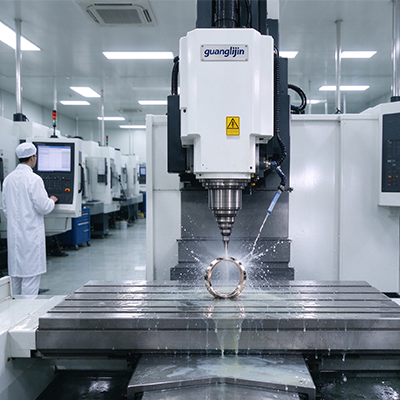
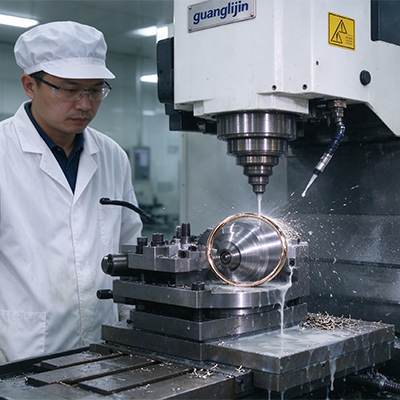
Supplying a precision desktop machine is harder than it looks. The category is crowded with machines that look identical on a spec sheet. The real differences sit in frame rigidity, rotary accuracy, and controller capability. This guide covers the supply-side checks that separate a precision desktop 5 axis cnc machine from a bench decoration.
The Supply Chain Reality: Many Sellers, Few Builders
Desktop five-axis machines appear under dozens of brand names. Most share components from a small number of factories. The seller may be a distributor, an assembler, or a rebadger. Knowing which one you are buying from changes the support picture.
A distributor sells the builder’s product with the builder’s support. An assembler buys components and builds the machine in-house. A rebadger puts a label on someone else’s machine. The rebadger has the least control over quality and the least ability to support you.
Ask direct questions. Who builds the frame? Who assembles the rotary axes? Who writes the controller configuration? A seller who cannot answer those questions is not a precision supplier.
Spare parts availability matters more on a desktop machine than on a large one. Components are small and specialized. A rotary table replacement can take months if the seller has no stock. Confirm spare rotary parts and controller spares are available in your region.
Frame and Rotary Accuracy: The Numbers That Matter
Precision desktop supply starts with the frame. Granite bases and cast iron columns damp vibration better than welded aluminum. The difference shows up on the first aluminum cut. Aluminum frames ring under load and transfer vibration into the part.
Rotary axis accuracy is the second number buyers overlook. A tilt error of 20 arc-seconds at 100 mm from center moves the tool tip by about 10 µm. That is half the tolerance budget on many small parts. Ask for the rotary accuracy report, not just the linear axis data.
Backlash on the rotary axes matters too. Measure it with the clamp released and again with it engaged. Both numbers belong in the supply agreement. A machine with loose rotary backlash produces a step in every angled feature.
Our team audited four desktop five-axis suppliers in 2025 for a small-parts job shop. Two provided rotary accuracy data. One included clamped and unclamped backlash values. The shop chose the supplier with the full data package. That machine held ±0.012 mm on a five-sided aluminum housing. The cheapest bid had no rotary data at all.
Comparing Two Desktop Supply Packages: Project A vs. Project B
| Parameter | Project A: Data-Rich Supply | Project B: Standard Supply |
|---|---|---|
| Frame documentation | Granite base spec, frame flatness report | Marketing description only |
| Linear accuracy | Laser interferometer report, three axes | Certificate only |
| Rotary accuracy | Indexing and contour test data | Not provided |
| Backlash | Clamped and unclamped values for both axes | Single quoted value |
| Acceptance test | Five-axis test part, measured and reported | 3-axis test part only |
| Spare parts | Regional stock for rotary and controller parts | Factory order, 8-week lead time |
| Price | Higher by 12% | Lower |
Project A paid more and got a machine that held tolerance from day one. Project B saved 12% and spent the first month chasing rotary backlash and waiting for a spare part. Precision supply is a data package plus a parts channel. The cheapest bid rarely includes either.
Controller and RTCP Verification
The controller decides whether the machine is truly five-axis. RTCP keeps the tool tip on path as the rotary axes move. Without it, angled features carry position errors that grow with pivot distance.
Desktop controllers range from full industrial software to hobby-grade firmware. The industrial controllers support RTCP, kinematic compensation, and collision checking. The hobby-grade ones support basic interpolation and little else.
Confirm RTCP is included and active before delivery. Ask the supplier to run a five-axis test cut at two different angles. Measure the deviation between the two features. That test proves the controller is compensating correctly.
CAM post-processor support is part of the supply. Your CAM software needs a post for the specific machine and controller. A generic post produces collisions and scrapped parts. Ask the supplier for the post and test it before signing.
Step-by-Step: Precision Desktop Supply Acceptance
- Request the frame specification. Confirm granite or cast iron construction with flatness data.
- Review linear axis accuracy reports. Laser interferometer data on all three axes, not a certificate.
- Review rotary axis accuracy and backlash. Indexing data plus clamped and unclamped backlash values.
- Verify RTCP is active. Run a test cut at two angles and measure the deviation.
- Test the CAM post-processor. Machine a simple five-sided part and inspect it.
- Confirm spare parts availability. Rotary table and controller spares stocked in your region.
Installation and Long-Term Precision
A desktop machine is light. Bench rigidity becomes part of the machine’s precision. A flexible bench transfers vibration into the cut. Bolt the machine to a rigid bench or a granite surface plate. Level it after bolting.
Warm-up routines protect precision on a small platform. The spindle and ballscrews warm faster than the light frame. Ten minutes of warm-up brings the machine closer to its working thermal state. Cut critical features after the warm-up.
Maintenance keeps precision alive. Clean the guideways and ballscrews on schedule. Check rotary backlash quarterly. Replace the controller backup battery before it fails. A precision machine stays precise when the owner maintains it.
Research on small machine tools shows that thermal and geometric errors dominate part error when the frame mass is low. Work published in Precision Engineering found that thermal error compensation reduced part deviation substantially on compact machining platforms. The desktop category benefits from the same discipline as full-size machines.
The desktop 5 axis cnc machine supply market rewards buyers who ask for data. Frame reports, rotary accuracy, RTCP proof, and spare parts stock separate the precision suppliers from the resellers. Ask for all four before signing.
Frequently Asked Questions
What should I check before buying a precision desktop 5 axis CNC machine?
Request frame specifications, linear axis laser reports, rotary axis accuracy, and clamped and unclamped backlash values. Confirm RTCP is active and test the CAM post-processor. Verify spare parts availability in your region.
How accurate is a desktop 5 axis CNC machine on small metal parts?
A precision desktop machine with a granite base and calibrated rotary axes holds ±0.01 mm to ±0.02 mm on small aluminum and brass parts. The range depends on frame rigidity and thermal control.
Why is rotary axis backlash important on a desktop 5 axis machine?
Backlash on the rotary axes produces a step in every angled feature. At 100 mm from center, 20 arc-seconds of error moves the tool tip about 10 µm. That is a large share of a small-part tolerance.
How do I verify RTCP on a desktop 5 axis CNC machine?
Cut a feature at two different table angles. Measure the deviation between the two features on a CMM. If RTCP is compensating correctly, the deviation stays within the machine’s position tolerance.
What frame material is best for a precision desktop 5 axis machine?
Granite bases and cast iron columns offer the best vibration damping and thermal stability. Welded aluminum frames cost less but ring under load and transfer vibration into the cut.
Precision Desktop 5-Axis Supply Checklist
- Confirm frame construction: granite, cast iron, or aluminum.
- Request laser interferometer reports for all three linear axes.
- Request rotary axis indexing accuracy data.
- Confirm clamped and unclamped backlash values for both rotary axes.
- Verify RTCP is active and run a two-angle test cut.
- Test the CAM post-processor on a five-sided part.
- Confirm spare rotary and controller parts are stocked regionally.
- Bolt the machine to a rigid bench and level it.
- Run a ten-minute warm-up before precision cuts.
- Schedule quarterly rotary backlash checks.