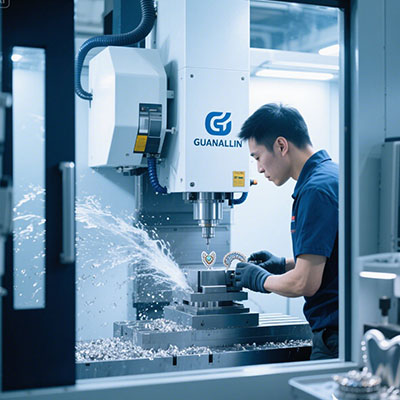
Buying a 3 axis cnc turning machine for precision work is not just about comparing price tags. The real challenge is matching axis configuration, thermal behavior, and tooling strategy to your actual part tolerance. This guide cuts through the noise.
What Makes a 3 Axis CNC Lathe “Precision-Grade”?
A standard 3-axis lathe adds a C-axis to the usual X and Z motions. That C-axis lets the spindle index and interpolate. With live tooling, you can drill off-center holes or mill flats without a second setup [citation:5]. But axis count alone does not guarantee precision.
What matters is how the machine holds tolerance over a full shift. Positioning accuracy on a well-built 3-axis turning center typically lands around ±0.010 mm, with repeatability near ±0.005 mm [citation:9]. Those numbers mean little if thermal drift eats them alive by lunchtime.
We tell buyers to look beyond the spec sheet. Ask for a warm-up test report. Run a test cut after four hours of continuous spindle load. That is where bargain machines reveal themselves.
Project A vs Project B: A Real Buying Comparison
Two shops, same budget range, different outcomes. The table below compares what actually happened.
| Factor | Project A (Job Shop, 12 Parts/Week) | Project B (Tier-2 Auto Supplier, 800 Parts/Week) |
|---|---|---|
| Machine chosen | 3-axis lathe with C-axis, 8-station turret | 3-axis turning center with live tooling, 12-station |
| Quoted positioning accuracy | ±0.010 mm | ±0.008 mm |
| Actual scrap rate (first month) | 4.2% | 0.9% |
| Root cause of scrap | Thermal drift after 2 hours | None significant after warm-up protocol |
| Coolant strategy | Flood, manual adjustment | High-pressure (70 bar) targeted delivery |
| Tool wear compensation | Manual offset entry | Automatic wear compensation active |
Project A saved roughly $8,000 on purchase price. It lost more than that in scrapped stainless parts within six weeks. The difference was not the iron. It was the thermal management and coolant delivery [citation:6].
A Step-by-Step Buying Workflow That Actually Works
Here is the process we walk clients through. Skip steps and you will likely regret it.
Step 1: Define Your Tolerance Window First
Write down the tightest true position, roundness, and surface finish your parts demand. Not the average. The worst case. A machine that holds ±0.015 mm on aluminum may struggle at ±0.008 mm on 304 stainless.
Step 2: Demand a Warm-Up Cut Report
Ask the builder to run a 20-part test batch. Record dimensions at part 1, part 10, and part 20. If the drift exceeds 30% of your tolerance band, the machine needs thermal compensation you may not want to manage.
Step 3: Verify C-Axis Indexing Accuracy, Not Just Travel
The C-axis is only useful if it repeats. Check the backlash and indexing repeatability. A sloppy C-axis turns your “mill-turn” into a scrap generator. Confirm the control supports simultaneous X-C interpolation if your parts need contour milling [citation:10].
Step 4: Audit the Coolant and Chip Evacuation Path
Precision turning generates heat. If chips recirculate into the cutting zone, thermal stability vanishes. Look for high-pressure coolant readiness and a chip conveyor designed for your material. Aluminum stringers and stainless birds-nests demand different solutions.
Step 5: Confirm Tooling Interface and Compensation Logic
You need a control that accepts tool wear offsets easily and preferably automatically. Manual offset entry every 20 parts is a recipe for human error. Ask for a live demo of the wear compensation screen.
⚠ Attention: Three Buying Mistakes That Kill Precision
Mistake 1: Treating “3-axis” as a complete description. A 3-axis lathe with X/Z/C is not the same as a 3-axis mill with X/Y/Z. On a lathe, the third axis is rotary. If you need Y-axis travel for off-center features, a 3-axis lathe will not do it [citation:10].
Mistake 2: Ignoring spindle thermal growth. The spindle grows as it heats. A machine that cuts perfectly at 9 a.m. may drift by 11 a.m. Look for spindle temperature monitoring or at least a builder who acknowledges the issue.
Mistake 3: Buying a “precision” machine without a precision foundation. Vibration from a nearby press or an uneven floor will ruin your best efforts. Isolate the machine. It costs less than the scrap you will otherwise generate.
Why Active Tooling Changes the Precision Game
Active tooling on a 3-axis turning machine lets the tool adjust in real time. A 2025 study on complex component manufacturing found that live tooling with real-time parameter adjustment improved dimensional accuracy and cut production time compared to static tooling setups .
The takeaway for buyers is simple. If your part has milled features and turned diameters with tight relationships, active tooling reduces the number of setups. Fewer setups mean fewer chances for datum shift errors.
We saw this firsthand in a 2025 project involving hydraulic manifold bodies. A supplier switched from a static-tool 3-axis lathe to a live-tool configuration. The concentricity callout between the turned bore and cross-drilled port improved from 0.025 mm to 0.012 mm. No other change was made.
The Precision Buying Checklist
Use this before you sign a purchase order.
- ☐ Tolerance window documented for your tightest part feature
- ☐ Warm-up test data reviewed (dimensions at part 1, 10, 20)
- ☐ C-axis indexing repeatability verified with a test cut
- ☐ Coolant pressure and delivery location confirmed for your material
- ☐ Tool wear compensation workflow demonstrated
- ☐ Machine foundation and vibration isolation plan in place
- ☐ Spindle thermal behavior discussed with the builder
- ☐ Live tooling capability matched to your milling/drilling needs
- ☐ Post-sale application support confirmed in writing
Questions Buyers Actually Search For
What is the difference between a 3-axis and 4-axis CNC lathe?
A 3-axis lathe typically has X, Z, and C axes. The C-axis controls spindle rotation for indexing and live tooling. A 4-axis lathe adds either a second turret or a Y-axis for off-center machining [citation:10]. If your parts need true Y-axis milling, do not buy a 3-axis machine.
Can a 3-axis CNC turning machine hold ±0.005 mm tolerance?
Some can, under ideal conditions. A Mazak Multiplex-class machine with proper thermal control can reach ±0.0005 inches (±0.0127 mm) in production [citation:4]. For ±0.005 mm, you need tight thermal management, rigid tooling, and a stable environment. Expect to pay significantly more.
How much does a precision 3-axis CNC turning machine cost?
Entry-level machines from Asian builders start around $23,000 to $55,000 depending on size and live tooling [citation:12][citation:7]. European or Japanese precision-focused models cost two to three times more. The price gap buys thermal stability and long-term accuracy retention.
What LSI factors most affect 3-axis turning precision?
Spindle runout, ballscrew backlash, thermal growth, coolant delivery, and tool holder rigidity. All five must be managed. A weakness in any one caps your achievable tolerance.
Final Word on Precision Buying
The 3 axis cnc turning machine market is crowded. Every builder claims precision. Few prove it under production conditions. Bring a test part. Ask for thermal data. Watch the machine cut for two hours, not twenty minutes.
That approach filters out the pretenders. The machine that survives your scrutiny is the one worth buying.