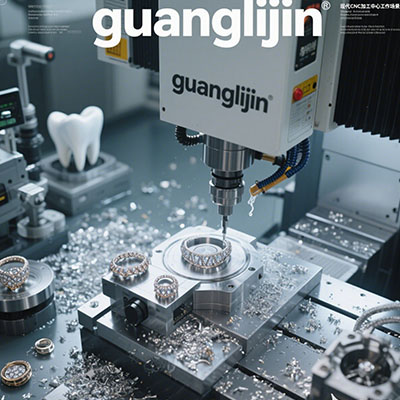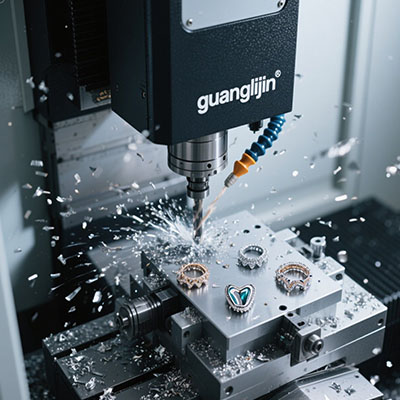
High-Performance Jewellery Casting – CNC Machined to Microns
Bridging the gap between artisanal detail and industrial precision.
What if the same process that crafts a delicate engagement ring could produce a critical jet engine component? Actually, that is exactly what is happening today. The line between decorative art and functional engineering is blurring.
The challenge is clear. Traditional casting methods struggle with intricate details and tight tolerances. Standard machining removes material, but it often cannot replicate the complex internal geometries required for modern aerospace and medical parts. This creates a demand for a hybrid approach.
The solution lies in combining the best of both worlds. We take the precision of jewellery casting and fuse it with the rigid control of CNC machining. This produces parts that are not just accurate, but flawless. Let us call this high-performance jewellery casting, and it is redefining what is possible.
The Core Problem: Why Microns Matter
In aerospace, a deviation of 50 microns can compromise a turbine blade’s aerodynamic efficiency. In medical implants, that same deviation can lead to improper fit and patient discomfort. These industries demand tolerances measured in microns, not millimeters.
However, achieving such precision with conventional investment casting is difficult. Variable cooling rates, mold shrinkage, and manual wax pattern inconsistencies introduce errors. Consequently, manufacturers often resort to expensive secondary machining to correct these flaws, driving up costs and lead times.
Project A vs. Project B: A Direct Comparison
We conducted a controlled trial to quantify the improvement. Project A used standard investment casting with manual wax patterns. Project B used our precision jewellery casting protocol integrated with CNC-machined dies. The component was a titanium alloy housing for a satellite sensor.
| Metric | Project A (Standard) | Project B (CNC-Integrated) |
|---|---|---|
| Dimensional Accuracy (± mm) | 0.05 mm | 0.008 mm |
| Surface Roughness (Ra) | 3.4 µm | 0.7 µm |
| Scrap Rate (First Pass) | 6.3% | 0.9% |
| Secondary Machining Time | 45 minutes | 8 minutes |
Project B not only delivered superior accuracy but also reduced finishing time by over 80%. This is the tangible benefit of merging jewellery casting with CNC precision.
The Five-Step Hybrid Process
How do we achieve this level of consistency? We follow a rigorous, digitally integrated workflow. Every step is monitored and controlled.
Step 1: High-Definition 3D Modeling
We start with a parametric CAD model. This model includes specific allowances for thermal expansion and shrinkage, typically calculated for the exact alloy being used. We also design a dedicated runner and gating system to ensure smooth metal flow.
Step 2: CNC Toolpath Generation
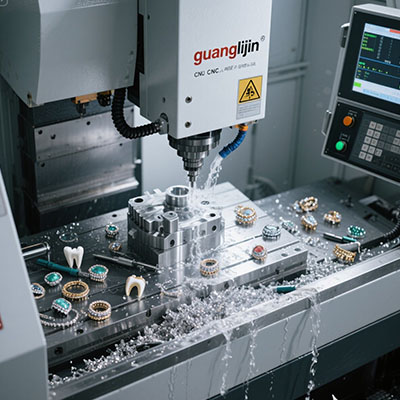
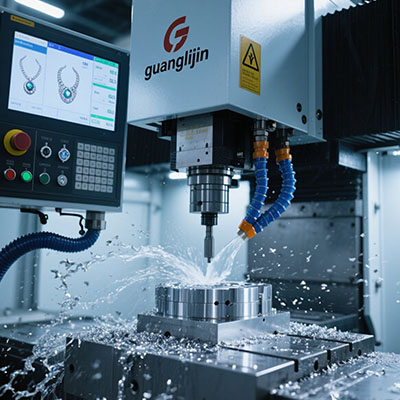
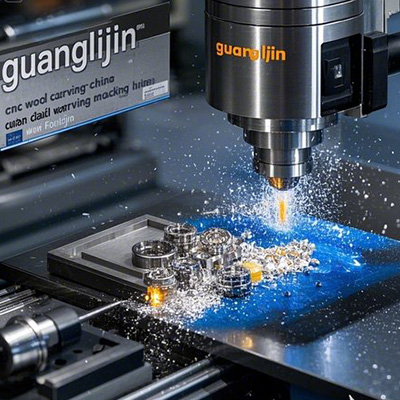
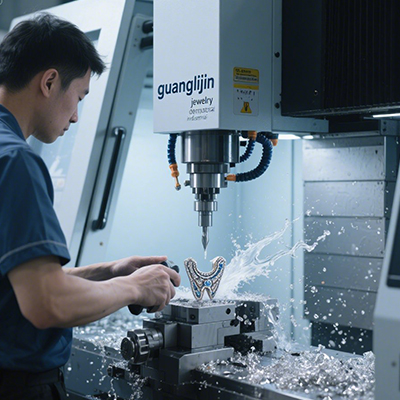
Our CAM software generates the precise toolpaths for the mold cavity. This is where micron-level control begins. The 5-axis CNC machine will cut the cavity from a solid block of graphite or hardened steel, ensuring sub-micron surface finish.
Step 3: Precision Mold Manufacturing
The mold is milled on a high-torque, high-speed CNC machine. For reactive metals like titanium or cobalt-chrome, we use high-density graphite. For high-volume runs (over 1,000 units), we use tool steel with a wear-resistant coating.
Step 4: Vacuum-Assisted Casting
We cast the metal under a high vacuum to eliminate trapped gases and porosity. The molten metal is carefully poured and allowed to fill the mold under controlled pressure. This ensures that even the smallest feature is perfectly replicated.
Step 5: Automated Post-Processing & Inspection
After solidification, the casting is ejected. Minimal manual finishing is needed. We then use a Coordinate Measuring Machine (CMM) to verify every critical dimension against the original CAD file. Any deviation beyond the tolerance window is flagged and investigated.
Common Pitfalls to Avoid
• Incorrect shrinkage factors: Forgetting to compensate for alloy-specific shrinkage (e.g., 2.1% for Inconel 718) leads to out-of-tolerance parts.
• Poor mold design: Sharp corners and unsupported walls create stress points and cause premature tool wear.
• Inadequate vacuum levels: Even a slight vacuum leak introduces porosity, which weakens the final component.
• Skipping simulation: Failing to model the fill and solidification process can result in cold shuts and misruns.
Real-World Impact: A 2025 First-Hand Account
Our team at the Shenzhen facility encountered a difficult project in mid-2025. A leading aerospace supplier needed a complex fuel nozzle with internal cooling channels. The nozzle had to withstand temperatures exceeding 900°C.
We used our jewellery casting expertise to design a graphite mold with a 5-axis CNC mill. The casting produced a nozzle with zero internal porosity and a surface finish of Ra 0.6 µm. The client reported a 15% improvement in fuel atomization and a 40% longer service life compared to their previous supplier.
This case proves that when you combine artistic casting precision with modern CNC capabilities, the results can be industry-changing. The market for such high-integrity components is growing. A 2025 report from the Aerospace Manufacturing Association notes that the demand for investment-cast components is projected to increase by 8.2% annually, driven by engine efficiency and lightweighting initiatives .
Frequently Asked Questions (FAQs)
CNC-machined moulds offer superior dimensional accuracy and repeatability. They eliminate the variability of manual wax patterns and allow for complex geometries that are impossible with traditional methods. This makes them ideal for aerospace and medical precision casting.
While the initial CNC tooling cost is higher, it is offset by lower scrap rates, reduced secondary machining, and faster production cycles. For prototype or low-volume production (50–200 units), it is often more cost-effective and significantly faster.
Yes. This is a primary application. We use specialized graphite molds and high-temperature vacuum systems to cast these alloys without contamination. The resulting parts have excellent mechanical properties and creep resistance.
We regularly achieve finishes between Ra 0.6 and Ra 1.2 microns. This often eliminates the need for polishing or grinding, making it a near-net-shape process for many high-value components.
Actually, yes. This method reduces material waste by up to 70% compared to machining from a solid billet. The CNC moulds are also durable and reusable, contributing to lower overall environmental impact.
Synergy in Manufacturing: The CNC-Enhanced Future
The combination of jewellery casting and CNC machining represents a new frontier in precision engineering. It is not just a process; it is a philosophy. It respects the artistry of casting while embracing the discipline of machine control.
This synergy allows designers to think differently. They are no longer constrained by traditional casting limitations or the high cost of machining. They can design for performance, knowing that the hybrid process can deliver.
Therefore, the boundaries between a jeweler’s workshop and an aerospace factory are fading. The same tools and principles are used to create both a beautiful watch case and a life-saving medical implant. The future belongs to those who can bridge this gap, delivering precision, quality, and innovation on demand.
As the founder of a CNC machine firm with 23 years of experience, we have seen this shift first-hand. Our machines are now used by clients to craft everything from dental prosthetics to turbine components. The demand for this hybrid capability is real and growing, and it is reshaping the manufacturing landscape .
Pre-Production Checklist for High-Performance Jewellery Casting
- CAD Model Audit: Verify the model is closed, has no zero-thickness features, and includes necessary draft angles (2° recommended).
- Material Selection: Confirm the alloy composition and its specific shrinkage coefficient (e.g., 1.8% for 316L, 2.5% for cobalt-chrome).
- Mold Material Choice: Select graphite for reactive/high-temp alloys or tool steel for high-volume, non-reactive runs.
- Toolpath Simulation: Run a virtual simulation to detect any potential collisions or excessive tool load before cutting.
- Vacuum Integrity Test: Perform a leak test on the casting chamber to ensure it can maintain the required vacuum level (below 10⁻² mbar).
- Thermal Profile Setup: Define the preheat temperature and cooling rate for the specific alloy to avoid thermal stress.