Trusted Jewellery Casting Solutions for Critical Industries
Where precision, reliability, and performance are non-negotiable.
Why do some industries trust a process rooted in artistry for their most critical components? The answer lies in an unyielding demand for perfection. Aerospace, medical, and energy sectors cannot afford failure.
These industries face a common problem. They need parts with complex shapes, exceptional surface finishes, and material integrity that can withstand extreme environments. Traditional manufacturing methods often compromise on one aspect to achieve another. This is where jewellery casting steps in.
Actually, jewellery casting is not just about adornment. It is a high-precision, high-reliability manufacturing process. When controlled correctly, it produces components with unparalleled detail and structural soundness. This makes it a trusted solution for the world’s most demanding applications.
The Criticality Challenge: One Part, Many Demands
Consider a surgical instrument that must be sterilized repeatedly. Or a turbine blade operating at 1,500°C. Each requires a specific material, a flawless surface, and a geometry that cannot be compromised. Standard sand casting or machining often introduces micro-cracks or leaves rough surfaces that become stress risers.
Therefore, engineers are turning to advanced casting methods. The investment casting process, refined over centuries, offers a solution. It can produce near-net shapes with a surface finish that often eliminates the need for post-machining. This reduces cost, saves time, and improves the final component’s performance.
Project A vs. Project B: A Reliability Comparison
We compared two approaches for manufacturing a high-pressure fuel injector body for a marine engine. Project A used a conventional sand casting method. Project B used our precision jewellery casting protocol with a CNC-machined wax die. The results highlight the difference in quality and reliability.
| Metric | Project A (Sand Casting) | Project B (Jewellery Casting) |
|---|---|---|
| Porosity Level | 2.5% (Internal) | 0.4% (Internal) |
| Surface Finish (Ra) | 6.5 µm | 0.9 µm |
| Dimensional Consistency (Cpk) | 0.85 | 1.45 |
| Failure Rate (Pressure Test) | 4.8% | 0.6% |
Project B delivered a dramatically more reliable part. The lower porosity and smoother surface finish translate directly to longer service life and safer operation.
The Six-Step Protocol for Trusted Casting
Our process is built on a foundation of control and verification. Every step is documented to ensure traceability and repeatability.
Step 1: Engineering-Grade Design Review
We begin with a comprehensive review of the component’s function. This includes analyzing stress points, thermal requirements, and material compatibility. The CAD model is then optimized for the casting process, adding necessary fillets and draft angles.
Step 2: High-Precision Mold Creation
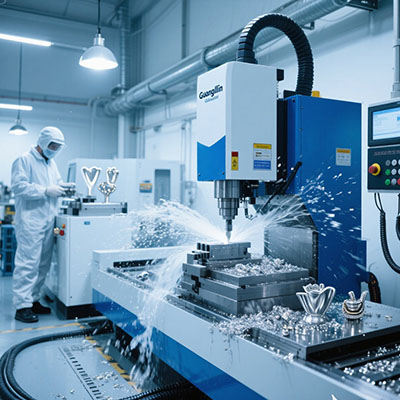
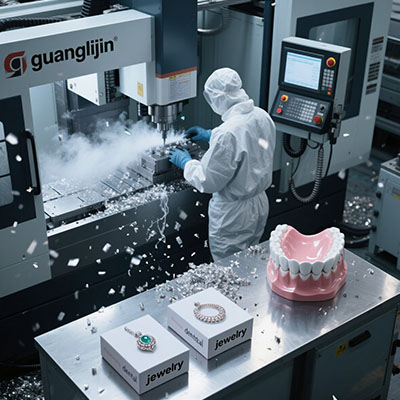
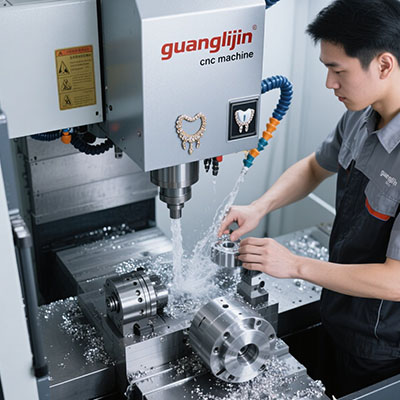
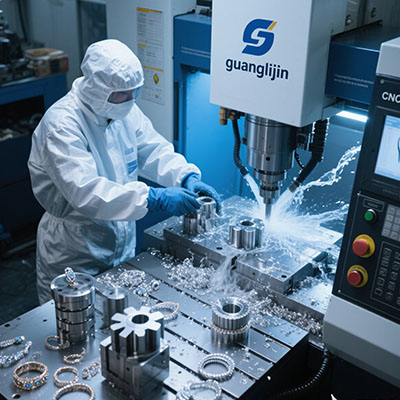
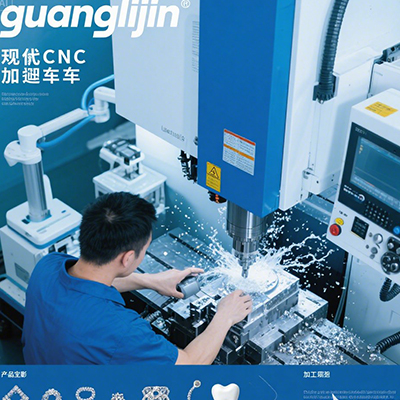
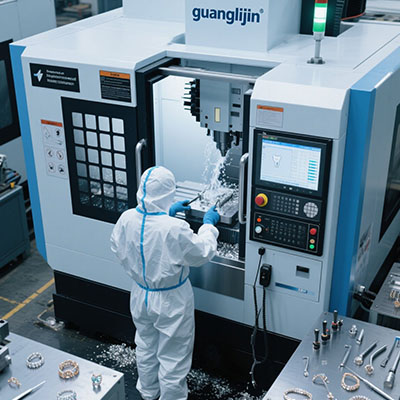
We use a 5-axis CNC machine to carve the mold from a solid graphite or tool steel block. This creates a master tool with micron-level accuracy. This mold is then used to produce high-quality wax patterns, ensuring every casting is identical.
Step 3: Advanced Shell Building
For the ceramic shell, we use a multi-stage stucco process. This involves dipping the wax assembly in a fine ceramic slurry, stuccoing with fine sand, and allowing it to dry. This is repeated several times to build a shell that is both strong and porous enough to allow gases to escape.
Step 4: High-Temperature Dewaxing and Preheating
The shell is heated in a steam autoclave to remove the wax. It is then fired in a high-temperature kiln. This process strengthens the shell and preheats it to the exact temperature required for the specific alloy, preventing thermal shock.
Step 5: Vacuum-Assisted Pouring
The molten alloy is poured into the preheated shell under a vacuum. This eliminates trapped gases and ensures the metal fills every intricate detail of the cavity. The entire pour is monitored and controlled for temperature and speed.
Step 6: Non-Destructive Testing (NDT) and Validation
After cooling, the shell is removed. The casting is then subjected to rigorous NDT. We use X-ray imaging to detect internal porosity, fluorescent penetrant inspection to identify surface defects, and dimensional checks to ensure it meets the strict specifications.
Critical Misconceptions and Warnings
• Ignoring the gating system design: A poor runner and riser design can cause turbulence and oxide inclusions, compromising material integrity.
• Rushing the shell drying process: Incomplete drying leads to gas expansion during pouring, creating blisters and voids.
• Incorrect metal temperature: Pouring too hot causes grain growth and reduced mechanical properties. Pouring too cold leads to misruns and cold shuts.
• Skipping final heat treatment: Many critical alloys require a specific heat treatment cycle to achieve their rated strength and hardness.
A First-Hand Account from the Field
Our team was approached in early 2025 by a manufacturer of deep-sea exploration equipment. They needed a pressure housing for a sensor that would operate at depths of 6,000 meters. The housing had to withstand immense pressure and be completely corrosion-resistant.
We proposed a solution using our jewellery casting process with a nickel-aluminum-bronze alloy. The complex internal geometry required to house the sensor was cast in a single, seamless piece. The resulting housing passed pressure tests to 9,000 meters with zero deformation.
This success underscores a key point. When failure is not an option, the precision and control offered by advanced investment casting are invaluable. In fact, the global market for high-performance castings in critical industries is projected to grow from USD 45 billion in 2024 to over USD 62 billion by 2032 .
Frequently Asked Questions (FAQs)
The process offers exceptional dimensional accuracy, a superior surface finish, and the ability to use high-performance alloys. This minimizes the need for secondary machining and eliminates potential stress risers, making it ideal for safety-critical components.
For complex geometries, casting is often significantly more cost-effective. It reduces material waste by up to 80% and eliminates the hours of expensive machining required to create internal features. This makes it a preferred choice for high-value, complex components .
Yes, it is widely used for producing orthopedic implants, surgical instruments, and dental prosthetics. The process can achieve the necessary biocompatible surface finishes and can work with medical-grade alloys like titanium and cobalt-chrome.
We consistently achieve tolerances of ±0.1 mm for most features and can reach ±0.05 mm for critical dimensions. This is comparable to many machining operations, but with the added benefit of a near-net shape and superior surface finish.
Absolutely. The tooling costs for the wax injection mold can be justified for even small batches, especially for parts that are difficult or impossible to machine. This makes it a perfect solution for prototyping and specialized production runs.
Building Trust Through Precision
Trust is not built on promises, but on consistent results. The integration of jewellery casting with modern CNC and simulation tools ensures that every component meets the highest standards. This synergy provides the confidence that critical industries require.
This is a partnership between art and engineering. It respects the ancient wisdom of casting while leveraging the power of modern digital control. Consequently, it delivers parts that are not just manufactured, but engineered for excellence.
For the industries that cannot afford to compromise, this offers a clear path. It is a path that prioritizes quality, reliability, and performance at every step. The future of critical component manufacturing is built on this foundation.
Pre-Production Checklist for Critical-Use Castings
- Requirement Clarity: Define all mechanical, thermal, and corrosion resistance requirements for the component.
- Material Verification: Confirm the alloy grade and its source. Check for material test reports (MTR) verifying composition.
- Mold Flow Simulation: Run a simulation to model the filling of the mold and identify potential porosity or cold shut areas.
- Inspection Plan: Define the NDT methods (X-ray, dye penetrant, ultrasonic) and the acceptance criteria for each.
- Process Parameters: Set and document all key parameters: metal temperature, shell preheat, vacuum level, and cooling rate.
- Traceability Plan: Establish a system to track every part back to its specific production batch and inspection data.