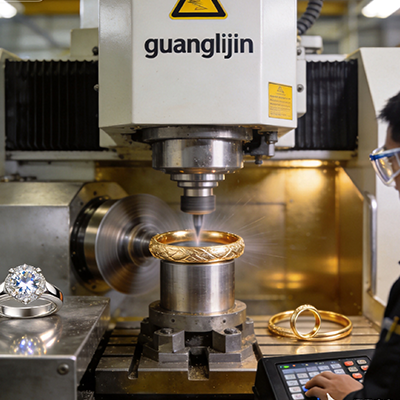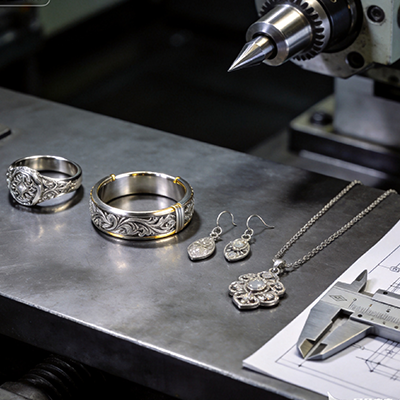
Complex parts used to force a choice. You could accept multiple setups and the error they bring. Or you could reject the job. Advanced multi-axis machining removes that choice. The cnc machine multi axis platform turns five-sided work into a single continuous process. That shift changes cost, quality, and what a shop can bid on.
Why Multi-Axis Machining Solves the Setup Problem
Every setup costs money and accuracy. The part leaves the fixture. The operator re-clamps it. A new datum reference enters the process. Error accumulates.
Multi-axis platforms attack this problem directly. Rotary and tilt axes reposition the workpiece or the tool without releasing the part. Four-axis machining adds rotation around one axis. Five-axis adds tilt. Platforms with more axes add redundant motion for reach and compensation.
Tooling data confirms the payoff. Multi-axis machining routinely achieves tolerances of ±0.005 mm, and some aerospace suppliers report ±0.0005 inch on parts up to 48 inches . That accuracy depends on thermal control and a validated post-processor. Still, the mechanism is clear: fewer setups mean fewer error sources.
How the Extra Axes Change Cutting Mechanics
Axis count alone says little. A machine may count a bar feeder or a sub-spindle indexer as an axis. Those axes position. They do not cut at the same time. The practical question is how many axes interpolate during a contouring move.
True simultaneous motion changes the stiffness loop. A B-axis head mounted far from the part creates overhang. Overhang invites chatter. A compact design with the rotary axis directly under the part keeps the setup stiff. That stiffness matters for thin-wall work. Titanium Ti-6Al-4V deflects under cutting force. A stiff loop reduces that deflection.
Thermal behavior follows the same logic. More rotary axes mean more servos and more friction near the cutting zone. On long aluminum runs, growth in the tenths of a millimeter range is possible without a warm-up cycle. Expert shops run a 15 to 30 minute warm-up before the first tight cut.
Project Comparison: 3-Axis vs. Advanced Multi-Axis Production
| Production Factor | Project A: 3-Axis Machining | Project B: Multi-Axis Machining |
|---|---|---|
| Typical part | Aluminum mounting plate | Aluminum hydraulic manifold with angled ports |
| Setup count | 4 | 1 |
| Datum references | Multiple, with regression risk | Single datum throughout |
| Angled feature access | Requires re-fixturing | Simultaneous rotary motion |
| Cycle time | Longer, with handling between ops | Shorter, continuous cutting |
| Tolerance achieved | ±0.02 mm typical | ±0.005 mm or tighter |
| Scrap risk | Higher on final features | Lower, because features finish in one pass |
Project B wins on quality and throughput. Project A wins on simplicity and machine cost. The skilled shop knows which project belongs on which platform. Sending a simple plate to a multi-axis center wastes machine time and programming hours. Sending a complex manifold to a 3-axis mill invites tolerance stack-up.
⚠ Attention: Where Advanced Multi-Axis Work Fails
⚠ Attention: The post-processor is the silent failure point. A CAM system that cannot interpolate all axes simultaneously will produce a toolpath that looks correct on screen but drives the machine into a soft limit mid-cut. We saw this in a 2025 project involving a thin-walled titanium housing. The simulation passed. The real cut failed. The post-processor treated two redundant axes as static.
⚠ Attention: Chip evacuation becomes nonlinear with more axes. In deep pocket work approached from multiple angles, gravity does not clear the chips. Coolant through the spindle helps. But the programmer must plan entry and exit vectors with chip flow in mind.
⚠ Attention: Axis count does not equal capability. A buyer who assumes eight axes means eight simultaneous cutting motions will be disappointed. Ask how many axes interpolate during a contouring move. Ask for a demonstration, not a brochure.
Step-by-Step Guide: Setting Up Advanced Multi-Axis Machining
Step 1: Map every feature to an axis requirement. List each surface, hole, and contour. Note which features require angular access beyond simple rotation. If fewer than a quarter of features demand the extra axes, a simpler platform may suffice.
Step 2: Validate the post-processor with full collision simulation. Run the complete toolpath with all drives active. Check stroke limits, rotary travel, and interference between the head, fixture, and part. A simulation that skips redundant axes is not a simulation.
Step 3: Design workholding that clears the rotary envelope. Low-profile modular fixturing keeps the part accessible. Simulate the full tilt range with the workpiece model loaded. A fixture that blocks axis travel defeats the machine’s purpose.
Step 4: Establish thermal equilibrium before the first tight cut. Run the spindle warm-up cycle. Measure a reference feature. Run the cycle again. If the measurement moves, the machine is not ready for tight tolerances.
Step 5: Verify with independent metrology. The machine probe is a production tool, not an inspection authority. Run the first article on a CMM. Compare the results to the digital model. If deviation exceeds half the tolerance band, stop and investigate before production.
Frequently Asked Questions About Multi-Axis CNC Machines
Q: What is the difference between 4-axis and 5-axis CNC machining?
A: A 4-axis machine rotates the workpiece around one axis, usually the X axis. A 5-axis machine adds tilt, allowing the tool to approach the part from almost any angle. Five-axis work enables contoured surfaces and angled features in one setup. Four-axis work suits cylindrical parts with features on the circumference.
Q: How many axes does a typical multi-axis CNC machine have?
A: Most production multi-axis machines carry 4 or 5 axes. Advanced platforms reach 9 or 12 axes by adding redundant linear and rotary drives. The extra axes provide reach and compensation, not just additional cutting directions .
Q: Can multi-axis CNC machines hold tight tolerances on titanium parts?
A: Yes, with thermal control and a validated post-processor. Multi-axis platforms routinely achieve ±0.005 mm on difficult alloys, and some suppliers report ±0.0005 inch on parts up to 48 inches . The qualifier is thermal control. A machine rated in a lab will not hold that tolerance in an uncontrolled shop.
Q: What industries use multi-axis CNC machining besides aerospace?
A: Medical implant manufacturing, oil and gas valve components, and high-end automotive prototyping all use multi-axis capability. The common thread is complex geometry with tight tolerances that reward single-setup completion .
Checklist: Advanced Multi-Axis Machining Readiness
☐ Feature-to-axis mapping completed — extra axes justified by datum consolidation or angular access
☐ Post-processor validated with full collision simulation
☐ Workholding designed to clear the complete rotary envelope
☐ Thermal warm-up cycle documented and followed before first article
☐ CMM inspection plan approved and independent of machine probe
☐ Chip evacuation strategy reviewed for multi-angle deep pocket work
☐ Operator trained on multi-axis coordinate systems and recovery procedures
☐ Rotary axis calibration and linear scale verification scheduled
☐ First article deviation reviewed against tolerance band before production release
Advanced multi-axis machining is not a purchase decision. It is a process decision. The machine is a tool. The expertise is knowing when to use it, how to program it, and when to leave it idle while a simpler platform runs the simple work. That judgment separates the shop that owns a multi-axis machine from the shop that profits from one.