A quote in two hours. A part in five days. That’s the pitch many online platforms make for cnc machining 5 axis work. Reality is messier. Fast quotes often hide engineering review time. Fast parts sometimes skip critical inspection steps. This guide separates genuine speed from marketing speed—and shows you how to get both velocity and quality.
What “Fast Turnaround” Actually Means in Five-Axis Sourcing
Turnaround is not one number. It splits into quote turnaround, programming lead time, machining cycle, and inspection release. A platform that returns a price in 30 minutes may still take three days to program a complex simultaneous toolpath. Therefore, ask for a breakdown, not a single figure.
Industry benchmarks show that RFQ-to-quote cycles for custom machined parts average 2–5 business days when human review is involved. Automated quoting tools compress that to minutes for simple geometry. Complex five-axis parts rarely qualify for full automation. Research from the manufacturing digitization sector indicates that roughly 60% of five-axis RFQs still require manual programmer review before a firm price is issued (Source: industry digitization survey, 2024). Speed claims deserve scrutiny.
Quote Speed vs. Production Speed: Two Different Clocks
You can get a fast price. You cannot always get a fast part. Programming simultaneous five-axis motion takes time. Collision simulation, tool-axis vector planning, and post-processor verification all consume hours. A shop that promises a three-day turnaround on a twisted impeller is either using indexed machining or cutting corners on verification.
Specific to platforms offering instant pricing, the bottleneck shifts downstream. The quote arrives quickly. Then the programmer discovers an undercut the automated system missed. The lead time stretches. Your project loses a week. Fast quotes feel good. Reliable quotes save money.
Where Turnaround Time Really Goes: A Comparative View
| Stage | Project A: Simple Bracket (3+2) | Project B: Complex Housing (Simultaneous) |
|---|---|---|
| Quote generation | Under 1 hour (automated) | 4–8 hours (manual review) |
| CAM programming | 2–4 hours | 2–4 days |
| Fixture design | Minimal, standard vise | 1–2 days custom workholding |
| First-article inspection | Same day | 1–2 days CMM programming + run |
| Realistic total lead time | 3–5 business days | 10–15 business days |
Project A qualifies for fast turnaround because the geometry allows indexed machining and simple fixturing. Project B does not, regardless of what a quote page advertises. Understanding this distinction prevents disappointment. It also helps you negotiate realistic deadlines with internal stakeholders.
A Step-by-Step Guide to Getting Fast, Accurate Five-Axis Quotes
- Upload a complete 3D model and a 2D drawing with tolerances. Missing GD&T forces the quoting engineer to guess. Guessing adds 24–48 hours. Include material spec, surface finish requirements, and any critical-to-function dimensions.
- State whether simultaneous motion is required. Write it explicitly: “Surfaces X and Y require simultaneous 5-axis contouring.” This single line routes your RFQ to the right programmer and prevents re-quoting later.
- Provide a target lead time and ask for a breakdown. Request quote time, programming time, and machining time separately. Suppliers who cannot break it down likely have not planned the job.
- Offer a prototype quantity alongside production volume. Shops prioritize first articles differently from batch runs. A one-piece prototype order with a clear path to 500 units gets faster attention than a standalone sample request.
- Confirm inspection release criteria upfront. A part is not “done” when the spindle stops. Ask when the CMM report will be available and whether it blocks shipment. Shops that ship before inspection are fast—and risky.
Why Some Shops Quote Fast but Deliver Slow
Speed at the quoting stage often comes from automation that skips feasibility checks. The software sees a CAD file, estimates volume removal, and applies a rate. It does not see the thin wall that will chatter. It does not see the deep pocket that requires a long-reach tool with severe deflection risk.
We team found in a 2025 medical implant project that one platform quoted a five-axis titanium component in 45 minutes. The price was 30% below three competitors. The part arrived three weeks late and failed CMM inspection on two critical bores. The root cause: the automated quote assumed indexed machining, but the part required simultaneous contouring. The shop re-quoted mid-production. The “fast” quote cost six weeks of total delay.
Therefore, treat a suspiciously fast quote as a signal to ask harder questions. Request the programmer’s name. Ask how many simultaneous five-axis jobs they run per month. A shop that does this daily will answer without hesitation.
Design Choices That Accelerate Five-Axis Quotes and Production
Standardize your corner radii. Use a single radius value across all internal corners when possible. This lets the programmer use one tool for multiple features, cutting programming time and cycle time together. A shop that sees consistent radii can quote faster because the toolpath strategy is predictable.
Avoid deep, narrow slots. A slot narrower than 6 mm and deeper than 12 mm forces micro-tooling and pecking cycles. Those add hours to the machine schedule. Widen the slot or reduce depth. Your quote will drop and your lead time will shrink.
Provide a datum scheme that references features machined in the first setup. Five-axis parts that require re-datuming between operations add inspection time and risk. A single-setup datum scheme lets the shop verify all critical features on one CMM run. That saves a full day on many projects.
Quality Signals for Fast Five-Axis Suppliers
Ask for their CAM software and post-processor validation process. Shops running Mastercam, PowerMill, or NX with verified five-axis posts have already invested in speed infrastructure. The software does not guarantee quality, but the investment signals seriousness.
Request a sample inspection report from a comparable part. Look for CMM results on features machined from different tool orientations. True simultaneous cnc machining 5 axis introduces kinematic errors that only appear when you measure across orientations. A shop that reports those measurements transparently is a shop you can trust with a deadline.
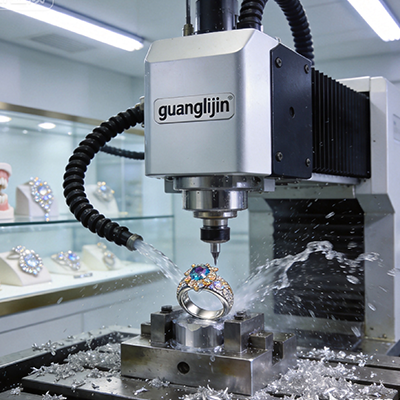
For buyers sourcing small precision components through online platforms, the same logic applies. Desktop five-axis systems with automated tool changers can turn quotes in hours, but the qualification questions remain: material experience, tool-axis strategy, and inspection discipline. Speed without those three pillars is just hurry.
Frequently Asked Questions
A: Automated platforms return prices in minutes for simple geometry. Complex simultaneous five-axis parts typically require 4–8 hours of manual review. Expect same-day quotes for standard materials and geometries; allow one business day for titanium or Inconel.
A: A realistic fast-track timeline for a simultaneous five-axis part with ±0.01 mm tolerances is 7–10 business days including first-article inspection. Anything shorter usually means indexed machining or skipped inspection steps.
A: Fast quotes often come from automated systems that skip feasibility review. Slower quotes involve a programmer checking tool access, collision risk, and fixture design. The slower quote is usually more accurate.
A: You can get an indicative price from a 3D model alone. A firm quote requires tolerances, material specification, and surface finish requirements. Supplying all three upfront eliminates back-and-forth and speeds up the final quote.
Final Pre-Order Checklist
- ✅ 3D model and 2D drawing with GD&T uploaded together
- ✅ Material, surface finish, and critical tolerances specified in writing
- ✅ Simultaneous five-axis requirement stated explicitly in RFQ
- ✅ Quote breakdown requested: programming time, machining time, fixture cost
- ✅ Prototype quantity included alongside production volume
- ✅ Inspection release criteria confirmed before order placement
- ✅ Supplier confirmed CMM capability for cross-orientation features
- ✅ Lead time validated against geometry complexity, not just platform claims