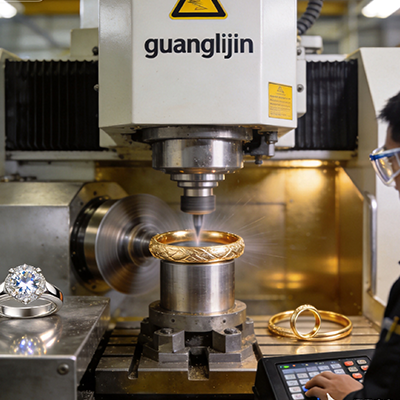
Complex geometry. Tight tolerances. One setup. That’s the promise of cnc machining 5 axis services you can order online. Yet the gap between a quote and a qualified part is wider than most buyers expect. This guide breaks down what actually matters when you source simultaneous five-axis work through a digital platform—and how to avoid the traps that drive cost and delay.
Why Five-Axis Online Isn’t Just “Three-Axis With Extra Axes”
A three-axis mill reaches features from the top. A five-axis machine tilts and rotates the tool or part while cutting, so the cutter approaches complex surfaces from angles that would otherwise require multiple setups. That distinction changes everything about part design, quoting, and quality risk.
The global installed base of five-axis machining centers has grown sharply, yet many online platforms list “5-axis” while primarily running 3+2 indexed work—where the rotary axes lock before cutting, then unlock to reposition. True simultaneous cnc machining 5 axis keeps all five axes in motion during the cut. Blisks, impellers, and orthopedic implants usually demand the latter[citation:5].
Indexed vs. Simultaneous: Know What You’re Buying
A 3+2 setup handles angled holes and multi-face parts well. It reduces clamping compared to a pure three-axis job. But free-form surfaces with continuous curvature require the tool to pivot smoothly along the path. If your part has twisted blades or organic contours, ask the supplier directly: “Is this simultaneous or indexed?” A vague answer is a red flag.
We team found in a 2025 aerospace bracket project that two vendors quoting “5-axis” delivered wildly different results. One used 3+2 with a ball-end tool; the other ran simultaneous tool-axis control. Surface finish on the fillet differed by a factor of three in Ra. The lesson: axis count on a spec sheet means little without motion strategy.
Cost Realities: What Drives Your Online Quote
Machine hour rates tell a partial story. A five-axis mill runs roughly $75 to $250+ per hour, versus $35 to $120 for three-axis equipment[citation:2]. That premium reflects capability, not just speed. But the total cost equation flips depending on part complexity and batch size.
Project A vs. Project B: A Comparative Breakdown
| Factor | Project A: Aluminum Manifold | Project B: Titanium Impeller |
|---|---|---|
| Geometry | Angled ports, flat mounting faces | Twisted blades, varying thickness |
| Axis strategy | 3+2 indexed | Simultaneous 5-axis |
| Setups required | 2 (vs. 4 on 3-axis) | 1 |
| Cycle time impact | 15–20% faster than 3-axis multi-setup | 40–50% faster than 3-axis with fixtures |
| Primary risk | Fixture interference on deep pockets | Tool deflection in thin blade sections |
| Typical online quote range | $85–$140/hr effective | $180–$260/hr effective |
Project A could run on a 3+2 machine and still deliver value. Project B cannot. Sending a manifold to a simultaneous-only shop often wastes money. Sending an impeller to a shop that only indexes guarantees scrapped parts or hand finishing that erases the tolerance advantage.
A Step-by-Step Guide to Ordering Custom Five-Axis Work Online
Digital sourcing compresses the quoting cycle but doesn’t remove engineering risk. Follow these steps to protect your project.
- Classify your geometry before uploading. Mark every surface that requires the tool to tilt while cutting. If the answer is “none,” a three-axis or 3+2 quote will save 30–50%. Be honest with yourself.
- Specify simultaneous capability in writing. Include a line in your RFQ: “This part requires simultaneous 5-axis contouring on surfaces X, Y, Z.” This filters out shops that only index.
- Send a representative sample first. For first-time suppliers, order one piece before committing to a batch. Inspect the critical surfaces with a profilometer or at minimum a visual comparator against the CAD model.
- Request the setup sheet and tool list. A qualified five-axis shop will show you which tools approach which features. If they cannot explain collision avoidance strategy for deep cavities, walk away.
- Verify inspection method. Ask for a CMM report on the first article. Five-axis parts often fail not at the machine but at inspection because datum schemes shift across rotated setups. Confirm the supplier uses the same datum reference frame you specified.
Design Choices That Make or Break Five-Axis Economics
Wall thickness matters more on five-axis work than on simple prismatic parts. Thin walls deflect under cutting force. Deflection shows up as chatter marks and dimensional drift. Keep metal walls at 0.8 mm or thicker, and maintain a height-to-thickness ratio near 3:1 when possible[citation:4].
Hole depth follows the same logic. A depth-to-diameter ratio beyond 3:1 on small holes invites drill breakage and poor chip evacuation. Blind holes need an extra 25% depth allowance for chip accumulation. Threads deeper than three times the diameter add cost with negligible strength gain.
Therefore, the most effective cost lever isn’t finding a cheaper hourly rate. It’s designing features that let the five-axis machine do what it does best: reach many faces in one setup without heroic tooling.
Quality Signals When Vetting an Online Five-Axis Supplier
Look beyond the instant quote button. Ask three questions: Which CAM software generates your toolpaths? How do you verify collision-free motion for deep cavities? Can you share a first-article inspection report from a comparable part?
Suppliers using Mastercam, PowerMill, or Hypermill typically have robust five-axis modules. The software matters less than the programmer’s experience, but a shop that invested in dedicated CAM tools is more likely to understand tool-axis vector control. Research on tool-axis optimization shows that intelligent vector planning can improve machining accuracy by over 20% and extend tool life by roughly 15% on complex surfaces[citation:3]. That’s not marketing—it’s the measurable gap between a competent programmer and an exceptional one.
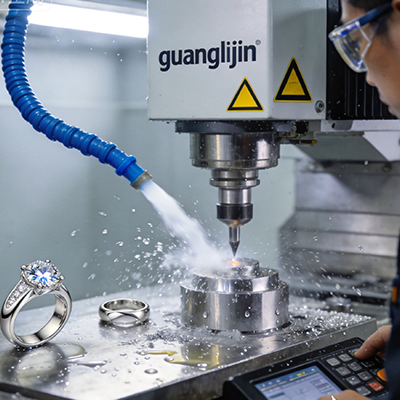
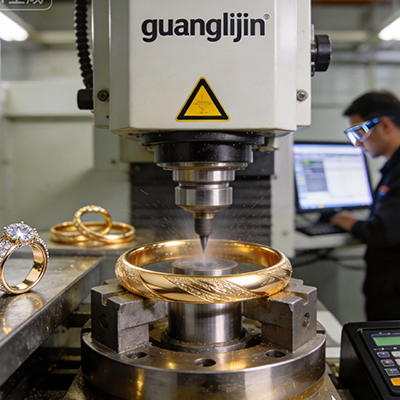
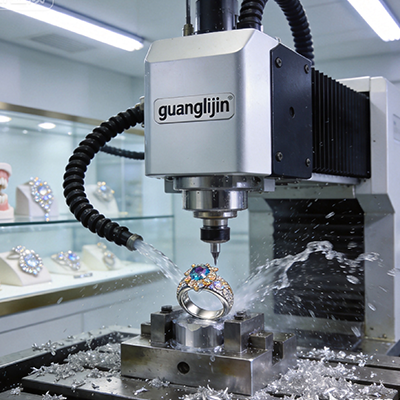
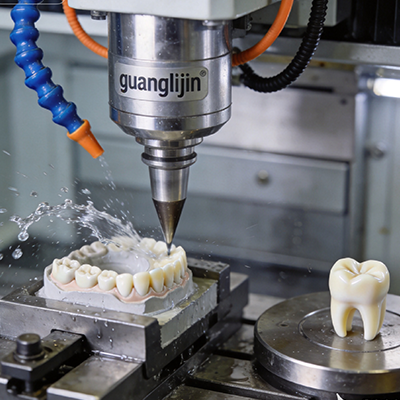
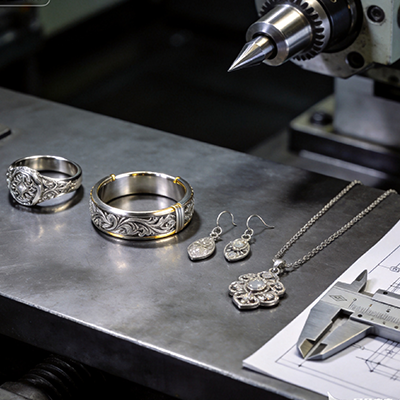
For buyers exploring cnc machining 5 axis for jewelry, dental, or small precision components, desktop five-axis platforms with sub-0.01 mm accuracy exist. These serve a different niche than large gantry machines, but the qualification questions remain identical: material expertise, tool-axis strategy, and inspection rigor.
Frequently Asked Questions
A: If any surface has continuous curvature that the tool must follow while tilting—such as impeller blades, turbine vanes, or complex molds—you need simultaneous motion. Parts with flat faces meeting at angles can use 3+2 indexed machining and cost significantly less.
A: A qualified shop can hold ±0.01 mm on critical features, with some reaching ±0.005 mm on small parts. But tolerance depends on material, feature size, and inspection method. Always specify tolerances only where functionally necessary—over-tolerancing drives up cost without adding value.
A: Five-axis machines cost more to buy, program, and maintain. Hourly rates run roughly double. However, for complex parts, five-axis often wins on total cost by eliminating multiple setups, reducing fixturing, and cutting cycle time. For simple prismatic parts, three-axis remains the economical choice.
A: Verify that the datum scheme matches your drawing. Check CMM results on features machined from different tool orientations—those are the areas most vulnerable to kinematic errors. Confirm surface finish (Ra) on curved surfaces, not just flat reference faces.
Final Pre-Order Checklist
- ✅ Geometry reviewed: simultaneous contouring surfaces identified and marked on drawing
- ✅ RFQ language explicitly states “simultaneous 5-axis” where required
- ✅ Internal corner radii ≥ 1.3× expected tool radius
- ✅ Wall thickness ≥ 0.8 mm (metal) with aspect ratio ≤ 3:1
- ✅ Hole depth-to-diameter ratio ≤ 3:1; blind holes have +25% depth allowance
- ✅ Supplier confirmed CMM inspection capability and will provide first-article report
- ✅ Prototype order placed before production batch
- ✅ Datum scheme communicated and agreed upon in writing