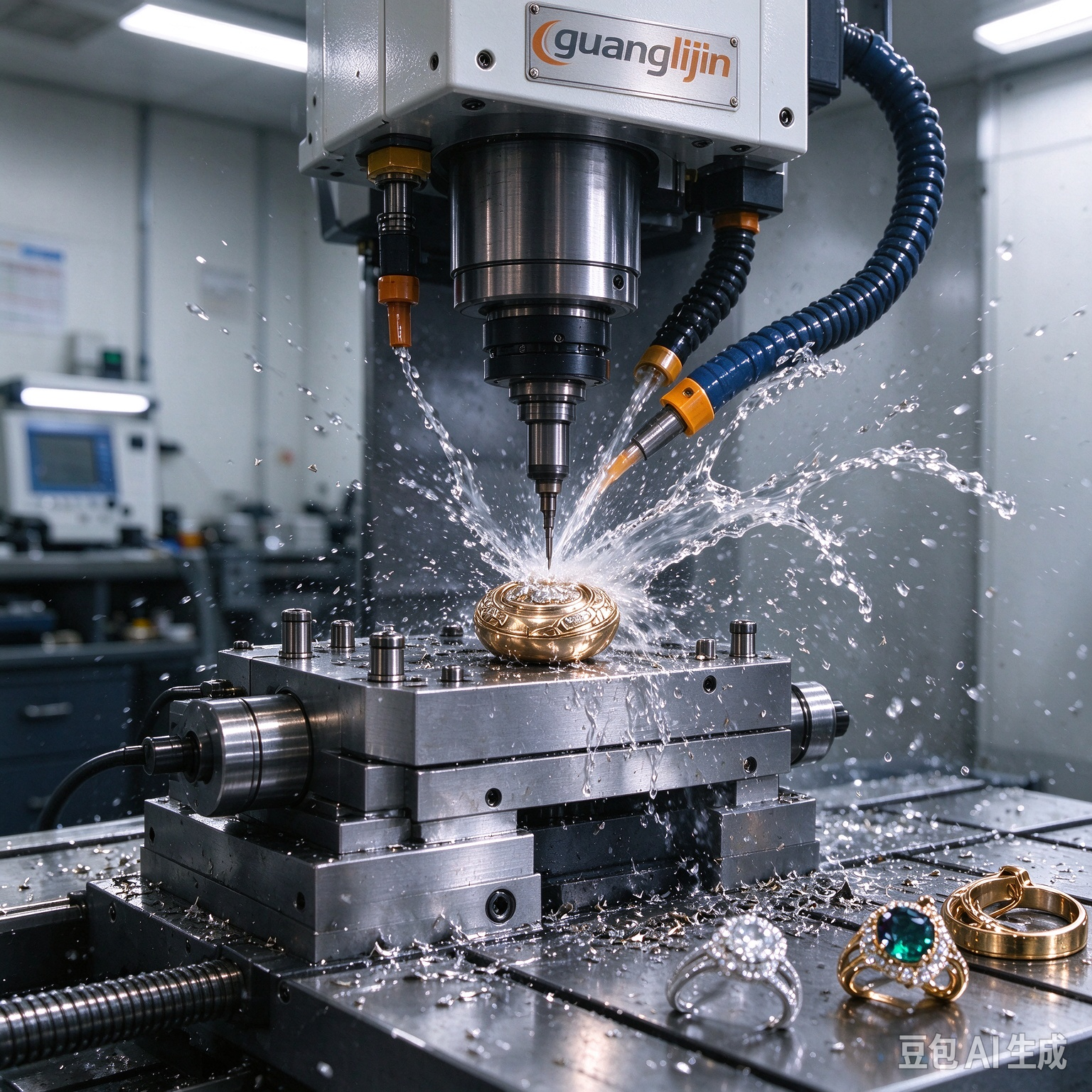
The sticker price is the beginning of the conversation. The configured price and the five-year total are what actually matter.
Pricing a five-axis machine feels like pricing a house. The listing number is real, but it rarely reflects what you actually pay. Options, software, installation, and the learning curve all pile on. A shop that budgets only the base price is a shop that runs out of money before the first chip hits the tray.
This guide breaks down the 5 axis CNC machine cost landscape by tier, by configuration, and by the hidden layers that separate a profitable purchase from a painful one. The numbers come from published sources and real market data. The interpretation comes from the shop floor.
Three Price Tiers, Three Different Products
The market splits into three broad bands. Entry-level 3+2 machines with limited simultaneous capability sit between $50,000 and $100,000. Production-grade simultaneous five-axis machines land between $100,000 and $200,000. High-end industrial systems for aerospace and medical work climb past $300,000 [citation:4].
The Haas UMC-750 anchors the production-grade tier. Its published starting price is $192,995. A configured package with options reaches $207,880 [citation:7][citation:9]. That buys a 762 × 508 × 508 mm envelope, an integrated trunnion, and a 22.4 kW inline spindle.
The high-end tier looks different. A new DMG Mori DMU 40 runs between $325,000 and $475,000 depending on spindle, ATC, and control selection [citation:3]. The gap between these two machines is not marketing. It is casting mass, thermal compensation sophistication, controller maturity, and service network depth.
Project A vs. Project B: Two Pricing Realities
Price only matters against a specific production scenario. Project A is a job shop buying its first five-axis machine for mixed aluminum work. Project B is a production cell replacing a worn high-end machine for titanium aerospace parts.
| Factor | Project A: First Five-Axis, Aluminum | Project B: Titanium Aerospace Replacement |
|---|---|---|
| Machine class | Production-grade (Haas UMC-750) | High-end industrial (DMG Mori class) |
| Base price | $192,995 [citation:9] | $325,000–$475,000 new [citation:3] |
| Configured price | ~$207,880 with options [citation:7] | ~$400,000 with spindle/ATC upgrades |
| Controller | Haas control, TCPC included | Heidenhain TNC 640 or Siemens 840D |
| CAM software | $15,000–$25,000/year | $30,000–$50,000/year |
| Scrap exposure | Low: aluminum brackets, $50–$200 material | High: titanium billets, $2,000+ material |
| Service network risk | Moderate: Haas HFO network is broad | Critical: downtime stops single-source production |
Project A can justify the Haas tier. The tolerance band is wider. Scrap cost is manageable. The lower capital commitment leaves budget for CAM training and post-processor development. The machine will hold ±0.025 mm on prismatic features without drama.
Project B cannot cut the same corner. A single scrapped titanium billet erases the price difference between a mid-range and a high-end machine. The DMU 40’s thermal stability and controller maturity are not luxuries. They are insurance against a $2,000 mistake repeated ten times [citation:3].
Step-by-Step: Building a Realistic Cost Model
Before signing anything, build the number that matters. These steps force honesty into the decision.
- Price the configured machine, not the base. Add through-spindle coolant, probing, additional tool stations, and the spindle taper you actually need. A $192,995 Haas UMC-750 becomes $207,880 with options [citation:7]. A Chinese five-axis machine listed at $45,000 climbs toward $85,000 with a Fanuc controller and basic production features.
- Quote the CAM seat before the machine arrives. Five-axis CAM licenses run $15,000 to $50,000 per year. Post-processor development adds first-year cost. A shop that bought a machine before checking their CAM license discovered a $28,000 upgrade requirement after delivery.
- Budget installation and infrastructure. A five-axis machining center needs 380V power, a reinforced floor, compressed air, and professional commissioning. Budget $10,000 to $30,000. Commissioning takes weeks, not days.
- Calculate scrap cost per bad part. Multiply material cost by the realistic first-year scrap rate. A $2,000 titanium billet at 10% scrap adds $200 per part to the effective machine cost. A $50 aluminum bracket adds $5. The machine tier should match the scrap exposure.
- Model the learning curve. A new five-axis programmer takes three to six months to reach full productivity. During that period, cycle times run longer and scrap rates climb. Budget that productivity dip into the payback calculation.
- Compare new versus used with open eyes. Used DMG Mori DMU 40 units from 2018–2023 trade between $175,000 and $300,000 [citation:3]. Used machines save upfront but carry worn components and no warranty. Budget 10% to 20% of purchase price annually for maintenance.
We Learned This in 2025: The Controller Gap
Our team consulted with a shop in early 2025 that bought a low-cost five-axis VMC for $32,000. The casting looked solid. The price was attractive. The first complex aluminum part showed chatter and position drift that no amount of tuning could fix.
The problem was the controller. Its look-ahead and blending algorithms could not handle the dense CAM toolpaths the shop needed for contoured surfaces. The controller decelerated at segment boundaries. Motion was jerky. Surface finish failed inspection.
The shop replaced the controller with a Fanuc unit. The upgrade cost $22,000 including integration. Total investment: $54,000. Still cheaper than a Haas UMC-750. But the six months of debugging and scrapped parts added another $15,000 in lost time and material. The lesson: on a 5 axis CNC machine cost analysis, the controller is not a line item to minimize. It is the line item that determines whether the machine works at all.
Common Missteps in Five-Axis Pricing
Treating the sticker price as the budget
The machine is roughly 40% of the first-year total. Installation, tooling, CAM software, power, and the operator’s ramp-up consume the rest. A $200,000 machine with no budget for the ecosystem is a machine that sits idle waiting for software and fixtures.
Ignoring the resale value difference
European and Japanese machines retain value. A used DMG Mori DMU 40 from 2018–2023 trades at $175,000 to $300,000 [citation:3]. A Chinese five-axis machine has a thinner used market. If the replacement cycle is five to seven years, resale value changes the total cost calculation.
Underestimating downtime cost
A $100,000 machine that sits broken for two weeks costs more than a $180,000 machine that runs. The service network and spare parts availability are part of the pricing equation. A controller brand with no local support is a bargain that becomes expensive on the first fault.
Frequently Searched Questions
Q: How much does a 5 axis CNC machine cost for a small shop?
A production-grade simultaneous five-axis machine typically runs $100,000 to $200,000. The Haas UMC-750 starts at $192,995 base and reaches $207,880 configured [citation:7][citation:9]. Entry-level 3+2 machines sit at $50,000 to $100,000. Budget an additional 30% to 50% for installation, CAM software, tooling, and training in the first year [citation:4].
Q: Is a cheap Chinese 5 axis CNC machine worth the lower price?
It depends on tolerance and scrap exposure. For aluminum parts with wider tolerances and low scrap cost, a Chinese tier-1 machine with a Fanuc or Siemens controller can deliver value. For titanium aerospace or medical work with tight tolerances and high scrap cost, the thermal stability and controller maturity of a European or Japanese machine justify the premium [citation:3].
Q: How much does a used 5 axis CNC machine cost compared to new?
Used machines save 30% to 50% upfront. A used DMG Mori DMU 40 from 2018–2023 trades at $175,000 to $300,000 versus $325,000 to $475,000 new [citation:3]. Budget 10% to 20% of the purchase price annually for maintenance and repairs. Used machines carry worn components and no warranty.
Q: What hidden costs should I budget beyond the machine price?
Installation and infrastructure: $10,000–$30,000. CAM software: $15,000–$50,000 per year. Operator training and ramp-up: three to six months of reduced productivity. Five-year ownership costs typically add 33% to 50% of the initial purchase on top of the machine price [citation:4].
Pre-Purchase Pricing Checklist
- Configured price quoted, not base price
- CAM software license and post-processor cost verified before order
- Installation, power, and foundation costs estimated
- Operator training and productivity ramp-up budgeted
- Scrap cost per part calculated and matched to machine tier
- Used machine maintenance reserve set at 10%–20% of purchase price annually
- Service network and spare parts availability verified for the controller brand
- Five-year total cost model built against actual part mix and tolerance requirements
- Resale value considered if replacement cycle is under seven years
The best 5 axis CNC machine cost solution is not the cheapest machine. It is the machine whose configured price and five-year total match your production reality. A $200,000 Haas that runs reliably on aluminum is cheaper than a $50,000 machine that scraps titanium. Do the math before the purchase order. The machine will do exactly what you paid for.