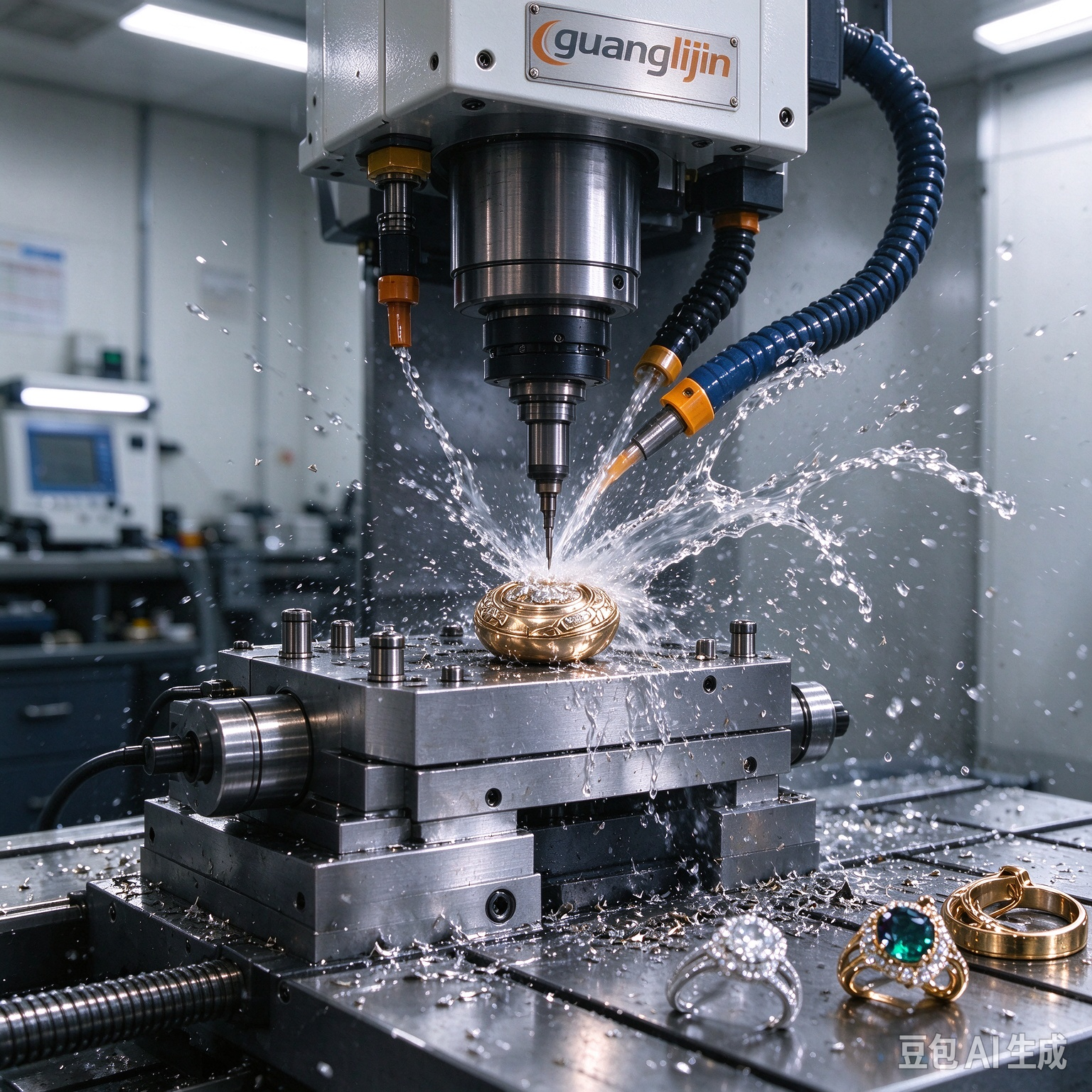
The phrase “5 axis CNC machine” sounds straightforward until you try to define it precisely. Does it mean five directions of movement? Five motors? Five independent operations? The advanced answer is none of those. The real meaning lives in how the axes cooperate, when they lock, and what that cooperation buys you on the shop floor.
The Core Definition, Stripped Down
A 5 axis CNC machine adds two rotational axes to the standard three linear axes (X, Y, Z). Those rotations typically appear as A and B axes, or A and C, depending on whether the rotary motion sits in the spindle head or the table [citation:3].
That is the mechanical definition. The advanced meaning goes further. The value of a 5 axis CNC machine comes from what those two extra axes eliminate: repositioning. Every time an operator unclamps a part and flips it, error creeps in. Every setup adds labor and risk. A 5-axis machine removes most of those events.
Global shipments reached roughly 34,000 units in 2025, with market value around $833.7 billion . That volume signals maturity. These machines are no longer experimental.
3+2 Positioning vs. Simultaneous Motion: The Split That Defines Everything
Here is where the advanced meaning diverges from the marketing copy. A 5 axis CNC machine operates in two distinct modes, and confusing them leads to bad purchases.
3+2 positioning locks the rotary axes at a fixed angle before cutting begins. The machine then cuts with three linear axes, exactly like a 3-axis mill, but from a tilted workplane. Shops use this mode for roughly 80% of typical 5-axis work [citation:3].
Simultaneous 5-axis moves all five axes together while the tool is in the cut. The tool tip follows a continuous path while its orientation shifts constantly. Turbine blades and sculpted impellers demand this. Most everyday parts do not.
Therefore, when evaluating a machine, ask a direct question: does the control support true simultaneous interpolation, or only positioned 3+2? Some entry-level models blur this distinction. The specification sheet should state it plainly.
Project A vs. Project B: Where the Meaning Becomes Money
Two identical aluminum manifolds with features on four faces. One shop runs them on a 3-axis machine with four setups. Another runs them on a 5-axis machine with one setup. The numbers below reflect typical production conditions.
| Metric | Project A: 3-Axis, 4 Setups | Project B: 5-Axis, 1 Setup |
|---|---|---|
| Setup count | 4 | 1 |
| Inter-feature position accuracy | ±0.018–0.032 mm | ±0.006–0.009 mm |
| Scrap rate | 12–15% | <3% |
| Total machining time | Baseline | −30% |
| Surface finish on inclined faces | Ra 2.1–3.2 µm | Ra 1.0–1.5 µm |
The cycle time reduction came from eliminating setup time, not from faster cutting. Cutting time per feature was nearly identical. The scrap rate improvement alone justified the machine rate premium in this case [citation:6].
That is the advanced meaning in practice: a 5-axis machine is a setup-elimination tool first, a precision tool second, and a sculpting tool third.
Five Steps to Evaluate Whether the Meaning Applies to Your Shop
Understanding the definition is passive. Applying it requires a sequence. Follow these steps before committing capital.
Step 1: Count Setups, Not Features
Pull twenty recent jobs that required three or more 3-axis setups. If more than 30% of your workload falls into that group, the 5-axis case strengthens. Setup count is the most reliable predictor of 5-axis return [citation:3].
Step 2: Separate Positional Work from Contouring Work
Review the geometry. Flat faces at angles, cross-holes, and pockets on multiple sides fit 3+2 positioning. Sculpted airfoils, deep undercuts, and continuous curvature demand simultaneous motion. Most shops overestimate how much simultaneous work they actually have [citation:9].
Step 3: Calculate Cost Per Part, Not Hourly Rate
A 5-axis machine costs more per hour. That number means little in isolation. Build a simple model: setup hours × labor rate + scrap cost + fixture cost. The 5-axis route wins when setup and scrap savings exceed the rate premium. For high-mix, low-volume work, this happens frequently [citation:6].
Step 4: Budget CAM Training Before Machine Selection
Programming is the real barrier. A machinist fluent in 3-axis code needs structured training on workplanes, rotary alignment, and collision checking. Allocate 40 to 80 hours before the first production job. CAM software with machine simulation shortens that curve substantially [citation:9].
Step 5: Run a Controlled Pilot on One Recurring Job
Pick a part with four or more 3-axis setups. Run it on a 5-axis machine in a measured trial. Record cycle time, first-pass yield, and operator touch time. Compare against your calculated baseline. Data settles the question faster than any specification sheet.
What the Advanced Meaning Does Not Include
Another trap: assuming every 5-axis control handles simultaneous motion smoothly. Some entry-level machines offer 3+2 positioning only. The control may accept simultaneous code but perform poorly under continuous load. Verify with a cutting demo on your geometry.
Therefore, read the specification sheet carefully. “5-axis capable” and “simultaneous 5-axis capable” are different claims.
Frequently Asked Questions
What is the advanced 5 axis CNC machine meaning for a job shop moving up from 3-axis?
For a job shop, the advanced meaning centers on consolidation. A 5-axis machine converts three or four 3-axis setups into one. The precision gain comes from machining all features relative to a single datum. The productivity gain comes from eliminating re-fixturing, not from faster spindle speeds.
Do I need simultaneous 5-axis machining for complex aerospace brackets?
Not usually. Many aerospace structural fittings with compound angles run efficiently in 3+2 positioning. Simultaneous motion becomes necessary for turbine blades, impellers, and blisks with continuously changing curvature [citation:9]. Brackets and housings rarely cross that threshold.
How much does a 5 axis CNC machining center cost in 2026?
Global market data places the range at roughly $200,000 to $600,000 per unit depending on size and capability . Entry-level 3+2 machines sit near the lower bound. Large simultaneous-capable gantry models push well beyond.
What tolerances can a 5 axis CNC machine hold on multi-face parts?
Production 5-axis machining holds ±0.005–0.010 mm on positional relationships between features on different faces. This is possible because all features are cut in one setup relative to one coordinate system. Precision setups and thermal control can push critical features to ±0.003–0.005 mm [citation:6].
Final Checklist: Is 5-Axis the Right Meaning for Your Next Job?
- Part has critical features on four or more faces
- Current 3-axis process requires three or more setups
- Compound angles or angled cross-holes appear in the geometry
- Inter-feature position tolerance suffers from re-clamping variation
- Scrap rate on multi-setup jobs exceeds 5%
- CAM software and trained programming staff are available or budgeted
- Cost-per-part model (setup + scrap + rate) favors the 5-axis route
- Pilot run confirms setup reduction and yield improvement
- Machine specification confirms the control supports the mode you need (3+2 or simultaneous)
To review machine configurations and technical specifications for multi-axis platforms, see this 5 axis CNC machine meaning reference for equipment details.
The advanced meaning of a 5 axis CNC machine is not about having five motors or five directions of travel. It is about removing the human variable from multi-face machining. When setups disappear, error sources disappear with them. That is the capability worth paying for.