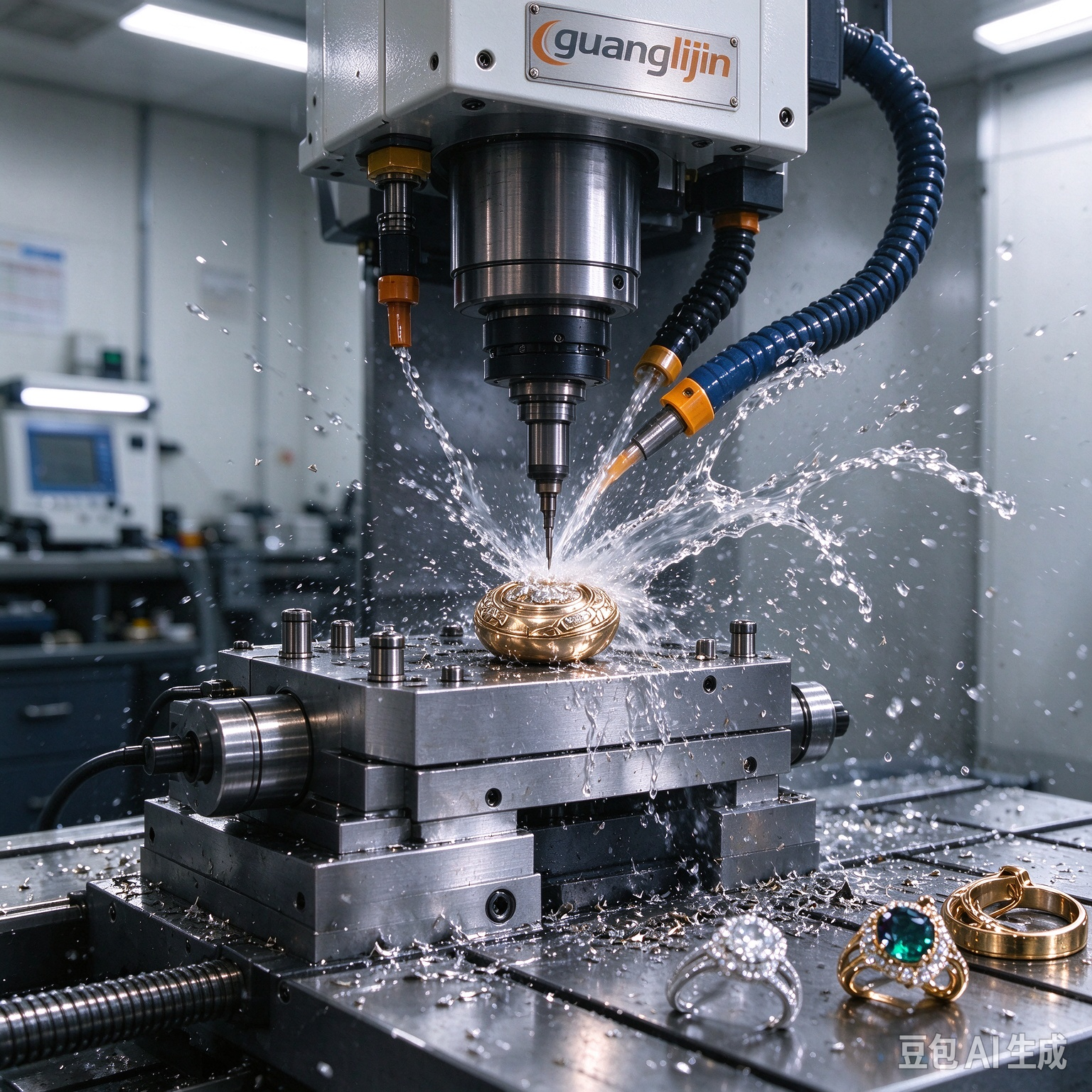
What does a 5 axis CNC machine actually mean for your shop floor? The term gets thrown around a lot. Some buyers treat it as a magic upgrade. Others fear it as an overpriced complication. The truth sits in a practical middle ground. This guide breaks down the real meaning, the trade-offs, and the decisions that matter.
What Does 5 Axis CNC Machine Meaning Really Cover?
A 5 axis CNC machine moves the cutting tool or the workpiece along five distinct axes at the same time. Three of those axes are linear: X, Y, and Z. The other two are rotational, typically labeled A and B, or A and C depending on the machine architecture [citation:3][citation:11].
That added rotation changes the game. A 3-axis mill can only approach the part from the top. A 5-axis machine tilts and swivels. The tool reaches compound angles, undercuts, and deep pockets without the operator unclamping and flipping the part.
Industry data puts the global 5-axis machining center market at roughly $833.7 billion in 2025, with shipments around 34,000 units . That scale tells you something: this is no longer exotic technology reserved for aerospace giants.
3+2 vs. Simultaneous: Two Meanings Inside One Term
Here is where confusion often creeps in. A 5 axis CNC machine can operate in two fundamentally different modes.
3+2 positioning locks the two rotary axes in place. The machine then cuts with three linear axes. Think of it as a highly flexible 3-axis setup. The part gets repositioned to five different faces without manual intervention.
Simultaneous 5-axis moves all five axes together. The tool tip follows a continuous path while the orientation shifts constantly. Turbine blades and sculpted impellers demand this. Most everyday 5-axis work uses the 3+2 approach [citation:14].
We saw this distinction firsthand in early 2025. Our team evaluated a batch of aluminum housings with features on six faces. The 3+2 approach handled 90% of the features in two setups. Attempting simultaneous motion for the same parts would have tripled programming time with zero quality gain. That experience shaped how we now quote multi-face jobs.
Project A vs. Project B: A Direct Comparison
Numbers make the meaning concrete. The table below compares two real-world scenarios using typical shop rates and setup counts.
| Factor | Project A: 3-Axis Approach | Project B: 5-Axis Approach |
|---|---|---|
| Part type | Aluminum manifold, features on 4 sides | Same manifold |
| Setup count | 4 setups | 1 setup |
| Setup time per op | 35 minutes | 45 minutes (initial only) |
| Hourly machine rate | $95/hr | $155/hr |
| Scrap risk from re-clamping | Moderate to high | Low |
| Total cycle time | 4.5 hours | 2.8 hours |
| Position tolerance achieved | ±0.003″ | ±0.001″ |
The hourly rate for the 5-axis machine runs higher. Yet the total part cost often lands lower once you count setups, handling, and scrap [citation:14]. That is the practical meaning buyers need to grasp.
Step-by-Step Guide: Moving from Meaning to Action
Understanding the definition is step one. Putting it to work requires a sequence. Follow these five steps when evaluating whether a 5 axis CNC machine belongs in your operation.
Step 1: Audit Your Part Portfolio
Pull the last 50 jobs. Count how many required three or more setups on a 3-axis machine. If that number exceeds 30%, the case for 5-axis grows stronger. Parts with compound angles or features on four or more faces are prime candidates.
Step 2: Separate 3+2 Work from Full Simultaneous Needs
Review your geometry. Most multi-face parts fit cleanly into 3+2 positioning. Only sculpted surfaces with continuous curvature demand simultaneous motion. This distinction controls both programming complexity and machine price.
Step 3: Calculate True Cost Per Part, Not Hourly Rate
Build a simple spreadsheet. Include setup hours, fixture costs, scrap rate, and labor for each operation. The 5-axis machine wins when setup reduction and scrap avoidance outweigh the rate premium. For high-mix, low-volume work, the math often flips in favor of 5-axis [citation:6].
Step 4: Invest in CAM Training Before Iron
Programming is the real barrier. A machinist comfortable with 3-axis code needs structured CAM training for rotary axes and collision checking. Budget 40 to 80 hours of learning before the first production job. Software with 5-axis simulation cuts that curve significantly.
Step 5: Run a Pilot Part, Then Measure
Pick one recurring job with four or more setups. Run it on a 5-axis machine in a controlled trial. Measure cycle time, first-pass yield, and operator touch time. Compare against your calculated baseline. The data settles the argument.
Common Misunderstandings That Skew the Meaning
Several persistent myths distort how buyers interpret the 5 axis CNC machine meaning.
Myth: 5-axis is always faster. For a simple flat plate with top-side features, a 3-axis machine cycles faster and costs less per hour. The 5-axis advantage appears when setups multiply [citation:14].
Myth: Programming is impossibly hard. Modern CAM software with machine simulation has flattened the learning curve. Shops that mastered 3-axis programming can transition to 3+2 work in weeks, not years [citation:2].
Myth: You need simultaneous motion for everything. Industry practitioners estimate that 3+2 positioning covers roughly 80% of typical 5-axis work. Full simultaneous machining remains a specialist capability [citation:14].
Therefore, evaluate the machine against your specific part mix. The meaning shifts depending on what you make.
Frequently Asked Questions
What is the basic 5 axis CNC machine meaning for a small job shop?
For a small shop, the meaning centers on setup reduction. A 5-axis machine lets you machine five faces of a part in one clamping. That eliminates the re-fixturing errors and labor hours that eat into margins on multi-sided work.
Do I need simultaneous 5-axis machining for complex aerospace parts?
Not always. Many aerospace structural fittings with compound angles run efficiently in 3+2 mode. Simultaneous 5-axis motion becomes necessary for turbine blades, impellers, and other sculpted aerodynamic surfaces with continuous curvature [citation:6].
How much does a 5 axis CNC machining center cost in 2026?
Pricing varies widely by size, brand, and capability. Global market data indicates a range of roughly $200,000 to $600,000 per unit depending on specifications . Entry-level 3+2 machines sit at the lower end; large simultaneous-capable gantry models push well beyond.
What tolerances can a 5 axis CNC machine hold compared to 3-axis?
High-quality 5-axis machines routinely hold ±0.001″ to ±0.002″ for demanding work, with advanced models in controlled environments reaching tighter [citation:11]. The key advantage is that single-setup machining removes the cumulative position error introduced by multiple re-clampings on a 3-axis machine.
Final Checklist: Is 5-Axis Right for Your Next Job?
- Part has features on four or more faces
- Current 3-axis process requires three or more setups
- Compound angles or undercuts appear in the geometry
- Tight position tolerances suffer from re-clamping errors
- Scrap rate on multi-setup jobs exceeds 5%
- CAM software and trained staff are available or budgeted
- Total cost per part (not hourly rate) favors the 5-axis route
- Pilot run confirms cycle time and yield improvements
To explore specific machine configurations and technical specifications, visit this 5 axis CNC machine meaning resource for detailed equipment guidance.
The meaning of a 5 axis CNC machine ultimately comes down to fit. It is a setup-reduction tool, a precision enabler, and a capability expander. It is not a universal replacement for every 3-axis job. Shops that match the technology to the part mix—rather than chasing specifications—extract the real value.