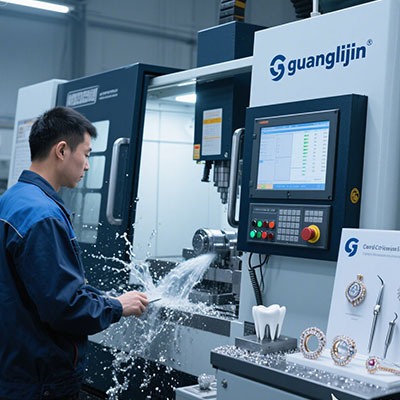
The term “5 axis CNC machine” gets used loosely. Salespeople say it. Shop owners ask about it. Buyers sign quotes without fully unpacking it. This overview fixes that. You will learn the actual meaning, the split between positioning and simultaneous modes, and how to judge whether the capability fits your workload.
The Essential Meaning in Plain Terms
A 5 axis CNC machine moves the cutting tool relative to the workpiece along five axes at once. Three are linear: X, Y, and Z. Two are rotational: typically A and B, or A and C .
Those two rotary axes change everything. A 3-axis mill reaches the top face only. A 5-axis machine tilts the head or the table. The tool reaches compound angles, deep pockets, and undercuts without manual re-clamping.
That is the surface definition. The deeper meaning involves what disappears: extra setups, re-fixturing error, and operator touch time. Industry shipments hit roughly 34,000 units in 2025, with market value near $833.7 billion . This is mainstream technology now.
3+2 Positioning vs. Full Simultaneous: Two Modes, One Name
This distinction matters more than any specification. A 5 axis CNC machine operates in one of two modes, and buyers often miss the gap.
3+2 positioning locks the two rotary axes at a fixed angle. Cutting then proceeds with three linear axes. The part is repositioned to a new face without unclamping. Roughly 80% of typical 5-axis work fits this mode .
Simultaneous 5-axis moves all five axes together while the tool is in the cut. The tool tip follows a continuous path while orientation shifts constantly. Turbine blades, impellers, and blisks require this. Most brackets and housings do not.
Therefore, ask a direct question before buying: does the control support true simultaneous interpolation, or only 3+2 positioning? Some entry-level models blur that line in the brochure. The specification sheet should state it plainly.
Project A vs. Project B: A Side-by-Side Look
Two identical stainless steel valve bodies. Features sit on five faces. One shop runs a 3-axis process with four setups. Another runs a 5-axis process with one setup. The table reflects typical production conditions.
| Metric | Project A: 3-Axis, 4 Setups | Project B: 5-Axis, 1 Setup |
|---|---|---|
| Setup count | 4 | 1 |
| Fixture cost per part | Higher (multiple fixtures) | Lower (single fixture) |
| Inter-feature position error | ±0.020–0.035 mm | ±0.006–0.010 mm |
| Scrap rate | 10–14% | <3% |
| Operator touch time | High | Low |
| Total cycle time | Baseline | −28% |
The cycle time gain came from fewer setups, not faster cutting. Per-feature cutting time was nearly identical. The scrap reduction alone justified the higher machine rate in this comparison .
That is the practical meaning: a 5-axis machine is a setup-elimination tool first, a precision tool second, and a sculpting tool third.
Five Steps to Test Whether the Meaning Applies to You
Reading definitions is passive. Decision-making is active. Follow these steps before committing capital.
Step 1: Count Setups Across Recent Jobs
Pull twenty jobs from the last quarter. Note how many required three or more 3-axis setups. If more than 30% cross that line, the 5-axis case strengthens. Setup count predicts 5-axis return better than any other single metric .
Step 2: Separate Positional Work from Contouring Work
Review the geometry. Angled flat faces, cross-holes, and multi-side pockets fit 3+2. Sculpted airfoils and continuous curvature demand simultaneous motion. Most shops overestimate how much simultaneous work they truly have .
Step 3: Build a Cost-Per-Part Model
Hourly rate alone misleads. Build a simple model: setup hours × labor rate + scrap cost + fixture cost. The 5-axis route wins when setup and scrap savings exceed the rate premium. For high-mix, low-volume work, this happens often .
Step 4: Budget CAM Training Before Machine Selection
Programming is the real barrier. A 3-axis programmer needs structured training on workplanes, rotary alignment, and collision checking. Allocate 40 to 80 hours before the first production job. CAM software with machine simulation shortens that curve .
Step 5: Run a Controlled Pilot on One Recurring Job
Pick a part with four or more 3-axis setups. Run it on a 5-axis machine in a measured trial. Record cycle time, first-pass yield, and operator touch time. Compare against your baseline. Data settles the question faster than any brochure.
Common Misunderstandings That Distort the Meaning
Myth: 5-axis is always faster. For a flat plate with top-side features, a 3-axis machine cycles faster and costs less per hour. The 5-axis advantage appears when setups multiply .
Myth: Programming is impossibly hard. Modern CAM software with simulation has flattened the learning curve. Shops fluent in 3-axis work can transition to 3+2 programming in weeks .
Myth: You need simultaneous motion for everything. Industry practitioners estimate 3+2 covers roughly 80% of typical 5-axis work. Full simultaneous machining remains a specialist capability .
Therefore, evaluate the machine against your part mix. The meaning shifts with what you make.
Frequently Asked Questions
What is the ultimate 5 axis CNC machine meaning for a small machine shop?
For a small shop, the meaning centers on setup reduction. A 5-axis machine machines five faces in one clamping. That removes the re-fixturing errors and labor hours that eat margins on multi-sided work. The gain is consolidation, not raw speed.
Do I need simultaneous 5-axis machining for complex aerospace parts?
Not always. Many aerospace brackets and fittings with compound angles run efficiently in 3+2 positioning. Simultaneous motion becomes necessary for turbine blades, impellers, and blisks with continuously changing curvature . Structural housings rarely cross that threshold.
How much does a 5 axis CNC machining center cost in 2026?
Global market data places the range at roughly $200,000 to $600,000 per unit depending on size and capability . Entry-level 3+2 machines sit near the lower bound. Large simultaneous-capable gantry models push well beyond.
What tolerances can a 5 axis CNC machine hold on multi-face parts?
Production 5-axis machining holds ±0.005–0.010 mm on positional relationships between features on different faces. This is possible because all features are cut in one setup relative to one coordinate system. Precision setups and thermal control push critical features to ±0.003–0.005 mm .
Is 5-axis machining worth it for low-volume, high-mix work?
Yes, often. Low-volume work carries high setup cost per part. A 5-axis machine compresses that cost by cutting setups. The breakeven point arrives faster than most shops expect when part geometry spans multiple faces .
Final Checklist: Is 5-Axis the Right Fit for Your Next Job?
- Part has critical features on four or more faces
- Current 3-axis process requires three or more setups
- Compound angles or angled cross-holes appear in the geometry
- Inter-feature position tolerance suffers from re-clamping variation
- Scrap rate on multi-setup jobs exceeds 5%
- CAM software and trained programming staff are available or budgeted
- Cost-per-part model (setup + scrap + rate) favors the 5-axis route
- Pilot run confirms setup reduction and yield improvement
- Machine specification confirms the control supports the mode you need (3+2 or simultaneous)
To review machine configurations and technical specifications for multi-axis platforms, see this 5 axis CNC machine meaning reference for equipment details.
The ultimate meaning of a 5 axis CNC machine is not five motors or five directions. It is the removal of the human variable from multi-face machining. When setups disappear, error sources disappear with them. That is the capability worth paying for.