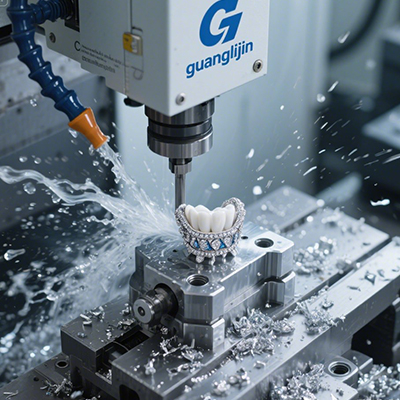
Sculpting wood is where a router earns its reputation. Flat panels forgive small errors. Organic forms do not. A twisted leaf, a carved face, a flowing chair arm — each exposes every weakness in the machine chain. This guide addresses sculpting work directly. We explain what a 5 axis wood cnc machine must do to hold a sculpted surface, how to test one, and which configuration suits your carving ambitions.
Why Sculpting Exposes Weakness Fast
Sculpting demands continuous tool orientation. The cutter must approach the surface from changing angles. It must keep the tip on path through deep undercuts and tight radii. A machine that indexes between positions cannot follow an organic surface.
Therefore the real question is not axis count. It is dynamic accuracy under tilt. The control needs tool-center-point management. The rotary axes need stiffness at full extension. The frame needs damping as the head swings. Remove any element and the surface shows ripples, facets, or burn marks.
Our team found in a 2025 sculpting case that a machine cut a beautiful demo swan. It failed on a deep-carved panel with reversing grain. The rotary axis lost position on a long continuous arc. The fix was not the control. It was a worn drive belt that stretched under sustained load.
Project A vs Project B: Sculpting Setup Comparison
Two studios invested in carving capability. Project A chose a compact trunnion machine. Project B selected a gantry router with a rotary fourth axis plus a tilting fifth head. Their part sizes differed, and so did their outcomes.
| Factor | Project A — Trunnion Machine | Project B — Gantry with Tilt Head |
|---|---|---|
| Workpiece size | Small to medium, table-limited | Large panels and long sculpted forms |
| Best sculpting type | Compact 3D parts, busts, turned shapes | Relief panels, oversized sculpture |
| Setup count | 1–2 with probing | 1 setup on fixed bed |
| Reach on undercuts | Good within swing envelope | Excellent along full bed length |
| Typical tilt range | ±30° to ±110° | ±110° to ±135° |
| Best fit | Furniture details, small sculpture | Architectural relief, large art pieces |
Project A produced crisp detail on compact carvings. Project B handled six-foot sculpted panels without repositioning. However, Project B needed a stiffer gantry to avoid chatter at full extension. The comparison forces a practical question: what is the largest sculpted form you actually sell?
Five Steps to Validate a Sculpting Machine
Do not accept a demo on soft basswood. Do not trust a calibration sheet. Run this sequence with your hardest carving wood and your most demanding form.
Step 1: Request a Continuous Five-Axis Carving Cut
Provide a test file with a deep undercut and reversing grain. Watch the tool tip on the control screen. It should follow the surface without hesitation. Listen for load spikes at extreme tilt. Hard maple and walnut expose weakness that basswood hides . Measure surface finish across the full form afterward.
Step 2: Verify Tool-Center-Point Accuracy at Extreme Tilt
Ask for a test that tilts the head to its limit while cutting a tight radius. If the control cannot hold TCP, the surface ripples at the edges. Request sample G-code. Look for simultaneous rotary and linear commands. Indexed output will not hold a sculpted surface .
Step 3: Check Rotary Axis Stiffness Under Load
Carving loads reverse direction constantly. A rotary axis with backlash or belt stretch loses position on long arcs. Ask how the A and C axes are driven. Direct-drive or precision worm gear systems hold up better than belt-driven units under sustained carving load.
Step 4: Match Spindle Torque and Runout to Carving Tools
Ball-nose and tapered tools cut differently than flat end mills. Carving demands torque at varying angles. Ask for the torque curve at your cutting speed. Then check runout at the tool holder. A practical target sits below 0.01 mm for clean carved detail . Excessive runout produces fuzz and short tool life.
Step 5: Audit Workholding for Multi-Angle Cuts
Sculpting changes force direction constantly. A fixture that held a flat blank may slip on a tilted surface. Plan vacuum zones, clamps, or sacrificial mounting for the actual cutting angles. Probe the blank before cutting to confirm position. Without this, operators guess offsets and scrap expensive stock.
Common Mistakes in Wood Sculpting Machining
⚠Attention: Do not use a three-axis roughing strategy and expect five-axis finishing to fix it. Roughing must leave consistent stock for the finishing pass. Uneven stock loads the cutter and causes deflection at full tilt.
⚠Attention: Do not ignore grain direction during carving. Cutting against the grain at a tilted angle causes tear-out that no feed rate can repair. The USDA Forest Products Laboratory notes that wood density and grain orientation strongly affect cutting resistance . Plan toolpath direction around grain, not just geometry.
⚠Attention: Never skip first-article inspection after a fixture change. A small clamp shift on a sculpted part creates a large error at the tool tip. Five minutes of checking saves hours of rework.
Another quiet error involves dust extraction. Sculpting produces chips from multiple angles. A fixed hood may miss the cut zone at extreme tilt. Confirm the extraction follows the spindle head, or plan manual clearing during long carving cycles.
Frequently Asked Questions
What is CNC wood sculpting machining?
CNC wood sculpting uses a rotating cutter to carve three-dimensional forms from wood. Five-axis machines tilt and rotate the tool to reach undercuts and compound curves. The result is a shaped surface that would take days to carve by hand .
Can a 5 axis wood CNC machine sculpt hardwood like walnut and oak?
Yes, with the right spindle torque, sharp tooling, and conservative feeds. Hardwood demands more torque and better chip clearance. Confirm the spindle torque curve matches your hardest species before purchase.
What CAD/CAM software supports five-axis wood sculpting?
Several platforms support simultaneous five-axis output for organic forms. Confirm the post-processor matches your machine and control. Test the post with your own sculpted geometry before purchase. A capable machine with a weak post produces weak surfaces.
How much does a CNC wood sculpting machine cost?
Entry-level five-axis routers start around $60,000–$90,000. Mid-range production machines run $120,000–$200,000. Large gantry sculpting centers exceed $250,000 . Price tracks envelope size, spindle power, and control quality.
How long does it take to learn five-axis wood sculpting?
Operators with three-axis experience typically need three to five weeks of focused training. Programming organic toolpaths takes longer. Plan for one champion per shift who owns setup, probing, and first-article checks .
Pre-Purchase Checklist
- ☐ Largest sculpted form and annual volume documented
- ☐ Hardest carving wood and deepest cut identified
- ☐ Continuous five-axis carving cut observed on hard maple
- ☐ Tool-center-point accuracy verified at extreme tilt
- ☐ Rotary axis stiffness tested under sustained load
- ☐ Spindle torque curve matched to carving tools
- ☐ Runout measured below 0.01 mm at tool holder
- ☐ CAM post verified for simultaneous output
- ☐ Workholding plan sketched for multi-angle cuts
- ☐ Dust extraction follows spindle head through tilt range
- ☐ Service access and spare spindle lead time confirmed
- ☐ Operator training plan covers probing and first-article checks
Sculpting success comes from the whole chain: frame, control, CAM, and workholding working together. Start with your form, survive a live carving test, and end with a checklist on the floor. Everything else is brochure noise.