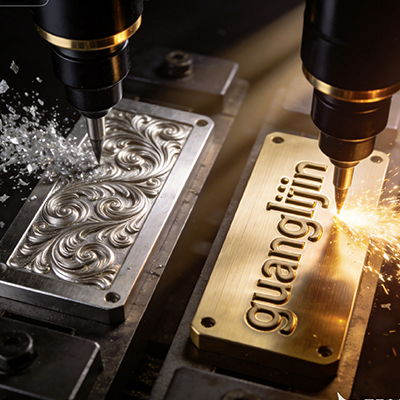
Jewelry work punishes a bad used machine purchase faster than almost any other trade. The parts are small. The tolerances are tight. A rotary axis that drifted on the previous owner’s watch will ruin a gold setting on yours. This guide focuses on that exact risk. We explain how to evaluate a used 5-axis cnc mill for jewelry processing, which checks expose hidden wear, and how to price the findings before you sign.
Why Jewelry Work Exposes Used Machine Weakness
Jewelry machining lives in a different scale. Work envelopes shrink to centimeters. Spindle speeds climb past 40,000 rpm. Cutter diameters fall under one millimeter. At that scale, a small error becomes a large percentage of the feature size.
Rotary axis alignment matters enormously. A used machine may show excellent linear accuracy on a test bar. The rotary centerline can still be off by a few hundredths of a millimeter. On a ring or a pendant, that offset shows up as an asymmetric cut or a setting that will not seat.
Our team inspected a used compact five-axis unit in 2025 that looked clean in photos. The seller claimed tight accuracy. The service records showed a spindle replacement with no alignment check afterward [citation:6]. We walked away. The price was attractive. The hidden recalibration cost was not.
Project A vs Project B: Two Used Purchase Approaches
Two jewelry shops bought used five-axis mills in the same quarter. Project A negotiated hard on sticker price. Project B negotiated on verified geometry. Six months later, their cost per good part diverged sharply.
| Factor | Project A — Price-Led | Project B — Verified |
|---|---|---|
| Pre-purchase testing | Video demo only | Live test block, runout check, warm-up cut |
| Rotary alignment records | Missing | Swept and logged on site |
| Spindle history | Unknown | Rebuild date and runout verified |
| Backlash data | None | Measured per axis from both directions |
| Outcome | Rework on first setting job | Stable yield from week one |
Project B paid more upfront. The difference came from fewer scrapped precious metal blanks and less operator guesswork. However, Project B is not automatically right for every buyer. A shop cutting wax and light prototypes can tolerate more wear than a shop cutting gold and platinum settings. The comparison forces a practical question: what is the most expensive material you will put in the vise?
Five Steps to Validate a Used Jewelry Mill
Do not accept a video. Do not trust a clean exterior. Run this sequence with the seller present and the machine under power.
Step 1: Request Service Records Before Any Site Visit
Ask for maintenance logs, spindle rebuild dates, and any alignment reports. A spindle replacement without a follow-up rotary sweep is a warning sign [citation:9]. Records that show regular lubrication and filter changes signal a cared-for machine. Long gaps with no documentation suggest neglect.
Step 2: Run a Test Block on Site With Your Own Stock
Bring a small block of your hardest material and a simple program that exercises all five axes. Cut a stepped feature and a small pocket. Measure the result on the machine with a dial indicator or a micrometer. A live cut on your stock beats any video demo. Watch for chatter at high spindle speeds. Jewelry cutters are small and unforgiving.
Step 3: Measure Spindle Runout and Listen for Bearing Noise
Mount a test bar in the spindle taper. Sweep it with a dial indicator at the collar and at the far end. Fine cutters expose runout fast. A reading above the holder maker’s limit means short tool life and poor surface finish on precious metal. Then run the spindle through its speed range. Listen for whine or roughness that changes with rpm. A quiet spindle under power is worth far more than a clean exterior [citation:4].
Step 4: Sweep the Rotary Axes and Check Backlash
Rotate the B and C axes slowly through their full range by hand or under jog control. Listen for grinding or hesitation in the worm or roller drive. Then approach a feature from both directions and measure the difference. That lost motion is backlash. Small values can be compensated. Large values mean service before production. On a used jewelry mill, rotary condition matters more than linear axis condition because the parts are small and the rotary motion dominates.
Step 5: Run a Warm-Up Test and Compare Cut Quality
Run the spindle at working rpm for fifteen minutes. Cut a light finishing pass before and after the warm-up. Compare the surfaces. Drift between the two cuts predicts thermal behavior in production. Jewelry tolerances sit in microns. A machine that changes size as it warms will scrap settings all morning [citation:6].
Common Mistakes When Buying Used for Jewelry
⚠Attention: Do not buy a machine rated for steel or aluminum and expect it to cut gold cleanly. Jewelry alloys cut differently. A spindle tuned for heavier loads may lack the high-speed smoothness that small cutters need.
⚠Attention: Do not ignore the control software version and options. A used machine may lack the high-speed machining option or the 5-axis simultaneous license you need. Confirm the installed options on the control screen, not on a sales sheet [citation:9].
⚠Attention: Never skip the rotary alignment records. Rotary service shifts alignment. Without records, you cannot price the recalibration risk. A machine that looks precise may carry hidden angular error that no amount of linear compensation can fix [citation:1].
Another quiet error involves the work envelope. Jewelry machines come in compact sizes. A used desktop unit may fit your bench but limit the size of the pieces you can clamp. Measure the actual working volume against your largest planned part before purchase.
Frequently Asked Questions
What should I check on a used 5-axis CNC mill for jewelry?
Prioritize spindle runout, rotary axis alignment, and service records. Jewelry parts are small, so angular error at the tool tip matters more than on larger work. Request a live test cut on your material before purchase [citation:1].
What spindle speed does jewelry CNC machining require?
Jewelry work often uses spindles from 30,000 to 60,000 rpm. Small cutters need high rpm to maintain surface speed. Confirm the used machine’s spindle reaches its rated speed smoothly and holds temperature during a warm-up run [citation:5].
Can a used 5-axis mill cut gold and platinum?
Yes, with sharp tooling, appropriate feeds, and a rigid machine. Precious metals are soft but gummy. Poor spindle runout causes smearing and short tool life. Verify runout at the holder before committing to a used purchase.
How much does a used 5-axis CNC mill for jewelry cost?
Compact jewelry-class five-axis machines vary widely by condition and control age. Budget for potential spindle service and rotary recalibration on top of the purchase price. A lower sticker with hidden service costs is the expensive option [citation:6].
What CAM software works with used jewelry five-axis mills?
Several platforms support small-part five-axis output. Confirm the post-processor matches the machine’s control before purchase. A used machine without a working post wastes its rotary axes and your time [citation:1].
Pre-Purchase Checklist
- ☐ Largest planned part size measured against work envelope
- ☐ Hardest material (gold, platinum, steel) identified
- ☐ Service records requested before site visit
- ☐ Spindle rebuild date and alignment report reviewed
- ☐ Live test cut run on your stock
- ☐ Spindle runout measured with dial indicator
- ☐ B and C axis swept through full range
- ☐ Rotary backlash measured from both directions
- ☐ Warm-up cut compared before and after spindle run
- ☐ Control options and 5-axis license confirmed on screen
- ☐ CAM post compatibility verified
- ☐ Recalibration and service costs priced into offer