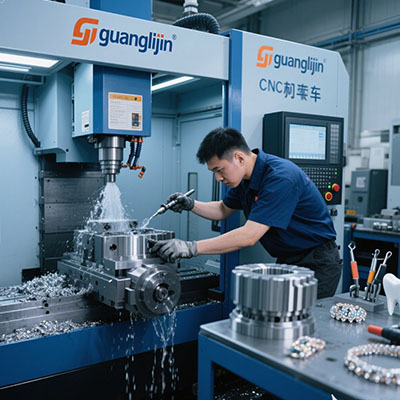
Finding a horizontal 4 axis CNC for sale that actually holds tolerance in die work is harder than reading a spec sheet. Die machining punishes weak structures. It exposes poor chip evacuation. It magnifies thermal drift over long cycles. So the buying decision should start with the cut, not the brochure.
This guide breaks the problem into three parts. First, what rigidity really means on a horizontal mill. Second, how to compare two machine paths side by side. Third, a step-by-step selection routine you can run before wiring a deposit. We keep the language plain so programmers and shop owners can align fast.
Why Die Machining Demands a Different Horizontal Mill
Die work is not generic milling. Cavities are deep. Walls are thin. Corner radii are tight. The cutter reaches far from the spindle, and the load never stays constant. A machine that flexes under interrupted cuts will chatter, and chatter leaves marks that hand polishing cannot hide.
Horizontal 4 axis CNC configuration matters here for a specific reason. The rotary table indexes the workpiece while the spindle stays horizontal. This gives multi-face access with fewer setups. Fewer setups mean less stack-up error. For die cavities that must align across parting lines, that is a real advantage [citation:2].
Rigidity comes from three places. The base casting needs mass and a stable layout. The guideways need preload and damping. The spindle needs torque at low speed, where die steels and hardened inserts are cut. A lightweight machine with a high rapids number will lose to a heavier frame every time on finish quality.
Comparing Two Paths: Legacy Three-Axis vs. Optimized Horizontal Four-Axis
Most die shops already have three-axis mills. The question is whether adding a horizontal 4 axis machine changes the economics. The table below compares a typical legacy path against a process built around an optimized horizontal four-axis setup.
| Factor | Project A — Legacy 3-Axis Path | Project B — Horizontal 4 Axis CNC Path |
|---|---|---|
| Setups per die cavity | 3–4 flips | 1–2 setups |
| Stack-up error risk | Higher across flips | Lower with indexed positioning |
| Surface consistency | More hand blending | More uniform across faces |
| Best fit | Simple prismatic blocks | Deep cavities and multi-face work |
| Chip evacuation | Gravity works against you on deep pockets | Horizontal spindle throws chips clear |
However, hardware alone does not fix process debt. A shop that buys a rigid machine but keeps loose fixtures will still fight variation. The machine is only one link in the chain. Fixture design, tool holding, and probing discipline must follow.
Specific data supports the setup reduction argument. Cycle-time studies in production machining often show 15–25% gains when probing replaces manual touch-offs and redundant flips are eliminated [citation:12]. That gain does not come from faster spindle speed. It comes from fewer non-cutting moves and fewer recovery loops.
Rigidity Signals to Check on a Horizontal 4 Axis CNC for Sale
Sales sheets list travels, spindle taper, and tool count. Those numbers matter. But rigidity is not a single specification. It is a system behavior. So how do you judge it before the machine is under power?
Start with the base and column design. An inverted T layout or a box column with symmetrical ribbing resists twisting under load. Ask for a photo of the casting without sheet metal. If the vendor hesitates, that tells you something.
Next, look at the guideway size and type. Heavy linear roller guides with preload handle die steel better than light ball guides. The difference shows up in interrupted cuts, where the cutter slams into hard and soft spots. A machine that rings during a test cut will ring in your die cavity.
Spindle torque at low RPM is the third signal. Die machining often runs at moderate spindle speeds with large diameter cutters. High peak torque at 200–800 RPM matters more than a 15,000 RPM maximum. Ask for a torque curve, not just a power rating.
I recall a 2025 case where our team evaluated a mid-size die shop moving from three-axis to a horizontal four-axis platform. The first machine quoted had impressive rapids and a large tool magazine. The second had lower rapids but a heavier frame and a dual-drive Z-axis. We ran a test coupon with a deep pocket and a thin wall. The first machine chattered at the corner. The second cut clean. The shop chose the second machine. Six months later, polishing hours per die had dropped by roughly a third.
That experience reinforced a simple rule. In die machining, the ability to take a stable cut at the corner beats a fast rapid move every time.
Five Practical Steps Before You Buy
Buying a horizontal 4 axis CNC is a capital decision. It should follow a routine, not a hunch. Here are five steps we recommend.
Step 1: Define the hardest feature, not the average part. Write down the deepest pocket, the thinnest wall, and the tightest tolerance your die work requires. Then ask every vendor to cut that feature on a test coupon. Do not accept a demo part that was designed to look good.
Step 2: Map the fixture strategy before the machine arrives. A horizontal mill with a rotary table changes how you hold the workpiece. Confirm the T-slot pattern, the pallet size, and the clamp clearance. A rigid machine with a weak fixture is still a weak process.
Step 3: Check the control’s four-axis behavior. Not every control handles rotary indexing with the same smoothness. Ask for a sample toolpath that uses the fourth axis for positioning and see how the machine blends the motion. Vague answers here often mean the post-processor is not proven.
Step 4: Verify chip management and coolant delivery. Horizontal spindles shed chips well by design. But deep die pockets still trap debris. Confirm the coolant-through-spindle pressure and the washdown routine. A machine that nests chips will scrap a finish pass.
Step 5: Inspect service access and spare parts. Ask where the spindle service center is, how long a replacement spindle takes, and whether the tool magazine parts are stocked locally. A rigid machine down for three weeks is not productive.
For teams actively comparing options, a focused horizontal 4 axis CNC for sale checklist can keep the evaluation grounded in production realities rather than headline specs.
Common Mistakes in Horizontal Four-Axis Selection
⚠Attention: Do not assume that more axes automatically improve die output. A four-axis machine used as a three-axis machine with an indexer is a wasted investment. The CAM strategy and the fixture plan must actually use the rotary motion.
⚠Attention: Do not copy cutting parameters from a vertical mill. Horizontal spindle orientation changes chip evacuation and coolant behavior. Feeds and speeds that work on a VMC may overload the horizontal spindle or leave poor finishes.
⚠Attention: Do not skip first-article inspection after a fixture change. A rotary table that indexes accurately on a test block may show drift under a heavy die block. Verify early and late parts in each batch.
Another mistake is buying for the biggest part in the shop rather than the family of parts that pays the bills. A large machine with a large pallet may not fit the small die inserts that dominate the workload. Match the work envelope to the actual part mix, not the occasional outlier.
LSI Considerations for Die-Focused Horizontal Mills
Several related factors shape the final decision. Rigid horizontal machining center design affects finish quality on hardened steels. Four-axis rotary table accuracy determines whether multi-face features align without re-fixturing. Die machining spindle torque at low speed controls the ability to use large cutters in deep cavities. Chip evacuation efficiency separates a productive shift from a cleaning loop. Pallet size and load capacity must match the die blocks you actually run.
These are not marketing terms. They are the variables that separate a machine that holds tolerance from one that needs constant adjustment. A vendor who can speak to all five in specific numbers is worth a longer conversation.
Frequently Asked Questions
What should I check first on a used horizontal 4 axis CNC for sale? Check the guideway wear and the rotary table backlash. A used machine with a worn rotary axis will struggle with die cavity alignment. Ask for a positioning test report on the fourth axis.
How much rigidity is enough for die steel and hardened inserts? Look for a machine weight and frame design that match the cut, not the brochure. A heavy cast base and preloaded roller guides are stronger signals than a high rapids number.
Can a horizontal 4 axis CNC replace a five-axis machine for die work? For many die cavities with features reachable through indexed positioning, yes. A four-axis machine becomes limiting when the geometry requires simultaneous multi-axis motion or angled access that indexing cannot reach [citation:2].
What tooling matters most on a rigid horizontal mill for die machining? Strong holders with minimal overhang and a tool library organized by reach. A rigid machine still chatters if the cutter hangs too far from the spindle.
Final Checklist Before You Commit
Use this checklist to keep the decision grounded.
- [ ] Hardest die feature defined and documented
- [ ] Test coupon cut on the candidate machine
- [ ] Fourth-axis positioning accuracy verified
- [ ] Fixture and clamp clearance confirmed
- [ ] Spindle torque curve reviewed at die-cutting speeds
- [ ] Chip evacuation and coolant pressure checked
- [ ] Service access and spare part lead times confirmed
- [ ] Post-processor and CAM support validated
- [ ] First-article inspection routine written
- [ ] Operator training plan included in the quote
The right horizontal 4 axis CNC for sale is not the one with the longest feature list. It is the one that holds a stable cut in your hardest cavity, shift after shift. Focus the evaluation on rigidity, fixture fit, and process discipline. The rest follows.