Auto components punish inconsistency. A bracket that fits on Monday must fit on Friday. A housing bore that meets tolerance in lot one must repeat in lot fifty. Buyers in this sector do not forgive drift, and they do not pay for excuses.
That reality shapes how a horizontal 4 axis CNC for sale should be judged. The machine must repeat, not just perform. It must hold position across thousands of cycles, through tool changes and thermal swings. This guide covers rigidity, a direct comparison, five buying steps, and a closing checklist.
Why Auto Components Demand a Repeatable Horizontal Mill
Auto parts share common traits. Volumes are high. Tolerances are tight. Many parts have features on several faces. A control arm, a transmission housing, a steering knuckle — each needs accurate position across multiple orientations.
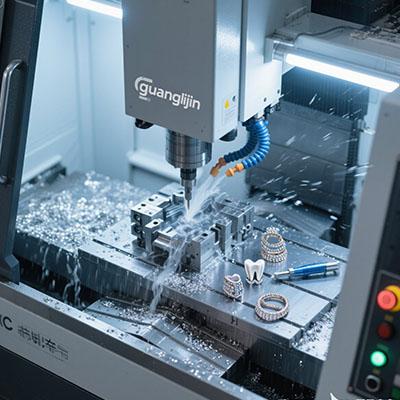
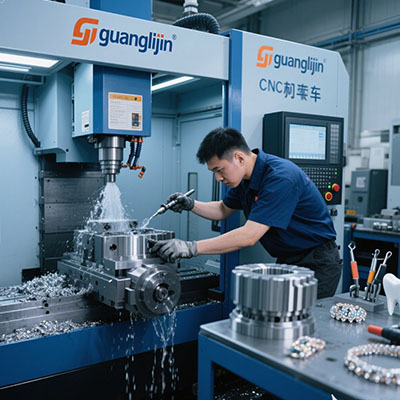
Horizontal 4 axis CNC layout helps here. The rotary table indexes the part. The spindle stays horizontal. Multi-face features are cut without re-fixturing. Fewer setups mean fewer chances for stack-up error, and auto buyers care about that repeatability more than raw speed.
Precision also depends on thermal stability. Long production runs heat the spindle and frame. A symmetric frame design and a compensated spindle reduce that drift. Ask vendors for thermal test data at your planned cutting speeds. Vague answers are a warning sign.
Comparison: Project A vs. Project B in Auto Parts Production
Two suppliers win the same auto component contract. One keeps a legacy vertical process. The other builds around a trusted horizontal four-axis machine. The table shows where the paths differ.
| Factor | Project A — Legacy Vertical Path | Project B — Horizontal 4 Axis Machine |
|---|---|---|
| Setups per part | 3–4 flips with re-datuming | 1–2 indexed setups |
| Repeatability across lots | Drifts with manual resets | Indexed positioning holds references |
| Cycle consistency | Varies with operator skill | More stable across shifts |
| Chip evacuation | Pockets trap debris | Horizontal spindle clears chips |
| Best fit | Low volume, simple parts | High volume, multi-face parts |
The gain is not only speed. It is consistency across lots. However, a rigid machine with weak fixtures will still drift. Fixture design belongs in the plan from the first quote.
Production data supports the case. Automotive machining studies often report 15–25% reductions in non-cutting time when probing and indexed setups replace manual touch-offs . That number matters when you ship thousands of parts per month.
Rigidity and Repeatability Signals to Check
How do you judge a trusted machine before it runs your part? Start with the frame. A box column with symmetric ribbing resists twist under interrupted cuts. Ask for casting photos without sheet metal.
Next, inspect the guideways. Heavy roller guides with preload suit auto components better than light ball guides. The difference appears on interrupted cuts, where the cutter meets hard and soft zones. A machine that rings in a test cut will ring in production.
Spindle torque at mid speed is the third signal. Auto parts often need moderate speeds and large cutters. Ask for a torque curve, not just a peak power figure.
I recall a 2025 case where our team supported a Tier-2 supplier evaluating a horizontal four-axis center for steering knuckles. Candidate one had fast rapids and a big magazine. Candidate two had a heavier frame and a dual-drive rotary table. We cut a knuckle with a deep bore and a thin flange. The first machine chattered at the flange. The second held finish. The supplier chose the heavier frame, and rework on that line fell within two quarters.
That case confirmed a simple rule. For auto work, stable cutting at the transition beats a fast rapid every time.
Five Steps to Evaluate a Machine for Auto Components
Buying a horizontal 4 axis CNC for sale is a capital decision. It deserves a routine, not a hunch. Here are five steps.
Step 1: Bring your own part. Do not accept a demo block. Bring a part with a deep bore, a thin wall, and a tight tolerance. Ask for a rough and finish pass on the same setup. Watch the transition.
Step 2: Confirm fixture and clamp clearance. Auto parts come in awkward shapes. Check the T-slot pattern, pallet size, and clamp reach on the rotary table. A rigid machine with a poor fixture is still a weak process.
Step 3: Verify fourth-axis indexing accuracy under load. Ask for a positioning test with a heavy part on the table. Backlash that hides on a small block can appear under a real workpiece.
Step 4: Review chip and coolant strategy. Horizontal spindles shed chips well. Deep bores still trap debris. Confirm coolant-through-spindle pressure and washdown routine.
Step 5: Check service and spare-part logistics. Ask where the spindle service center is and how long a replacement takes. A down machine is not a trusted machine.
Teams comparing options often benefit from a focused horizontal 4 axis CNC for sale review that ties specs to auto-part realities rather than headline numbers.
Common Mistakes in Auto-Focused Machine Selection
⚠Attention: Do not assume a four-axis machine automatically improves auto-part output. If the CAM strategy and fixture plan ignore the rotary motion, the fourth axis becomes dead weight.
⚠Attention: Do not copy cutting parameters from a vertical mill. Horizontal spindle orientation changes chip flow and coolant behavior. Feeds that work on a VMC may overload a horizontal spindle.
⚠Attention: Do not skip first-article inspection after a fixture change. A rotary table that indexes well on a test block can drift under a heavy part. Verify early and late parts in each batch.
Another trap is buying for the largest part in the shop rather than the family of parts that pays the bills. A large pallet may not fit the small brackets and housings that dominate the workload. Match the envelope to the real part mix.
LSI Factors for Auto-Component Horizontal Centers
Several related factors shape the final decision. Rigid horizontal machining center design affects finish quality on hard materials. Four-axis rotary table accuracy determines whether multi-face features align without re-fixturing. Auto component spindle torque at mid speed controls large-cutter performance. Chip evacuation efficiency separates a productive shift from a cleaning loop. Pallet load capacity must match the parts you actually run.
These are not marketing terms. They are the variables that separate a machine that holds tolerance from one that needs constant adjustment. A vendor who can speak to all five in specific numbers is worth a longer conversation.
Frequently Asked Questions
What should I inspect first on a used horizontal 4 axis CNC for sale for auto parts? Check rotary table backlash and guideway wear. A worn fourth axis will struggle with multi-face alignment. Ask for a positioning test report under load.
How much rigidity is enough for high-volume auto component machining? Look for a heavy cast base and preloaded roller guides. A high rapids number is a weaker signal than frame mass and damping.
Can a horizontal 4 axis CNC handle multi-face auto parts in one setup? Yes, for features reachable through indexed positioning. It becomes limiting when geometry needs simultaneous multi-axis motion or angled access that indexing cannot reach .
What tooling matters most for auto parts on a rigid horizontal mill? Strong holders with minimal overhang and a tool library organized by reach. A rigid machine still chatters if the cutter hangs too far from the spindle.
Final Checklist Before You Commit
Use this checklist to keep the decision grounded.
- [ ] Hardest auto-part feature defined and documented
- [ ] Rough and finish test cut on your own part
- [ ] Fourth-axis positioning accuracy verified under load
- [ ] Fixture and clamp clearance confirmed
- [ ] Spindle torque curve reviewed at production speeds
- [ ] Chip evacuation and coolant pressure checked
- [ ] Service access and spare part lead times confirmed
- [ ] Post-processor and CAM support validated
- [ ] First-article inspection routine written
- [ ] Operator training plan included in the quote
The right horizontal 4 axis CNC for sale is not the one with the longest feature list. It is the one that holds a stable cut through a rough pass and a finish pass on your auto component, lot after lot. Focus the evaluation on rigidity, fixture fit, and process discipline. The rest follows.