Dental milling leaves no room for “close enough.” A crown margin that sits 30 microns off becomes a cement line that washes out. A custom abutment that cannot clear an undercut becomes a hand-finished compromise. The machine’s axis count decides which of those outcomes is routine.
The 4 axis vs 5 axis cnc question in dental fabrication is not about speed or brand. It is about geometry access. A fourth axis rotates the blank. A fifth axis tilts it. That tilt opens undercuts, angled screw channels, and implant interfaces that a four-axis machine simply cannot reach with the tool perpendicular.
This breakdown focuses on measured fit data, real production limits, and the cases where the extra axis earns its cost.
The Dental Fabrication Problem: Undercuts and Margin Access
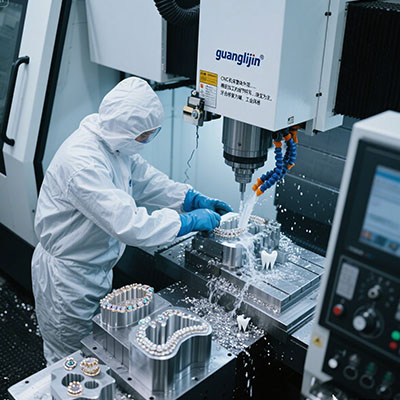
A four-axis dental mill moves X, Y, and Z while rotating the blank on the A axis. It flips the workpiece to mill occlusal and intaglio surfaces. That workflow handles single crowns, inlays, onlays, and short-span bridges with parallel preparations [citation:13].
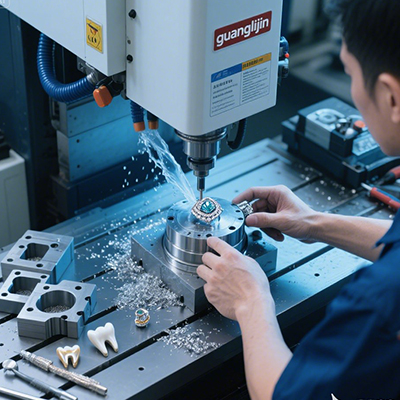
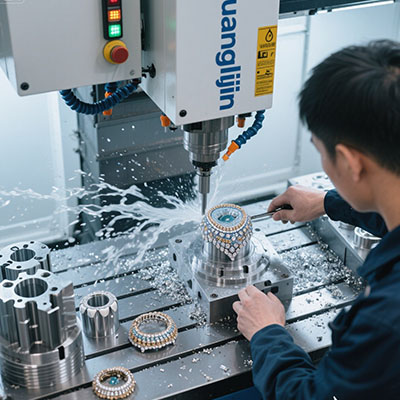
Add a fifth axis and the blank tilts. The B axis rotation lets the tool approach from angles that were blocked before. Undercuts become accessible. Angled implant channels become machinable. Deep margin lines on divergent preparations stop demanding excessive block-out.
Therefore, the axis count is not a luxury feature. It is a geometry gate. Parts that fit through the gate mill clean. Parts that do not require hand work that erases the machine’s precision advantage.
Project A vs Project B: Measured Fit Outcomes
Academic studies have compared the two machine classes directly. The numbers below come from published in vitro research, not marketing claims.
| Measured Factor | Project A: 4-Axis Milling | Project B: 5-Axis Milling |
|---|---|---|
| Marginal RMS (PEEK post and core) | 139.45 ± 24.59 µm | 104.14 ± 10.51 µm [citation:1] |
| Internal RMS (PEEK post and core) | 135.04 ± 8.68 µm | 116.22 ± 9.89 µm [citation:1] |
| Internal gap (e.max crowns) | 87.61 ± 53.86 µm | 56.85 ± 33.94 µm [citation:4] |
| Undercut access | Limited; tool perpendicular | Full; tool tilts to reach |
| Implant abutment capability | Not recommended | Required for accurate hex geometry [citation:8] |
Project A wins on cost and simplicity. For single posterior crowns and three-unit bridges with parallel preps, a four-axis mill produces clinically acceptable results all day [citation:7]. The internal fit gap of roughly 88 µm is within many clinicians’ tolerance bands.
Project B wins when the margin line disappears into a deep preparation or the case involves an implant interface. The five-axis machine’s internal gap of roughly 57 µm represents a measurable reduction in cement thickness [citation:4]. That difference matters on long-span cases where fit errors accumulate.
However, the fifth axis is not free. A dependable four-axis dental mill runs $30,000 to $80,000. A five-axis machine starts around $80,000 and climbs past $200,000 for production metal-capable units [citation:8]. The premium buys geometry access, not automatic quality on simple cases.
⚠ Attention: Three Mistakes in the Axis Decision
Mistake 1: Assuming five-axis machines produce better anatomy on simple crowns. The milling strategy drives anatomy, not the axis count. A well-programmed four-axis mill produces full-contour crowns that are indistinguishable from five-axis output [citation:7]. Do not pay for the fifth axis expecting prettier occlusal surfaces on single units.
Mistake 2: Buying a four-axis mill with implant work on the roadmap. Custom abutments with accurate hex geometry and anti-rotational features are not a four-axis capability. The tool cannot reach the retention features without colliding with adjacent walls [citation:8]. If implant prosthetics are planned within two years, the four-axis machine becomes a stepping stone you pay for twice.
Mistake 3: Ignoring the CAM and bur cost of five-axis production. Five-axis toolpaths consume more burs. Long-neck and specialized ball-nose tools enter the inventory. CAM modules for simultaneous motion add software cost. Budget 20 to 30 percent more in annual consumables and plan for spindle rebuilds every three to five years on metal work [citation:8].
Our Team’s 2025 Dental Milling Observation
We evaluated a four-axis dental mill against a five-axis unit in early 2025 using identical zirconia crown designs. The single-unit crowns showed no visible difference in anatomy or margin crispness. Both seated cleanly on the dies.
Then we ran a three-unit bridge with a slightly divergent middle abutment. The four-axis machine left excess material at the margin on the divergent side. The technician spent eleven minutes hand-finishing that margin. The five-axis machine milled the same margin line without hand work.
Eleven minutes per bridge adds up over a month. The lesson was not that four-axis machines are bad. It was that the fifth axis pays for itself in labor on a specific case type, not on every case.
Step-by-Step: Choosing the Right Axis Count
Follow these five steps before committing to a dental mill.
Step 1 — Audit your current case mix. Count the percentage of single crowns, short-span bridges, implant abutments, and full-arch frameworks over the past three months. If 85 to 90 percent of volume is single units and parallel-prep bridges, a four-axis mill covers the workload [citation:7].
Step 2 — Project the case mix two years forward. Implant restorations are growing in most labs. If custom abutments or screw-retained cases are on the roadmap, the fifth axis becomes a requirement, not an upgrade. Avoid the buy-twice cycle.
Step 3 — Request fit data from the machine vendor. Ask for marginal and internal RMS values from published studies or in-house validation. A vendor that cannot provide fit numbers is selling on brochure specs, not clinical outcomes.
Step 4 — Calculate the labor cost of hand finishing. Track how many minutes per case your technicians spend adjusting margins or clearing undercuts. Multiply by your labor rate and case volume. That number offsets the five-axis price premium faster than raw milling speed ever will.
Step 5 — Verify the CAM path and bur inventory for your chosen material. Five-axis simultaneous machining needs a CAM module and a broader bur set. A 4 axis vs 5 axis cnc decision made without consumable costs is incomplete. Price the burs before the machine.
LSI Terms for Dental Axis Evaluation
Use these phrases when specifying machines or reading clinical literature:
- Marginal and internal RMS fit values — The measured gap between restoration and die, reported in microns.
- Undercut access capability — The machine’s ability to reach features below the height of contour.
- Custom implant abutment milling — A five-axis-only application requiring hex and screw seat access.
- Screw-retained restoration channels — Angled access holes that demand tool tilt.
- Four-axis indexing workflow — Rotate, flip, mill. The standard approach for simple restorations.
Frequently Searched Questions About 4 Axis vs 5 Axis CNC Dental Milling
Is a 5-axis dental mill necessary for single crowns? No. A four-axis mill produces single crowns with fit and anatomy that meet clinical standards. Published research shows five-axis machines hold tighter internal fit values, but the difference on single units is often below the threshold of clinical significance for standard zirconia crowns [citation:4][citation:7].
What cases require a 5-axis dental milling machine? Custom implant abutments with accurate hex geometry, screw-retained restorations with angled channels, full-arch implant bars, and frameworks with severe undercuts. These geometries require the tool to approach at an angle that a four-axis machine cannot achieve [citation:8][citation:12].
How much better is the fit on a 5-axis mill? Published in vitro data shows marginal RMS improvement of roughly 25 to 35 percent on post and core restorations, and internal gap reduction from about 88 µm to 57 µm on glass ceramic crowns. The clinical impact depends on the restoration type and cement space design [citation:1][citation:4].
Can a 4-axis dental mill handle zirconia bridges? Yes, for three-unit bridges with reasonably parallel preparations. Divergent preparations may require extra block-out or hand finishing at the margin. Long-span bridges and full-arch cases move into five-axis territory [citation:13].
What is the price difference between 4-axis and 5-axis dental mills? Entry-level four-axis dry mills start around $15,000 to $25,000. Dependable production four-axis units run $30,000 to $80,000. Five-axis machines start around $80,000 and reach $200,000 or more for metal-capable production units [citation:8][citation:13].
Checklist: Before Choosing the Axis Count
☐ Three-month case mix audited by restoration type
☐ Implant and screw-retained volume projected for two years
☐ Vendor fit data requested (marginal and internal RMS)
☐ Hand-finishing minutes per case tracked and costed
☐ Undercut frequency in current preparations assessed
☐ CAM software module cost included for five-axis
☐ Annual bur consumption estimated at 20–30% higher for five-axis
☐ Spindle rebuild budget planned for metal milling
☐ Training time scheduled for five-axis CAM and fixture setup
☐ First-article comparison planned on your most complex case type
The 4 axis vs 5 axis cnc decision in dental fabrication comes down to geometry and case mix. Simple crowns stay on four axes. Undercuts, implants, and angled channels demand the fifth. Match the machine to the cases you will actually mill, and the margin will follow.