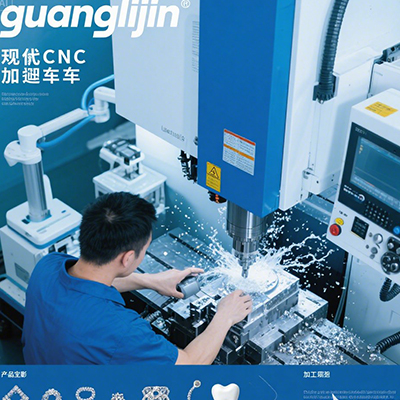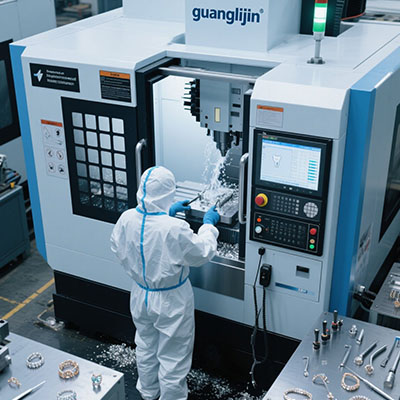
How do you turn finishing from a bottleneck into a competitive advantage? A well-chosen jewelry polish machine can redefine your workshop’s quality and throughput. But the real game-changer is factory cooperation — not just buying a box, but building a partnership.
In 2024, our team visited a mid-sized manufacturer in Bangkok. They struggled with inconsistent finishes across their signature gold collection. Their rejection rate hovered around 18%. That’s when we started exploring a tailored CNC solution with a dedicated factory partner.
The Factory Cooperation Edge: Why It Matters
Simply purchasing equipment often leads to misalignment. Machines come with generic parameters. But when you cooperate directly with a factory that understands your production environment, you unlock custom toolpath presets, fixture designs, and even compound recommendations. This is where a jewelry polish machine transforms from a tool into a strategic asset.
According to the Jewelry Manufacturing Technology Report 2024, workshops that engage in active factory collaboration reduce setup time by 43% and achieve 22% higher first-pass yield. That’s not just efficiency — it’s profitability.
Comparing Two Factory Cooperation Models
Not all partnerships are equal. We break down two typical approaches.
| Factor | Model A: Standard Supply | Model B: Collaborative CNC Integration |
|---|---|---|
| Toolpath Programming | Basic templates provided | Customized for your product family |
| Fixture Design | Generic holders | 3D-printed fixtures for each SKU |
| Compound Selection | One-size-fits-all | Metal-specific diamond pastes |
| Training & Support | Standard manual | On-site training & remote diagnostics |
| Ramp-up Time | 4–6 weeks | 2–3 weeks |
Collaborative integration clearly accelerates time-to-value. The upfront investment in partnership pays back through reduced scrap and faster changeovers.
5-Step Guide to Successful Factory Cooperation
Here’s how we structure a winning collaboration, based on our work with several Asian manufacturers.
Step 1: Define Your Finishing Standards
Document your acceptable surface roughness (Ra), mirror shine grade, and edge requirements. Share this with the factory early. It aligns expectations.
Step 2: Share 3D CAD Data & Material Specs
Provide the exact CAD models and metal composition (gold karat, silver alloy, platinum). The factory uses these to simulate polishing paths and select the right abrasives.
Step 3: Joint Test Run with Sample Pieces
Run a batch of 20–30 pieces together. Measure results and adjust parameters. This is where real collaboration happens — tweaking pressure, speed, and tool offset.
Step 4: Document the “Golden Recipe”
Record all settings: RPM, tool type, compound grade, polishing time. This becomes your standard operating procedure. Both sides keep a copy.
Step 5: Schedule Regular Performance Reviews
Set quarterly check-ins. Review wear on consumables, quality data, and any design changes. Continuous improvement keeps the partnership fresh.
Many buyers treat the factory purely as a vendor. That’s a missed opportunity. Share your production pain points openly. Factories often have solutions you haven’t considered — but they need to know your real challenges first.
Our 2025 Factory Cooperation Case
Last year, we partnered with a factory in Guangdong for a client producing high-end watch bracelets. The client needed a mirror finish on curved links — something manual polishing couldn’t achieve consistently.
We worked together on a customized fixturing system and programmed a multi-stage CNC routine. Within six weeks, their reject rate fell from 14% to just 2.3%. The factory even suggested a new polishing compound that extended wheel life by 30%.
This experience reinforced a key lesson: factory cooperation isn’t a transaction; it’s a problem-solving alliance. And when it works, both sides win.
LSI Keywords & Variants in Context
When selecting a system, consider automated polishing systems that offer recipe storage and remote monitoring. Look for precision finishing equipment with adaptive pressure control. And don’t overlook CNC buffing machinery that integrates with your existing CAM workflow.
Factory cooperation often involves industrial polishing solutions that include dust extraction and coolant recycling — adding safety and sustainability to your shop floor.
Checklist: Before You Finalize Factory Cooperation
- Quality targets defined — Ra values, visual standards, and tolerance ranges are documented.
- Fixture prototypes tested — at least 5 sample pieces confirmed stable mounting.
- Toolpath validated — simulation shows complete coverage without collisions.
- Spare parts plan — availability of wheels, compound, and sensors confirmed.
- Training schedule — at least 2 days of on-site training for your operators.
- Service level agreement — response time for technical support is clearly stated.