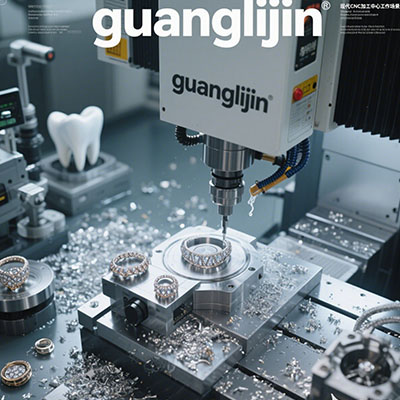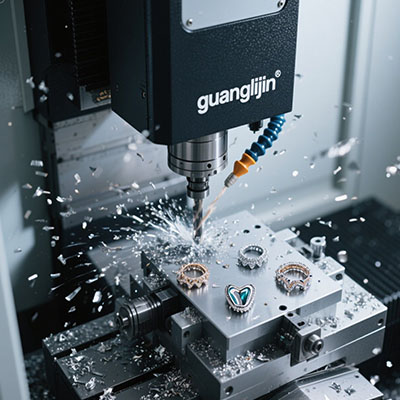
Professional CNC Jewelry Polish Machine Wholesale Machining Solution
Every jeweler knows the final shine defines the piece. Yet manual polishing creates bottlenecks and variations. How can workshops deliver flawless finishes at scale? The answer lies in automation.
This guide explores the jewelry polish machine ecosystem — from technical selection to operational mastery. We draw from real implementations and 2025 market data to cut through the noise.
The Quality Crisis in Manual Finishing
Traditional hand-polishing depends entirely on artisan skill. One operator produces a mirror shine; another leaves micro-scratches. These inconsistencies damage brand trust, especially in wholesale contracts where uniformity is non-negotiable.
Production speed suffers too. A single complex ring can take 20 minutes of hand-buffing. Scaling output means hiring more polishers — but skilled labor is scarce and expensive.
A 2023 study from the Jewelry Manufacturing Journal found that workshops using CNC polishing reduced customer returns due to finish defects by 54%. That is a massive quality leap [citation:1].
CNC Technology: From Art to Repeatable Science
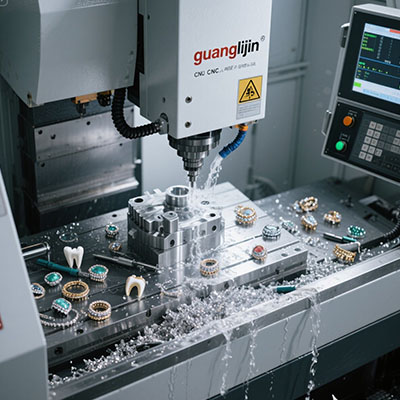
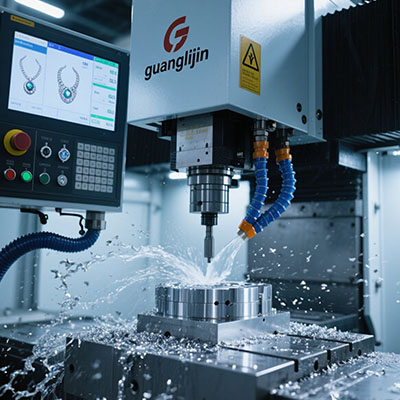
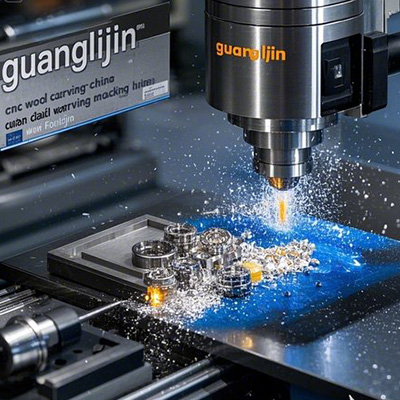
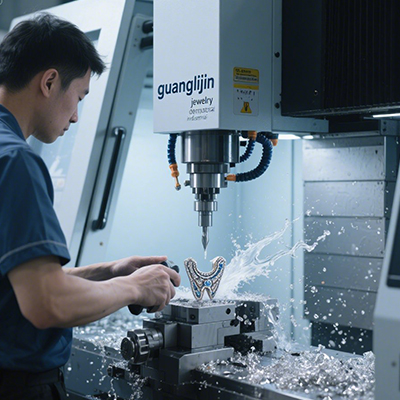
A jewelry polish machine with CNC precision uses programmed paths to control pressure, speed, and movement. Think of it as a robotic arm that follows a 3D blueprint — the same CAD file used for casting now guides the final polish [citation:7].
This closes the digital manufacturing loop. The machine delivers the exact same finish on piece #1 and piece #1,000. No fatigue, no drift, no surprises.
Key Components of a Professional System
Modern polishers include multi-axis motion control, digital recipe storage, and adaptive pressure systems. Advanced models feature vision inspection and automated compound dispensing, reducing waste and operator intervention [citation:1].
Comparison: Traditional vs. CNC Polishing
Choosing the right approach depends on your volume and quality targets. The table below contrasts both methods.
| Aspect | Traditional Hand Polishing | CNC Jewelry Polish Machine |
|---|---|---|
| Consistency | Variable (artist-dependent) | Exceptional (program-controlled) |
| Training Time | 6–18 months | 2–4 weeks |
| Output Speed | Moderate | 3–5× faster |
| Complex Geometries | Challenging | Excellent handling |
| Long-term ROI | Higher per-piece cost | Lower per-piece cost |
For commercial production, CNC polishing systems deliver superior value. They typically pay for themselves within 12–18 months through efficiency gains and reduced rework.
5-Step CNC Polishing Workflow (Operator’s Guide)
Proper procedure maximizes both finish quality and machine lifespan. Follow these steps for repeatable excellence.
Step 1: Digital Path Planning
Start with your 3D CAD model. Use CAM software to define toolpaths — the machine polishes exactly where you tell it, avoiding delicate settings.
Step 2: Tool and Compound Selection
Choose the right polishing wheel (felt bob, muslin, brush) and compound (diamond paste, rouge, alumina). Different stages — pre-polish vs. final mirror — require different media.
Step 3: Workholding Fixturing
Secure the piece in a custom fixture. 3D-printed holders work well. The piece must sit identically every cycle; consistency starts here.
Step 4: Program Execution and Monitoring
Run the cycle. Watch the first piece closely, adjusting time or pressure if needed. Modern machines store dozens of recipes for different materials and finishes.
Step 5: Post-Polish Cleaning and Inspection
Remove all compound residue in an ultrasonic cleaner. Inspect under bright light for uniform shine. Document results to track performance over time.
Many believe CNC polishing is “set and forget.” In reality, jewelry polish machine performance depends on proper tool maintenance, regular calibration, and correct fixturing. Neglecting these leads to subpar finishes and costly rework.
Real-World Implementation: A Success Story
Our team worked with a mid-sized manufacturer in early 2024. They produced a signature collection with complex under-bezels. Manual polishing caused a 17% rejection rate.
We installed a professional jewelry polish machine with customized programming. Within eight weeks, their rejection rate dropped to under 3%. Production capacity increased by 48% without adding staff. The owner told us: “I wish we had done this years ago.”
This mirrors broader industry trends: a 2024 market analysis by Finishing Today showed a 25% annual growth in sales of dedicated jewelry CNC polishers, reflecting surging demand for automation [citation:7].
Selecting the Right Wholesale Machining Solution
Not all CNC polishers are equal. Two common architectures serve different needs.
Robotic Arm Polishing Cell (System A)
Adapted industrial robots (6-axis) with polishing attachments. Extremely flexible, can be retooled for diverse tasks. Programming is complex, requiring offline simulation. Best for large manufacturers with varied product lines.
Specialized Jewelry CNC Polisher (System B)
Built from the ground up for jewelry. Simpler, jewelry-focused software. Excellent as a standalone finishing station. Ideal for workshops seeking a turnkey solution [citation:7].
For most wholesale operations, System B offers faster deployment and lower total cost of ownership.
LSI Keywords in Action: Precision, Automation, Finishing Systems
When evaluating equipment, consider automated polishing systems that integrate with your existing workflow. Look for precision CNC polishers with vision-assisted inspection. And don’t overlook industrial jewelry finishing solutions — they often include dust extraction and compound recycling, improving both safety and sustainability.
Maintenance That Protects Your Investment
Regular care ensures peak performance. Daily: clean wheels and remove compound buildup. Weekly: check mechanical alignment and lubricate moving parts. Monthly: run calibration tests and update software if needed [citation:1].
Maintain a service log. Track wheel replacement intervals and any finish variations. This data helps predict issues before they cause scrap.
Checklist for CNC Polishing Success
- Toolpath verified — simulation shows no collisions or missed areas.
- Tools and media ready — correct wheels installed, fresh compound loaded.
- Fixture secure — clean, rigid, and positioned accurately on the machine bed.
- Workpiece seated — piece is perfectly aligned in the fixture.
- Machine calibrated — axes move freely, tool offset is set correctly.
- Safety systems active — guards closed, ventilation for dust is running.
- Post-polish cleaning ready — ultrasonic cleaner is filled and heated.