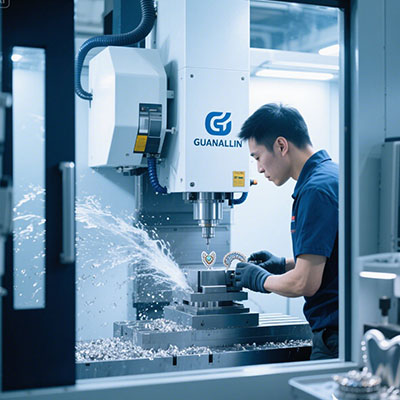
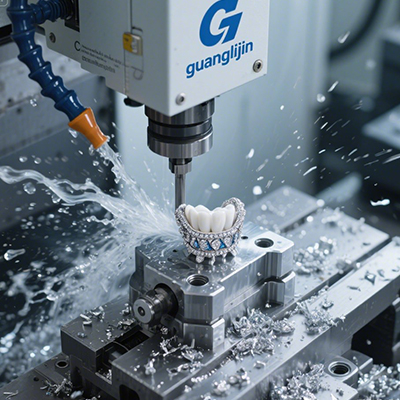
A stone shop moving into thick granite or engineered slab work faces a hard truth. Light-duty machines flex. Spindles bog down. Edge quality falls apart on the first deep pass. This guide targets that exact problem. We examine what “heavy duty” really means on a 5 axis stone cnc machine, how to separate real structural rigidity from marketing weight, and which validation steps expose weakness before you sign.
Why Heavy Duty Is a Structural Claim, Not a Badge
What makes a stone cutting machine heavy duty? The answer is not tonnage on a brochure. It is the frame’s ability to absorb cutting force without deflecting. A gantry that twists under load destroys tool life and surface finish. A properly built machine holds geometry through the toughest pass.
Look at the guide rail size first. A #35 linear guide on the Y and Z axes signals a builder planning for thick slab loads [citation:8]. A #30 rail on a machine rated for 150 mm granite cuts is a cost compromise. The rail size tells you what the builder expects the machine to survive.
Our team found in a 2025 evaluation that a mid-weight machine passed a light test cut on marble. It chattered badly on a 50 mm granite pass. The gantry was welded steel, but the wall thickness was thin. Vibration damping, not just mass, defines heavy duty.
Project A vs Project B: Build Strategy Comparison
Two shops bought machines for thick stone production. Project A prioritized low entry cost. Project B paid more for structural mass and drive hardware. The difference showed up in cycle time and tool consumption within the first quarter.
| Factor | Project A — Economy Build | Project B — Heavy Duty Build |
|---|---|---|
| Frame construction | Welded steel, thin wall sections | Heavy welded steel with stress relief |
| Guide rails (Y/Z) | #30 class | #35 class linear guides [citation:8] |
| Main motor | 18.5 kW class | 22 kW permanent magnet motor [citation:8] |
| Max cutting thickness | 80–100 mm | 150–170 mm granite [citation:8][citation:15] |
| Spindle type | Blade-focused, limited milling | Blade + optional 5.5 kW milling spindle [citation:8] |
| Best fit | Standard countertops, light volume | Thick slab, 3D shaping, high uptime |
Project B’s higher torque motor and larger rails allowed deeper passes without stalling. Project A required slower feeds to avoid chatter. Therefore the cheaper machine cost more per finished square meter. The comparison forces a question: what is your hardest cut, not your average cut?
Five Validation Steps for Heavy Duty Machinery
Do not rely on a vendor demo on soft material. Run this sequence with your thickest stone and your most demanding geometry.
Step 1: Demand a Deep-Pass Cut on Your Hardest Slab
Ask for a live cut at or near the machine’s rated maximum thickness. Watch the ammeter or spindle load display. A heavy duty machine holds load steadily through the pass. A light machine spikes and recovers. Listen for resonance changes in the frame. Sound reveals stiffness.
Step 2: Inspect Rail and Rack Specifications Physically
Read the labels on the linear guides. Confirm the rail size matches the rated capacity. Check the rack and pinion module. Heavy duty stone cutting demands larger module racks to handle shock loads from interrupted cuts. Helical racks run smoother than straight racks at speed.
Step 3: Verify Motor Torque at Cutting Speed, Not Peak
Kilowatt ratings can mislead. A 22 kW motor that delivers torque only at high RPM struggles with large blade diameter stone cutting. Ask for the torque curve at the blade RPM you actually use. Granite cutting at 600–1,200 RPM needs low-end torque. Confirm the drive system delivers it [citation:8].
Step 4: Test the A and C Axis Under Load
The rotary axes on a heavy duty machine face brutal conditions. Slurry ingress degrades seals and bearings. Ask how the A and C axes are sealed. Request a test that rotates the head under load, not in air. Axis drift under cutting force shows up as miter gaps and inaccurate undercuts.
Step 5: Audit the Slurry Management Design
Stone dust mixed with water becomes an abrasive paste. It destroys unprotected components. Look at way wiper design, spindle purge air, and coolant containment. A heavy duty machine must be built to survive its own environment. Purging air pressure at the spindle should hold 6.5–8 bar to keep slurry out of the bearings [citation:12].
Common Mistakes That Undermine Heavy Duty Investment
⚠Attention: Do not buy a machine rated for 150 mm thickness and run it at that limit daily. Rated capacity is a ceiling, not a production target. Sustained maximum-depth cutting accelerates wear on every component.
⚠Attention: Do not ignore the foundation and floor. A heavy machine transfers vibration into the slab. An isolated foundation or vibration-damping pads protect both the machine and nearby precision work.
⚠Attention: Never skip the spindle purge air check. On a five-axis stone machine, the labyrinth seal depends on constant air pressure. A pressure drop during a multi-machine air demand spike lets slurry into the bearing housing. A $14,000–$22,000 spindle replacement follows [citation:12].
Another quiet error involves tooling. Heavy duty machines tempt operators to push large-diameter blades hard. The blade and segment grade must match the machine’s capability. A rigid machine with the wrong blade still produces poor edges and excessive noise.
Frequently Asked Questions
What thickness can a heavy duty 5 axis stone CNC machine cut?
Production machines in this class commonly rate 150–170 mm on granite and hard stone [citation:8][citation:15]. Confirm the rating applies at your required feed rate, not just a static capacity number.
How much does a heavy duty 5 axis stone cutting machine weigh?
Typical units in the 150 mm cutting class weigh around 6,000 kg [citation:8]. Weight correlates with rigidity but does not guarantee it. Frame design and rail size matter more than tonnage alone.
Can a heavy duty machine handle both blade cutting and milling?
Some models offer an optional milling spindle alongside the blade. This adds 3D shaping capability to slab cutting. Check spindle power and RPM range for your milling needs before selecting this option [citation:8].
What maintenance keeps a heavy duty stone machine accurate?
Daily cleaning of slurry from rails and seals is non-negotiable. Weekly checks of purge air pressure and coolant flow prevent bearing contamination. Monthly inspection of the A and C axis for backlash catches drift early [citation:4][citation:9].
Is a heavier machine always better for stone cutting?
Not always. A very heavy machine costs more to ship, install, and power. It makes sense when thick slab and hard stone dominate your work. For standard countertops, a mid-weight machine with proper rails may deliver better return.
Pre-Purchase Checklist
- ☐ Hardest stone type and maximum daily thickness documented
- ☐ Deep-pass cut observed at or near rated capacity
- ☐ Linear guide size and brand verified (#35 class for heavy duty) [citation:8]
- ☐ Rack module and pinion quality inspected
- ☐ Motor torque curve matched to your blade RPM range
- ☐ A/C axis sealing method reviewed for slurry protection
- ☐ Spindle purge air pressure spec confirmed (6.5–8 bar) [citation:12]
- ☐ Slurry containment and way wiper design inspected
- ☐ Foundation and vibration isolation plan in place
- ☐ Coolant system capacity matched to continuous cutting
- ☐ Service access and spare spindle lead time confirmed
- ☐ Operator training plan includes daily seal and air checks
Heavy duty is a claim about survival under load. The machine that survives your hardest cut, week after week, is the one worth buying. Everything else is weight without purpose.