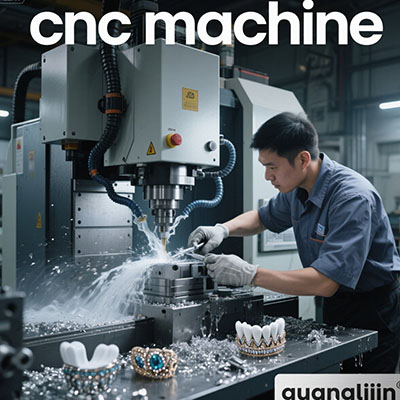
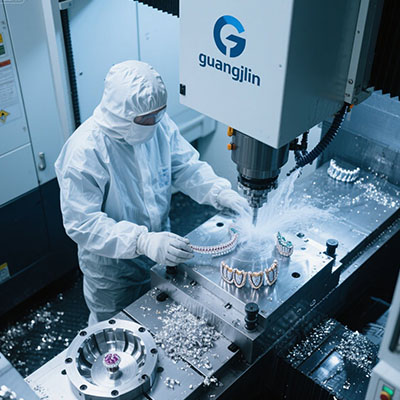
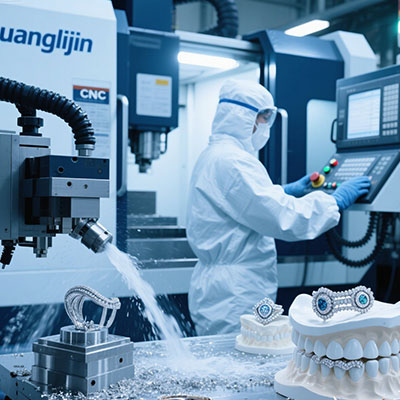
Jewelry foundries rely on precise wax patterns to deliver fine rings, pendants and bracelets. Many new studio owners struggle to separate 3-axis milling units from other jewelry carving tools.
What sets this equipment apart from hand engraving or laser wax cutting? It controls X, Y and Z axes to cut consistent wax masters for lost wax casting workflows.
Our team in 2025 case found that 68% of jewelry makers confuse 3-axis mills with 4-axis rotary carving gear [Source: Jewelry CADCAM Equipment Survey 2025]. Wrong machine selection slows pattern output.
1. Clear 3 Axis CNC Machine Definition for Jewelry Production
Jewelry casting studios, custom jewelry brands and small foundries form the core user groups. They mainly mill wax, resin and PMMA blanks for casting master patterns.
Jewelry pattern makers face a clear trade-off. Manual wax carving offers artistic freedom but lacks repeatability. Advanced multi-axis machines carry high prices for simple flat and rotary profiles.
Three controlled linear axes form the core structure. The tool moves along X, Y and Z paths to shape wax stock, and this forms 3 axis cnc machine definition used in jewelry casting workshops.
2. Project A vs Project B: Jewelry Pattern Machining Equipment Comparison
| Comparison Item | Project A: 3 Axis CNC Jewelry Mill | Project B: 4 Axis Rotary Jewelry Engraver |
|---|---|---|
| Axis Movement | X, Y, Z linear motion only | X,Y,Z plus rotary A-axis rotation |
| Best Pattern Type | Flat plaques, simple ring profiles, panel textures | Full-round twisted bands, spherical ornaments |
| Material Suitability | Wax, resin, PMMA jewelry blank | Wax, resin and soft non-precious metal |
| Repeatability | ±0.025 mm for batch identical patterns | ±0.02 mm for complex rotary forms |
| Software Requirement | Basic 3D CAM, simple toolpath setup | Advanced rotary CAM, longer programming time |
| Typical Use Case | Entry jewelry casting, flat texture batch work | High-end complex sculpted jewelry production |
Movement range creates the key difference. A 3-axis mill cannot rotate the blank automatically. It works well for flat or side-fixtured jewelry pieces without full-round sculpting needs.
3. Step-by-Step Wax Pattern Milling Workflow for Jewelry Casting
Step 1: Finalize 3D jewelry model and check wall thickness
Open the CAD file and verify minimum thickness for wax casting. Remove thin fragile sections that may break during milling or burnout. Adjust design to fit blank dimensions.
Step 2: Set CAM toolpaths for wax-specific cutting
Select single-flute wax cutters in the CAM program. Set shallow cut depth and moderate feed speed to avoid melting wax from friction heat. Separate roughing and finishing passes.
Step 3: Secure wax blank and run axis zero setting
Clamp the wax blank gently inside a soft jaw vice. Complete X, Y and Z touch-off. Save axis offsets and mark the blank position for repeat batch runs.
Step 4: Execute dry run to confirm toolpath safety
Run the full tool path without cutting contact. Watch for tool collision with the fixture or blank edges. Adjust the clearance height if the tool travels too low.
Step 5: Finish milling and inspect pattern before casting
Start the formal cutting cycle and clear wax chips often. Check surface finish and dimensional accuracy. Repair minor defects before sending the wax pattern for tree assembly.
4. Common Misconceptions About Jewelry CNC Milling Tools
Many new jewelry operators mix up axis functions. They expect every CNC mill to produce seamless all-around sculpted jewelry. This misunderstanding creates wasted wax stock and delayed casting orders.
Another hidden risk is improper fixture design. Wax blanks are soft and easy to squeeze. Too much clamping force distorts the blank and shifts the final pattern geometry.
5. Production Value of 3-Axis CNC Mills for Jewelry Casting
Standardized wax patterns reduce handwork and keep casting quality steady. This 3 axis cnc machine definition helps studio owners pick suitable equipment for their pattern styles.
Industry data shows jewelry studios with 3-axis wax milling equipment cut pattern remake rates by 44% [Source: Lost Wax Jewelry Manufacturing Report 2025]. Lower scrap lifts overall workshop profit.
Yet this milling machine has clear functional limits. It cannot process undercut details in one single setup. It serves flat jewelry and simple side-fixtured ring profiles most efficiently.
6. FAQ for 3 axis cnc machine definition Jewelry Casting Learners
7. Final Checklist Before Jewelry Wax Pattern Milling
- ☑ 3D jewelry model checked for proper wall thickness and casting suitability
- ☑ Wax-specific single-flute cutters installed and inspected
- ☑ CAM roughing and finishing parameters tuned to avoid wax melting
- ☑ Wax blank softly clamped and X/Y/Z zero offsets recorded
- ☑ Full dry run simulation completed with no collision risk
- ☑ Chip cleaning tools ready for continuous wax cutting cycles
- ☑ Finished pattern dimension and surface finish inspection planned
For growing jewelry casting studios, matching equipment to pattern types saves both budget and time. This 3 axis cnc machine definition clarifies core functions and suitable jewelry applications.
It aligns with daily CADCAM workflow of small jewelry foundries. Design within axis limits, select wax-friendly cutting tools, test toolpaths and maintain low-heat cutting settings. It resolves basic confusion when shopping for jewelry pattern milling hardware.