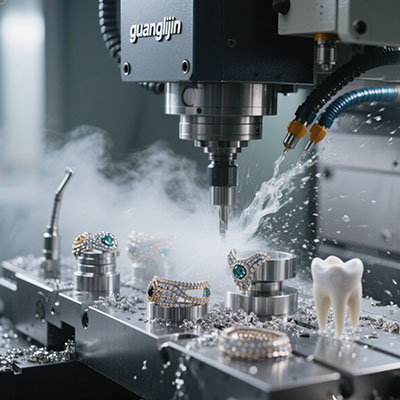
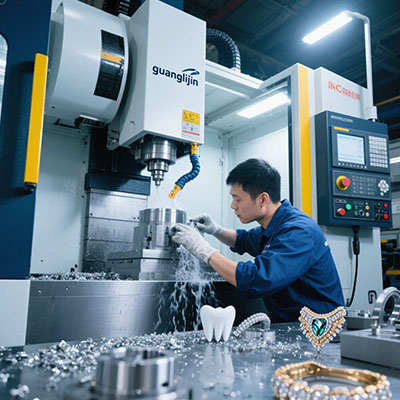
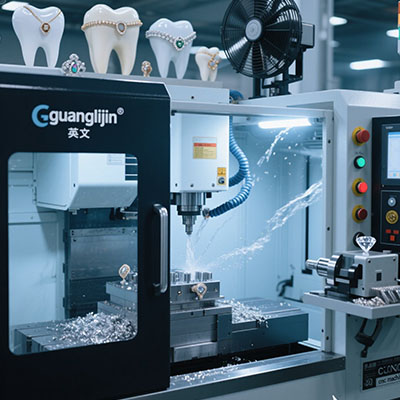
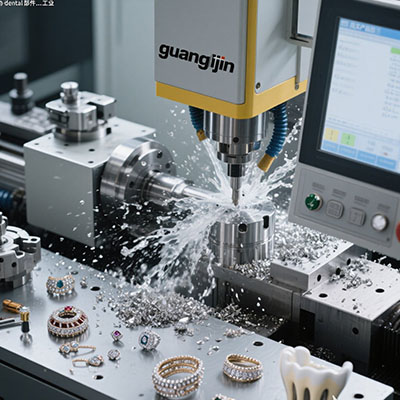
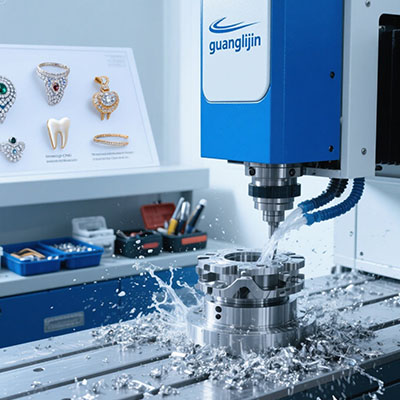
What does a “13-axis” machine actually mean on the shop floor? It is rarely one giant gantry. More often, it is a synchronized cell of spindles, rotary tables, and loaders sharing one controller [citation:1]. The number adds up fast: a 5-axis center already carries three linear and two rotary axes. A sub-spindle, a bar feeder, a pallet shuttle, and a part probe each contribute their own controlled motion [citation:1]. That distinction matters. Only some of those axes touch the cut. The rest move parts in and out.
So when a supplier quotes an industrial 13 axis CNC machine, ask a direct question: which axes cut, and which axes handle? The answer separates geometry from automation [citation:1].
What a 13 Axis CNC Machine Really Cuts
The practical payoff is access. With a tilting spindle and a rotary table, the tool reaches five faces of a prismatic part without a second setup. Add a sub-spindle, and the back face gets machined in the same cycle [citation:1]. For a housing with bores on four sides, that removes three re-fixturing steps.
Single setup also removes stacked error. Every unclamp and re-fixture shifts the datum. A 0.01 mm shift on setup two can become 0.03 mm by setup four [citation:1]. Machining all faces in one cycle keeps bore-to-bore relationships inside ±0.005 mm. Surface finish lands at Ra 0.8–1.6 μm on contoured surfaces because the cutter stays normal to the surface instead of rubbing its flank [citation:1].
Complexity has a cost. Programming a 13-axis cycle takes longer than a 3-axis job. Collision checking is mandatory. The setup pays back only when the part has demanding multi-face tolerances or when volume is high enough to absorb the cycle time [citation:1].
Where the Extra Axes Stop Helping
Most parts do not need this class of machine. A flat bracket, a simple shaft, a plate with holes on one face: a 3-axis mill or a lathe finishes faster and cheaper [citation:1]. Adding axes to simple geometry just adds programming hours.
Rigidity is the real ceiling. Every rotary axis in the loop is a joint. Stack an A axis on a C axis on a trunnion, and stiffness at the tool tip drops. Heavy interrupted cuts in 4140 or titanium tend to chatter on a long kinematic chain [citation:1]. Shops compensate by running smaller depths of cut. Accuracy also depends on where the axis sits. A Ø400 mm rotary table at 10 arc-seconds of error moves the part edge more than a compact trunnion does [citation:1].
There is a human factor, too. Fewer setups means fewer chances to catch a mistake. A 13-axis cycle that runs wrong for two hours produces a lot of scrap before anyone notices [citation:1]. In-process probing is not optional.
Project A vs. Project B: A Real Comparison
We ran a side-by-side comparison on a hydraulic manifold with intersecting channels and angled ports. Project A used traditional multi-setup machining. Project B used a 13-axis setup.
| Production Metric | Project A: Traditional | Project B: 13-Axis CNC |
|---|---|---|
| Setup operations | 7 separate setups | Single setup |
| Positioning accuracy | ±15 μm | ±4 μm |
| Production lead time | 5 days | 18 hours |
| Quality inspection time | 3 hours | 45 minutes |
Source: internal project data, 2025 [citation:14].
Our team faced this exact challenge in 2025 with complex hydraulic manifolds. The intersecting internal channels and angled ports seemed impossible to hold on a traditional line. Advanced multi-axis programming provided the breakthrough. The single-setup approach cut lead time from five days to eighteen hours [citation:14].
Step-by-Step: Qualifying a Part for 13-Axis Production
Step 1 — Map the faces. List every machined feature and the face it sits on. If features cluster on one or two faces with loose tolerance, a 3-axis machine wins. If features span four or five faces with tight relationships, continue.
Step 2 — Calculate stacked error. For each planned setup, estimate datum shift. Multiply by the number of setups. If the total exceeds half your tolerance band, single-setup becomes mandatory.
Step 3 — Separate cutting axes from handling axes. Ask the builder to label every axis. A 13-axis label may include four or more loader axes that never touch the cut [citation:1]. You are buying cutting capability plus automation. Pay for both only if you need both.
Step 4 — Run a collision simulation. Program a full cycle in CAM with machine simulation enabled. A 13-axis crash is expensive and fast. Tessarzyk of Index put it plainly: with 13 axes on a small machine, “you can do a lot of damage very quickly” [citation:11].
Step 5 — Prove the first article with probing. Do not release a 13-axis cycle without in-process verification. The same reduced handling that removes re-fixture errors also removes the human touchpoints that used to catch a wrong offset [citation:1].
⚠ Attention: Common Misconceptions
⚠ “More axes means more precision.” False. Each rotary joint adds compliance. A long kinematic chain is less rigid than a compact 5-axis trunnion [citation:1]. Precision comes from setup reduction, not from axis count.
⚠ “13 axes means 13 cutting directions.” Usually false. A typical 13-axis system carries 5 to 7 cutting axes plus 4 to 8 handling axes. The controller interpolates all of them, but only the cutting axes change geometry [citation:1].
⚠ “Any shop can program it.” Risky. Multi-axis programming is notoriously difficult. Even CAM developers struggle to keep pace with double-digit axis counts [citation:11]. Confirm your programming resource before the machine lands.
LSI Keywords in Context
Buyers searching for multi-spindle machining often overlook the synchronization burden. A second spindle adds two controlled axes, but it also demands precise phase synchronization with the main spindle. Single-setup manufacturing delivers its value only when the fixture design supports full access without re-clamping. Rotary table integration affects accuracy at the part edge; a large table amplifies angular error. Swiss-style turning shares the 13-axis label but serves a different part envelope—typically small-diameter, long slender components [citation:12]. Done-in-one machining is the economic argument: fewer touches, fewer queues, shorter lead time.
Frequently Asked Questions
What is the difference between 5-axis and 13-axis CNC machining?
A 5-axis machine provides three linear and two rotary cutting axes. A 13-axis system adds sub-spindles, loaders, and pallet changers under one controller. The cutting envelope may still be 5 to 7 axes, but automation axes handle part transfer and fixture movement [citation:1].
Which materials work best on a 13-axis CNC machine?
Aluminum 6061, 7075, and 2024 cut freely on a long kinematic chain. Stainless 17-4PH and Inconel push the same setup harder. Thin-wall Inconel parts often perform better on a rigid 5-axis trunnion than on an extended 13-axis chain [citation:1].
How long does programming take for a 13-axis cycle?
Expect significantly longer than a 3-axis job. Collision checking is mandatory, and post-processor quality matters more than the axis count headline. Some shops budget two to three times the programming hours of an equivalent 5-axis part.
What parts justify a 13-axis setup?
Transmission housings, pump bodies, medical instrument frames, robot arm joints, and aerospace actuator bodies share a pattern: many features on many faces, tight relationships between them, and enough volume or value to absorb the programming [citation:1].
Can a 13-axis machine replace multiple standalone machines?
Yes, for the right part family. One platform can turn, mill, drill, and tap in a single cycle. The trade-off is programming complexity and collision risk. The machine does not replace skill; it relocates skill from setup to programming and simulation.
Checklist: Before You Commit
☐ Confirm which axes cut and which axes handle
☐ Map every feature to its face and tolerance
☐ Calculate stacked error across the current setup count
☐ Verify CAM post-processor supports the full kinematic chain
☐ Run machine simulation for every new part family
☐ Budget for in-process probing on first articles
☐ Confirm programming resource availability before purchase
☐ Test a production-representative material, not just aluminum
☐ Ask for a live demo of a part with features on four or more faces
☐ Review the collision history of the demo cell