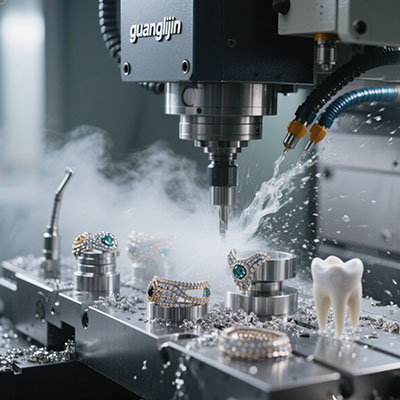
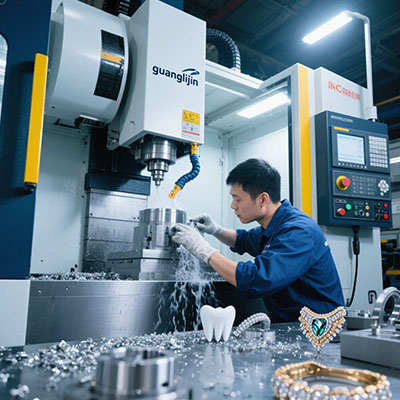
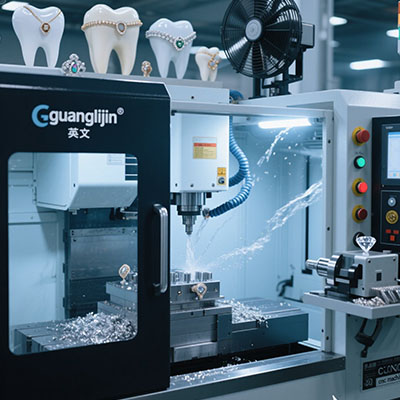
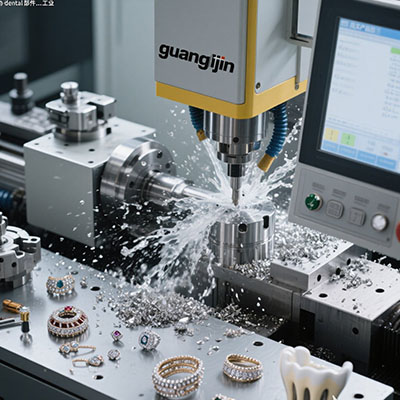
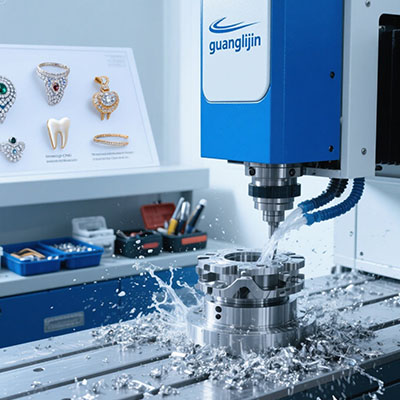
Five-axis machining solved undercuts and compound angles. It did not solve the problem of a part that needs turning, milling, drilling, and inspection without ever leaving the fixture. That is where 13 axis cnc platforms enter the conversation. But the number itself is misleading. Understanding what those axes actually do separates a smart investment from an expensive showpiece.
What Does “13 Axis” Actually Mean on a Shop Floor?
A 13-axis machine is not a single giant gantry with thirteen slides stacked in a row. It is a synchronized cell. Three linear axes position the tool. Rotary axes reorient the workpiece or tilt the spindle. A sub-spindle adds two more. Bar feeders, pallet shuttles, and part probes each contribute controlled axes of their own [citation:9].
Only five to seven of those axes typically touch the cut. The rest handle automation and material flow. That distinction matters enormously. When a supplier quotes a 13 axis cnc machine, ask which axes cut and which axes move. The answer tells you whether you are buying geometry or throughput [citation:9].
Cadence, a precision manufacturer, operates a 13-axis platform that runs three tools simultaneously. Their engineers describe it as a way to reduce secondary operations and minimize handling [citation:1]. The real gain is not the axis count. It is the elimination of re-fixturing steps.
Project A vs. Project B: When 13 Axes Pay Back
Not every part belongs on a long kinematic chain. Every rotary joint in the loop reduces stiffness at the tool tip. Heavy interrupted cuts in titanium or 4140 steel tend to chatter when the axis stack grows [citation:9].
| Factor | Project A: Medical Housing | Project B: Aerospace Actuator Body |
|---|---|---|
| Faces requiring machining | 4 faces + cross-holes | 5 faces + contoured bores |
| Tolerance stack concern | ±0.01 mm bore-to-bore | ±0.005 mm bore alignment |
| Annual volume | 12,000 units | 800 units |
| Material | 17-4PH stainless | Ti-6Al-4V |
| Setup count on 5-axis | 3 setups | 4 setups |
| Setup count on 13-axis | 1 setup | 1 setup |
| Cycle time trade-off | 18% longer cycle | 22% longer cycle |
| Verdict | Payback in 7 months | Marginal; rigidity loss hurts |
Project A wins because the volume amortizes programming complexity and the material cuts freely. Project B struggles because titanium on a long kinematic chain forces lighter depths of cut. A rigid five-axis trunnion often beats a 13-axis cell on exotic alloys with thin walls [citation:9].
Step-by-Step: Qualifying a Part for 13-Axis Production
Our team follows a qualification sequence before recommending any multi-axis platform. Here is the process we used in a 2025 medical connector project.
Step 1: Map every feature to a face. List all holes, pockets, threads, and contours. If more than 70% of features sit on three or fewer faces, a five-axis machine will usually be cheaper [citation:9].
Step 2: Calculate the tolerance stack from re-fixturing. Each unclamp and reclamp shifts the datum. A 0.01 mm shift on setup two becomes 0.03 mm by setup four. If the print demands ±0.005 mm between features on different faces, single-setup becomes mandatory [citation:9].
Step 3: Check material machinability on a long chain. Aluminum 6061 and 7075 tolerate the reduced rigidity of a 13-axis cell. Inconel and hardened stainless do not. Run a chatter test on the actual kinematic configuration before committing.
Step 4: Model the programming hours honestly. A 13-axis cycle takes longer to program than a three-axis job. Collision checking is not optional. Budget 40 to 60 hours of CAM time for a moderately complex housing, plus a first-article verification cycle.
Step 5: Verify in-process probing capability. A 13-axis cycle that runs wrong for two hours produces a large pile of scrap before anyone notices. In-process probing and a first-article check are not optional [citation:9].
Step 6: Compare total cost per good part, not hourly rate. The 13-axis hour rate is higher. The setup count is lower. The scrap risk is front-loaded. Run the math on annual volume before signing the PO.
⚠ Attention: Three Misconceptions That Sink 13-Axis Projects
Misconception 1: “More axes means tighter tolerances.” False. Every rotary axis adds angular error at the part. A large rotary table with 10 arc-seconds of error moves the part edge more than a compact trunnion does [citation:9]. Axis count does not guarantee accuracy. Kinematic design does.
Misconception 2: “The machine will run unattended immediately.” A 13-axis cycle is a synchronized system. Tool interference, bar feeder timing, and sub-spindle synchronization all need tuning. Expect a ramp-up period measured in weeks, not days.
Misconception 3: “Any complex part belongs on 13 axes.” A flat bracket with holes on one face runs faster and cheaper on a three-axis mill. Adding axes to simple geometry adds programming time without adding value [citation:9].
Real Data Points from the Shop Floor
Surface finish on a properly tuned 13-axis contouring cycle typically lands at Ra 0.8–1.6 μm. Secondary polishing is often unnecessary because the tool stays normal to the surface across the entire profile [citation:9].
Swiss-type multi-axis platforms routinely hold ±0.005 mm on turned diameters. With specialized setups, ±0.002 mm is achievable on critical features [citation:12]. That precision comes from the guide bushing supporting the workpiece close to the cut, not from the axis count alone.
Frequently Asked Questions
Q: What is the difference between 13 axis CNC and 5-axis machining?
A five-axis machining center moves the tool through three linear and two rotary axes. A 13 axis cnc system adds sub-spindles, loaders, and pallet changers under one control. The extra axes handle automation and back-face machining, not geometry creation [citation:9].
Q: Which industries use 13 axis Swiss screw machining for mission-critical parts?
Medical device manufacturers use it for bone screws, dental implants, and catheter components. Aerospace suppliers use it for fuel injector parts and hydraulic fittings. The common thread is small diameter, high feature density, and tight tolerance relationships [citation:7][citation:12].
Q: How do I choose between a 13 axis machining center and a Swiss-type lathe?
Part diameter decides. Swiss-type 13 axis machines excel below 32 mm diameter where the guide bushing controls deflection. A 13 axis machining center handles larger prismatic housings with multiple faces. Match the platform to the part envelope, not the axis headline [citation:12].
Q: What tolerances can 13 axis CNC machining realistically hold?
On a well-maintained Swiss platform, ±0.005 mm on turned diameters is routine. On a larger machining center, ±0.01 mm across multiple faces in a single setup is achievable. Tighter calls require specialized fixturing and slower cutting speeds [citation:3][citation:12].
Q: Is 13 axis CNC programming harder than 5-axis?
Yes. The controller must interpolate all axes simultaneously. Collision checking becomes more complex. Post-processor quality matters more than the machine’s headline axis count. Budget more CAM time and verify every toolpath before the first cut [citation:9].
Checklist: Before You Commit to a 13 Axis Process
☐ Feature map shows more than 70% of features on three or fewer faces? Reconsider five-axis.
☐ Tolerance stack from re-fixturing exceeds print requirements? Single-setup justifies the platform.
☐ Material is aluminum or free-machining stainless? Kinematic chain can handle it.
☐ Material is Inconel or thin-wall titanium? Run a chatter test first.
☐ CAM programming hours budgeted at 40+ for a moderately complex part?
☐ In-process probing and first-article inspection planned?
☐ Annual volume high enough to amortize programming over 18 months or less?
☐ Supplier can explain which axes cut and which axes move?
☐ Total cost per good part modeled, not just hourly rate compared?
☐ Ramp-up scrap allowance included in the project budget?
For shops evaluating 13 axis cnc solutions, the technology delivers real value when the part geometry and volume align. It fails when the axis count becomes the goal instead of the tool.