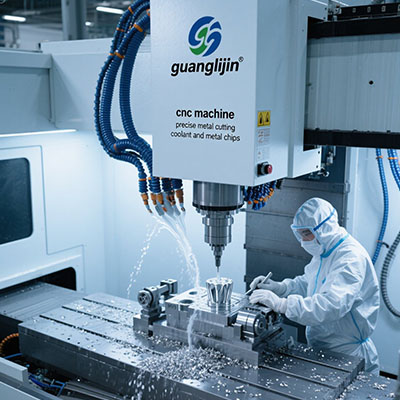
Jewelry making has changed. Small metal components now demand the same precision as aerospace brackets. A clasp must click. A pendant face must gleam. That is where 3 axis cnc aluminum machining earns its place. It removes material with controlled force, holds tolerances that hand tools cannot match, and scales from one prototype to a thousand pieces. This guide explains how the process works, what it costs, where it fails, and how to source it well.
Why 3 Axis CNC Aluminum Fits Jewelry Manufacturing
Aluminum is light, affordable, and takes anodized color beautifully. Jewelry designers use it for earrings, cufflinks, bracelet links, and decorative plates. The material cuts fast. That speed matters when you produce many small parts.
A three-axis machine moves the cutter in X, Y, and Z directions. The workpiece stays clamped. The tool comes down from above and mills pockets, profiles edges, and drills holes. Most jewelry components are flat or shallow. They have features on one face. A three-axis setup handles them without complex fixturing[citation:13].
We ran a batch of 200 aluminum pendant blanks last quarter. Each blank measured 30mm by 20mm by 3mm. The job required a recessed center pocket and four mounting holes. Cycle time averaged 4 minutes 20 seconds per part. Surface finish came off the tool at Ra 1.6. A quick bead blast removed tool marks. The customer anodized the parts black and sold them as a limited series.
That job would have cost far more on a five-axis machine. The geometry did not need it. The features faced one direction. Three axes did the work at a lower hourly rate. Rates for three-axis aluminum milling typically run from $35 to $120 per hour depending on region and shop quality[citation:15].
Critical Process Parameters for Jewelry-Grade Aluminum Parts
Small parts punish poor machining decisions. A chatter mark on a 2mm-wide earring edge is visible. A burr inside a clasp ruins function. Three parameters deserve close attention.
Tool Selection and Edge Sharpness
Aluminum is soft and gummy. It sticks to dull cutters. Use two-flute or three-flute carbide end mills designed for aluminum. Sharp edges reduce cutting force and heat. High helix angles help evacuate chips from small pockets[citation:4]. For jewelry work, a 1mm to 3mm cutter is common. Smaller tools break easily. Rigid setups matter.
Spindle Speed and Feed Rate Balance
Many operators push spindle speed too high. That raises temperature and accelerates tool wear. For small aluminum parts, spindle speeds between 12,000 and 20,000 RPM work well when matched with appropriate feed rates[citation:4]. The goal is chip clearance, not maximum RPM. If chips recut, surface finish suffers.
Cooling and Chip Evacuation
Jewelry parts often have tiny features. Chips pack into corners. Air blast or minimum quantity lubrication keeps the cut zone clear. Flood coolant works too but can move small parts if clamping is weak. We prefer air blast for parts under 50mm. It avoids residue and keeps the workpiece visible.
Project Comparison: Two Aluminum Jewelry Components
| Factor | Project A: Flat Pendant | Project B: Layered Clasp |
|---|---|---|
| Geometry | 2.5D pocket, one face | Multi-level steps, thin walls, tight fit |
| Setup count | 1 | 2 (flip for backside relief) |
| Tolerance | ±0.1mm | ±0.02mm on mating surfaces |
| Tooling | 3mm flat end mill | 1mm end mill, 0.5mm drill |
| Cycle time (per part) | 3–5 min | 12–18 min |
| Primary risk | Burrs on edges | Wall deflection, tool breakage |
| Relative cost | Baseline | 2.5–4× baseline |
Project B costs more for clear reasons. The second setup adds handling time. Thin walls force slower feeds to avoid vibration. Smaller tools break more often. A buyer should expect this. Designers who understand the gap can make informed trade-offs. A clasp that functions reliably is worth the extra cost. A decorative plate with non-critical tolerances should not carry clasp-level precision.
Step-by-Step Sourcing Guide for 3 Axis CNC Aluminum Jewelry
Step 1 — Finalize the 3D model and 2D drawing. Export STEP files. Include a drawing that marks critical dimensions. Not every dimension needs a tolerance. Over-tolerancing raises cost without adding function[citation:8].
Step 2 — Define the finish before quoting. As-machined aluminum shows tool marks. Bead blast gives a uniform matte look. Anodizing adds color and wear resistance but changes dimensions slightly. Tell the shop the final finish so they can leave appropriate stock.
Step 3 — Ask for a DFM review. A good shop flags features that will fail. Deep pockets narrower than the tool, sharp internal corners that need EDM, walls under 0.8mm. Fix these in the model before production. Catching a problem at the quote stage costs nothing. Catching it after 200 parts costs a lot.
Step 4 — Request a first article sample. For jewelry, appearance matters as much as dimensions. Inspect the sample under magnification. Check edge quality, pocket floor finish, and hole positions. Measure the features that mate with other components.
Step 5 — Confirm inspection and packaging. Small aluminum parts scratch easily. Ask how parts are protected after machining. Individual bagging or tray separation prevents damage during shipping. Request dimensional reports for critical features on the first batch.
⚠ Attention: Do not assume the cheapest quote reflects the lowest total cost. A shop that skips first article inspection may ship parts with out-of-tolerance features. Rework or scrap on a 500-piece jewelry order can erase the initial savings many times over. Ask what inspection is included[citation:3].
Common Mistakes in Aluminum Jewelry Machining
Specifying sharp internal corners. End mills are round. A 1mm cutter leaves a 0.5mm radius at every internal corner. If your design shows a true 90-degree corner, the shop must add EDM or leave the feature unfinished. Design with tool radii in mind[citation:2].
Ignoring wall thickness. Thin aluminum walls vibrate during cutting. The tool pushes the wall away, then it springs back. The result is chatter marks and inconsistent thickness. Keep walls above 1mm where possible. If the design requires thinner, expect slower feeds and higher cost[citation:9].
Using the wrong aluminum alloy. 6061-T6 is the workhorse. It machines well, anodizes predictably, and costs less than 7075. Use 7075 only when strength justifies the premium. For jewelry, 6061 handles most applications. Some designers prefer 7075 for clasps that take repeated stress.
Frequently Asked Questions About 3 Axis CNC Aluminum
Q: Can 3 axis cnc aluminum machining produce jewelry with curved surfaces?
A: Yes, for shallow curves on one face. A ball end mill can create smooth contoured surfaces. Deep undercuts or features on multiple sides need additional setups or a fourth axis. If the curve wraps around the part, three axes cannot reach it in one clamping.
Q: What tolerance is realistic for small aluminum jewelry parts on a 3 axis machine?
A: Standard machining holds ±0.1mm to ±0.05mm without special effort. Tightening to ±0.02mm or better requires careful setup, smaller tools, and more inspection time. Expect the price to rise accordingly. Many jewelry features function perfectly at ±0.1mm[citation:8].
Q: How much does a 3 axis CNC aluminum jewelry machining service cost for a small batch?
A: Setup fees dominate small runs. A simple aluminum bracket might carry a $50 to $150 setup charge. Machining time adds $35 to $120 per hour depending on the shop. For 10 small parts, expect a total in the hundreds of dollars. At 100 units, per-part cost drops sharply because setup spreads across more pieces[citation:15].
Q: Does anodizing affect the fit of machined aluminum jewelry components?
A: Yes. Type II anodizing adds roughly 0.005mm to 0.015mm per surface depending on process and alloy. If two parts must fit together, account for this. Mask threaded holes or mating surfaces if the fit is critical. Tell your machinist and anodizer about the fit requirement before production.
Operational Checklist for Buyers
☐ 3D model exported as STEP with all critical dimensions marked
☐ 2D drawing includes tolerances only where function requires them
☐ Internal corners have radii equal to or larger than the intended cutter
☐ Wall thickness reviewed and confirmed above minimum for stability
☐ Aluminum alloy grade specified (6061-T6 recommended for most jewelry)
☐ Surface finish defined (as-machined, bead blast, anodized color)
☐ Anodizing growth accounted for in mating features
☐ First article inspection requested before full batch
☐ Packaging method confirmed to prevent scratches
☐ DFM feedback received and reviewed before tooling begins
For buyers seeking a reliable partner, the 3 axis cnc aluminum service route offers a practical balance of cost, speed, and precision for jewelry components. Match the process to the part. Inspect the first article. Then scale with confidence._