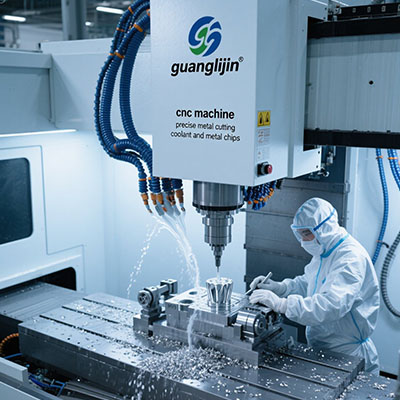
Jewelry fabrication lives on detail. A 0.2mm error on a clasp changes how a bracelet feels. A rough pocket floor ruins a pendant’s look. The 3 axis cnc aluminum system answers these demands without the overhead of five-axis equipment. It cuts, profiles, and drills small metal parts with repeatable accuracy. This article maps the full solution: machine choice, process control, cost structure, and sourcing strategy.
What Makes a 3 Axis System Suitable for Jewelry Fabrication
Three-axis machining moves the spindle along X, Y, and Z. The part stays fixed. Most jewelry components are flat or shallow with features on one face. That geometry fits the three-axis model perfectly.
Rigidity matters more than size. Small cutters demand stable machines. A benchtop router with a flexing gantry cannot hold ±0.05mm on a 1mm end mill. Cast iron frames and preloaded linear guides hold tolerance. Spindle runout below 0.01mm keeps tool life predictable.
Speed also counts. Jewelry batches are often small. Setup time eats profit. A three-axis system with quick-change fixturing and a tool presetter cuts non-cutting time. We tracked a 40-part run where setup consumed 35% of total job time. Reducing it changed the quote from marginal to profitable.
Therefore, machine selection should weigh rigidity, spindle quality, and setup speed. Price alone misleads. A cheaper machine that loses tolerance after two hours costs more than a stable one.
Core Process Parameters for Jewelry-Grade Aluminum Machining
Aluminum 6061-T6 remains the default alloy for jewelry components. It machines cleanly, anodizes evenly, and costs less than 7075. However, the material only performs well when the process suits it.
Tool Geometry and Coating
Two-flute carbide end mills with high helix angles clear chips fast. Uncoated tools work for aluminum because coatings can build up on the soft metal. Sharp edges reduce heat and cutting force. For pockets under 3mm wide, a 1mm cutter with 0.5mm corner radius balances reach and strength.
Speed, Feed, and Chip Load
Small tools need high RPM but modest chip load. A 1mm cutter running at 18,000 RPM with a 0.01mm chip per tooth removes material steadily without breaking. Pushing feed too high snaps small tools. Pulling it too low rubs the edge and work-hardens the surface.
Cooling Strategy
Air blast suits small parts. It clears chips and keeps the workpiece visible. Flood coolant can move thin parts under clamping force. Minimum quantity lubrication offers a middle path for deeper pockets. The goal is simple: no recutting, no heat buildup, no chip packing.
Comparison: Two Jewelry Fabrication Projects
| Factor | Project A: Flat Earring Plate | Project B: Articulated Bracelet Link |
|---|---|---|
| Part geometry | 2.5D profile, single face | Multiple steps, hinge bore, thin walls |
| Setups required | 1 | 2 (flip for hinge side) |
| Tolerance target | ±0.1mm | ±0.03mm on bore and mating face |
| Tooling | 2mm flat end mill | 0.8mm end mill, 1mm drill, boring bar |
| Cycle time per unit | 2–4 min | 14–20 min |
| Main failure mode | Edge burrs | Bore drift, wall chatter |
| Relative unit cost | 1× | 3–5× |
Project B costs more because it demands more. The second setup adds handling. The hinge bore requires tight tolerance and careful inspection. Thin walls force slower feeds. Designers who accept this gap make better decisions. Decorative plates should not carry hinge-level precision. Hinges cannot tolerate decorative-level looseness.
Step-by-Step Setup Guide for a Jewelry CNC Workflow
Step 1 — Validate the model for three-axis access. Check that every feature faces the spindle. Undercuts and side holes need extra setups. Mark these clearly before quoting.
Step 2 — Choose workholding that protects the part. Soft jaws machined to the part profile hold thin aluminum without marking. Vacuum plates suit flat plates. Double-sided tape works for prototypes but fails under coolant. Match the method to the batch size.
Step 3 — Build a tool list and sequence. Rough with the largest sensible cutter. Finish with a sharp small tool. Drill before boring. Group operations by tool to cut tool-change time. A clean sequence saves minutes on every cycle.
Step 4 — Prove the first article. Measure critical features with calibrated tools. Inspect edges under magnification. Check surface finish against the agreed standard. Do not start the batch until the first article passes.
Step 5 — Lock the process and document it. Record speeds, feeds, offsets, and inspection results. Repeat orders run faster when the process is written down. Consistency protects both the shop and the buyer.
⚠ Attention: Never skip the first-article check on a repeat order. Material lots vary. Tool wear accumulates. A process that held tolerance last month can drift this month. One measured part per batch catches drift before it becomes scrap.
Common Pitfalls in Aluminum Jewelry Fabrication
Designing sharp internal corners. A round cutter leaves a radius. Specifying a true square corner forces extra operations or leaves the feature unfinished. Draw the tool radius into the design.
Ignoring anodizing growth. Type II anodizing adds roughly 0.005–0.015mm per surface. Mating parts can bind after coating. Mask critical surfaces or adjust the model before machining.
Choosing alloy by habit. 7075 offers strength but machines slower and anodizes less predictably. Use it only where stress demands it. For most jewelry, 6061-T6 delivers better value.
Underestimating deburring. Small aluminum parts carry burrs that hand tools remove slowly. Budget deburr time in the quote. A vibratory tumbler with fine media handles most edges without changing dimensions.
Frequently Asked Questions About 3 Axis CNC Aluminum
Q: Can a 3 axis cnc aluminum machine cut curved jewelry surfaces?
A: Yes, for shallow curves on one face. A ball end mill creates smooth contours. Curves that wrap around the part need a fourth axis or multiple setups. Check the geometry before committing.
Q: What tolerance can I expect on small aluminum jewelry parts?
A: Standard work holds ±0.1mm to ±0.05mm. Tightening to ±0.02mm requires smaller tools, slower feeds, and more inspection. Cost rises with precision. Specify tight tolerance only where function requires it.
Q: How much does a 3 axis cnc aluminum jewelry fabrication run cost?
A: Setup fees dominate small batches. A simple part may carry a $50–$150 setup charge plus $35–$120 per hour of machine time. At 100 units, per-part cost falls sharply as setup spreads across the batch.
Q: Does anodizing change the fit of machined aluminum components?
A: Yes. The coating adds thickness on every surface. Threaded holes and mating faces may need masking. Tell the machinist and the anodizer about fit requirements before production begins.
Q: Which aluminum alloy is best for jewelry CNC machining?
A: 6061-T6 suits most applications. It machines well, anodizes evenly, and costs less than 7075. Choose 7075 only when strength or wear resistance justifies the higher price and slower cutting.
Operational Checklist for Jewelry CNC Buyers
☐ 3D model checked for three-axis access on all features
☐ STEP file exported with critical dimensions marked on the drawing
☐ Internal corners carry radii equal to or larger than the cutter
☐ Wall thickness confirmed stable for the chosen alloy
☐ Aluminum grade specified (6061-T6 for most jewelry work)
☐ Surface finish defined before quoting (as-machined, bead blast, anodized)
☐ Anodizing growth accounted for on mating surfaces
☐ Workholding method matched to part geometry and batch size
☐ First article measured and approved before full production
☐ Process parameters documented for repeat orders
☐ Deburring method chosen and budgeted
_A well-matched 3 axis cnc aluminum system turns jewelry designs into repeatable parts. Match the machine to the geometry. Control the process. Inspect the first article. The rest follows._