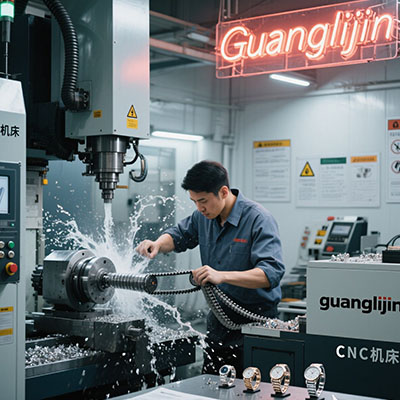
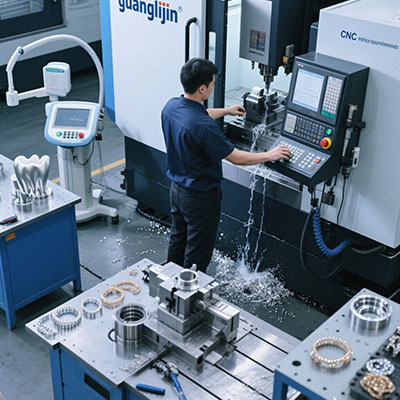
Aerospace machine shops run long shifts, cut hard alloys, and absorb vibration all day. The control electronics take a beating. A fragile board fails in weeks. A rugged 3 axis CNC controller survives for years. This article explains what rugged really means, how to evaluate supply options, and which integration mistakes cost shops the most downtime.
What Rugged Means in Aerospace Machining
Rugged is not a marketing sticker. It is a set of measurable properties. A controller earns the label through enclosure design, thermal margin, electrical protection, and connector quality.
Aerospace shops often run 20-hour days. Spindle heat rises. Coolant mist settles on cabinets. Chips find their way into every gap. The controller must tolerate all of it.
Industrial controllers are typically rated for ambient temperatures up to 45°C to 55°C inside the cabinet . Consumer-grade boards often derate above 40°C. That difference matters on a summer afternoon in a non-climate-controlled shop.
Why Supply Quality Beats Spec Sheets
Spec sheets describe ideal conditions. Supply quality decides what arrives at your dock. A controller with excellent specs but poor supply support becomes a paperweight when a drive fails.
Look at three supply factors. First, documented compatibility with common servo drives. Second, firmware and configuration file availability. Third, spare part lead time.
A shop we worked with in 2025 lost nine production days waiting for a replacement board. The controller itself was fine. The supply chain was not. That experience reshaped how we evaluate vendors.
When sourcing a 3 axis CNC controller, ask for the spare part list and typical lead times in writing. Supply reliability belongs in the purchase decision, not in the post-failure scramble.
Project A vs Project B: Two Supply Strategies
Aerospace shops choose between two supply strategies. Project A is single-source supply: one vendor, one controller family, deep integration. Project B is multi-source supply: two compatible controller families, broader compatibility, more integration work.
| Decision Factor | Project A: Single-Source Supply | Project B: Multi-Source Supply |
|---|---|---|
| Vendor relationship | Deep, long-term | Broad, transactional |
| Spare part risk | Concentrated | Distributed |
| Integration effort | Low after first install | Higher per controller family |
| Pricing leverage | Moderate | Stronger |
| Best fit | Stable machine fleet | Mixed or growing fleet |
Neither strategy wins universally. Single-source simplifies training and spares. Multi-source protects against single-vendor failure. Choose based on fleet size and downtime tolerance.
A Six-Step Rugged Supply Evaluation
- Verify the enclosure rating. Confirm IP rating, cabinet temperature range, and vibration specification. Ask for test documentation, not just marketing claims.
- Inspect connector and terminal quality. Locking connectors, strain relief, and plated terminals resist vibration. Push-on headers do not.
- Confirm drive and encoder compatibility in writing. Supply the full component list and request written approval from the vendor.
- Request the spare part list and lead times. Identify which components are field-replaceable and which require factory service.
- Test thermal margin in your cabinet. Run a representative cycle and log cabinet temperature. Confirm margin below the rated limit.
- Validate safety and stop behavior. Prove emergency stop, safe torque off, and limit switch response before production cutting.
Vibration and Electrical Noise: The Hidden Stressors
Aerospace machining generates vibration. Milling hard alloys, interrupted cuts, and high-speed spindles all send energy through the frame. The controller cabinet absorbs some of that energy.
Vibration loosens terminals. It cracks solder joints. It wears connector pins. Over months, small failures accumulate into intermittent faults that are hard to trace.
Electrical noise is the second stressor. Servo drives switch high currents at high frequency. Without proper grounding and shielding, that noise couples into encoder and communication lines. The result is position errors that appear and disappear.
Rugged controllers address both. They use locking connectors, filtered power inputs, and shielded communication ports. Therefore, rugged design is not just about surviving temperature. It is about surviving the full electrical and mechanical environment.
Common Supply Mistakes
“The spec sheet says industrial grade.” Industrial grade is not a standard. Ask for temperature range, IP rating, and vibration test data. Written specifications beat labels.
“One spare board is enough.” One spare protects against one failure. Aerospace shops often run multiple machines. Stock spares proportionally to fleet size and criticality.
“Any compatible controller will do.” Compatibility claims vary. A controller that runs the axes may not support the spindle, tool changer, or safety circuit. Verify every function.
“Lead time is a purchasing detail.” Lead time is a production risk. A three-week wait for a board can idle a machine and delay customer deliveries. Treat lead time as a technical requirement.
Frequently Asked Questions
What makes a 3 axis CNC controller rugged for aerospace machining?
Rugged controllers combine wide temperature tolerance, vibration-resistant connectors, filtered power inputs, and sealed enclosures. Test documentation matters more than marketing labels .
How do I choose a reliable 3 axis CNC controller supplier?
Check documented drive compatibility, spare part availability, firmware support, and written lead times. A supplier with deep aerospace experience reduces integration risk.
Can a rugged 3 axis CNC controller run in a non-climate-controlled shop?
Many industrial controllers tolerate cabinet temperatures up to 45°C to 55°C . Verify your actual cabinet temperature during a representative cycle before committing.
What spare parts should I stock for an aerospace 3 axis CNC controller?
Stock at least one controller board, one power supply, and one communication module per critical machine. Scale spares to fleet size and downtime cost.
How does vibration affect 3 axis CNC controller reliability?
Vibration loosens terminals and cracks solder joints. Locking connectors, strain relief, and proper mounting reduce risk. Regular inspection catches early wear .
Supply Readiness Checklist
Before You Place the Order
- Confirm enclosure IP rating and cabinet temperature range in writing.
- Verify vibration specification and mounting requirements.
- Inspect connector type, locking mechanism, and strain relief.
- Obtain written compatibility approval for the full component list.
- Request the spare part list and typical lead times.
- Confirm firmware and configuration file availability.
- Log cabinet temperature during a representative cycle.
- Prove emergency stop, safe torque off, and limit switch behavior.
- Stock spares proportional to fleet size and criticality.
- Set written acceptance criteria before delivery.
Aerospace machining supply decisions carry production consequences. The right 3 axis CNC controller is rugged in measurable ways and backed by a supply chain that responds fast. Evaluate the enclosure, the connectors, the compatibility documents, and the spare part list. Then test the system under real shop conditions. Rugged is proven, not promised.