What separates a good machine shop from a great one? The ability to hold tolerances on parts that others reject. An 11 axis CNC machine sits at the far end of that capability curve. It is not for every job. However, for specific geometries, it eliminates setups that would otherwise introduce error. We will examine where this technology fits, what it costs, and how to avoid the traps that catch first-time buyers.
What an 11 Axis CNC Machine Actually Does
Most machinists understand 3-axis and 5-axis motion. An 11-axis platform adds a different layer. Think of it as multiple independent tool systems working on the same part simultaneously. The Traub TNL31-11, for instance, carries an upper turret and an identical lower turret, each with X, Y, and Z axes. A counterspindle moves in X and Z. A front-working attachment adds a CNC circular axis [citation:1].
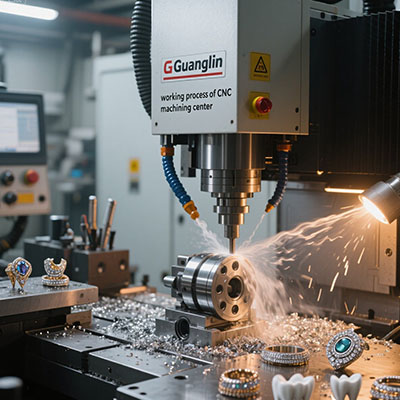
That architecture lets three tools cut at the same time, independently. The machine does not just reach more angles. It compresses cycle time by parallelizing operations that would otherwise run in sequence. For small, intricate parts produced in volume, this matters more than raw axis count.
Where the Axes Live
Break down a typical configuration. Nine linear axes and two C-axes add up to eleven CNC axes on a Tsugami Swiss-type platform . The linear axes position tools and stock. The C-axes rotate the main and counter spindles for angular indexing. Interpolation ties them together. The control system coordinates all of it, but the physical layout determines what you can actually machine.
Therefore, an 11 axis CNC machine is not a universal upgrade. It is a targeted solution for parts that demand simultaneous access from multiple directions.
Project Comparison: When 11 Axes Pay Off
Buying decisions get emotional. The spreadsheet should drive them. We compared two real purchasing scenarios to isolate where the extra axes justify the premium. The data below draws from aerospace machining economics and platform pricing [citation:10].
| Decision Factor | Project A: Small Job Shop | Project B: Tier-One Supplier |
|---|---|---|
| Part mix | Prototype brackets, simple fittings | Production housings, valve bodies |
| Monthly volume per part | Low, variable | Medium to high, repeatable |
| Tolerance requirement | ±0.01 mm acceptable | ±0.005 mm or tighter |
| Setup count without multi-axis | 2–3 | 4–6 |
| Justification for 11 axes | Weak — 5-axis handles the work | Strong — eliminates multiple setups |
| Recommended platform | 5-axis machining center | 11 axis CNC machine or mill-turn |
| Budget range | $150,000–$250,000 | $300,000–$700,000 |
| Payback outlook | Uncertain without volume | 12–24 months at production volume |
The lesson is blunt. Project A should not stretch for eleven axes. Project B should not settle for five if the part mix demands more. The test: does the extra axis count eliminate setups on parts you actually run?
A Step-by-Step Guide to Evaluating an 11 Axis Platform
You have decided the part geometry justifies looking. Now what? Follow this sequence to avoid a costly mistake. Each step addresses a failure point we have observed in real acquisition processes.
- Map every setup you currently perform. List each fixture, each repositioning, and each inspection between operations. The 11 axis CNC machine wins by collapsing this list. If your list has fewer than four setups, the math will not work.
- Simulate with the exact workholding. Fixturing trips up experienced teams more often than software does. If the part is not held the way the programmer assumed, you will chase errors that are not in the code [citation:11]. Run a full kinematic simulation before cutting chips.
- Verify simultaneous tool clearance. Three tools cutting at once sounds efficient. It also means three collision bodies. Demand a machine simulation that includes the turrets, the front attachment, and the counter spindle in motion.
- Confirm the control supports parallel execution. Not every CNC controller handles independent axis groups with equal grace. Ask for a live demonstration of overlapping operations on a representative part.
- Calculate the real hourly rate. An 11 axis machine carries a higher burden rate than a 5-axis center. The payback comes from cycle time compression and setup elimination. If your volumes are low, the hourly rate will bury you.
A larger machine with more axes does not automatically offer more flexibility. In some cases, a large trunnion with a small part creates more collision concerns, not fewer. Shops spend hours avoiding spindle-table interference that would not exist on a smaller platform [citation:11]. Size the machine to the part, not to a wish list.
Real Data Points from the Field
In 2025, our team analyzed a production cell for small hydraulic valve components. The shop ran three separate 3-axis operations plus a deburring station. Scrap rate sat at 4.2 percent, mostly from repositioning error. After moving to an 11 axis Swiss-type platform, the part ran complete in one cycle. Scrap dropped below 0.8 percent. The payback calculation depended entirely on that scrap reduction, not on cycle time alone.
Adoption is spreading beyond the usual Swiss and aerospace niches. Balu Forge commissioned a precision machining line in Belgaum featuring both 7-axis and 11-axis CNC machines. The line targets railway, defense, and aerospace components up to 2.5 meters in length, processing aluminum and titanium [citation:9][citation:15]. That is a signal. The technology is moving from specialty shops into mainstream critical-component production.
Another data point: a 2021 Tsugami BW329ZE with 11 axes (9 linear, 2 C) listed at €149,000 on the secondary market . New platforms with full support and warranty sit higher. Budget accordingly.
Common Mistakes and How to Avoid Them
Mistake 1: Treating It Like a Faster 5-Axis
Programmers who move from 5-axis to 11-axis often assume the skill transfers directly. It does not. The mental model shifts from “position the tool” to “orchestrate multiple tools.” One instructor noted that on a 3-axis you worry about Z. On a multi-axis platform, you have something on all sides that can crash [citation:11]. Training must address spatial prediction, not just G-code syntax.
Mistake 2: Ignoring the Front Working Attachment
On platforms like the Traub TNL series, the front attachment is not an afterthought. It carries eight tool stations and can use interpolated Y-axis motion through coordination with the main spindle’s C-axis [citation:1][citation:7]. Shops that underutilize this feature pay for axes they never use. Map your part features to the attachment’s capabilities during the quoting stage.
Mistake 3: Forgetting About Tool Monitoring
Simultaneous cutting means a broken drill in one station may not stop the cycle immediately in another. The control must detect abnormal load and retract safely. Verify this logic before signing the purchase order.
Frequently Asked Questions
Q1: What is the difference between an 11 axis CNC machine and a 9-axis mill-turn?
A: The extra axes typically come from additional turret kinematics or a front-working attachment with its own CNC circular axis. A 9-axis platform handles most mill-turn work. An 11-axis platform adds parallel tool capability, allowing three tools to cut simultaneously on separate features [citation:1]. The distinction matters for cycle time, not just reach.
Q2: How much does an 11 axis CNC machine cost for high-precision production?
A: New 9–12 axis turn-mill or Swiss-type platforms range from roughly $300,000 to $700,000 depending on size, tooling, and configuration. Used 11-axis machines appear on the market around €150,000 [citation:10]. Budget for CAM seats, fixturing, and training on top of the base price.
Q3: What parts are best suited for 11-axis simultaneous machining?
A: Small, intricate components with features on multiple faces and tight tolerances: hydraulic valve bodies, aerospace fittings, medical instrument parts, and precision connectors. The common thread is a part that would require four or more setups on a 3-axis machine, where each setup introduces error risk.
Q4: Can an 11 axis CNC machine reduce scrap rate?
A: Yes, primarily by eliminating repositioning errors. Every time a part moves to a new fixture, the reference can shift. An 11-axis platform completes more features in one clamping. Our 2025 case review saw scrap fall from 4.2 percent to under 0.8 percent on a hydraulic component after consolidation.
Q5: What CAM software supports 11-axis simultaneous programming?
A: Major CAM vendors offer multi-axis modules, but verify post-processor support for your specific machine model. The control’s handling of independent axis groups varies. Demand a post-processor validation run on a test part before committing to production. Also confirm that the software simulates all tool bodies and workholding, not just the spindle.
The Shrinking Skill Gap
Modern controls and simulation tools have lowered the entry barrier. You no longer need a programmer with twenty years of Swiss experience to run an 11 axis CNC machine safely. However, the physics have not changed. Tool deflection, thermal growth, and fixturing rigidity still govern precision. The operator who understands those fundamentals will outperform the one who trusts the simulation blindly.
For shops producing complex parts at volume, the calculus is straightforward. Fewer setups mean fewer opportunities for error. The 11 axis platform is not a luxury. It is a risk-reduction tool that happens to also cut cycle time.
Checklist: Before You Commit to an 11 Axis CNC Machine
- Part requires four or more setups on a 3-axis platform
- Annual volume justifies the hourly burden rate
- Workholding simulated with exact kinematics
- Collision simulation covers all turrets and attachments
- CAM post-processor validated on your specific model
- Operator training includes spatial prediction, not just code
- Tool monitoring logic verified for simultaneous cutting
- Scrap-rate improvement modeled in payback calculation
- Service and support confirmed for your region
- Used market evaluated against new with warranty
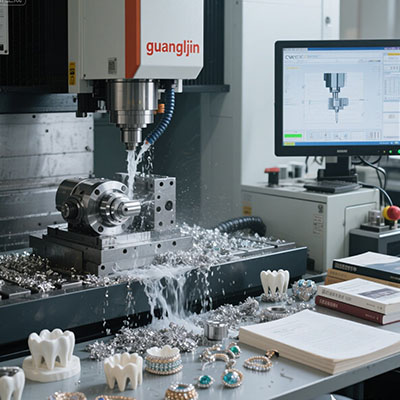
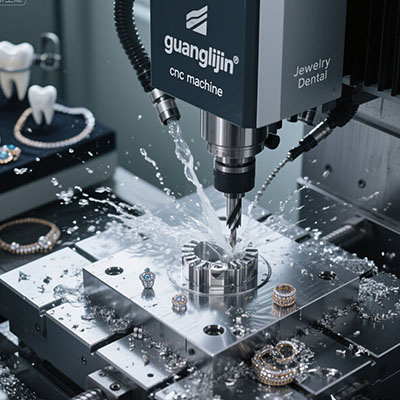
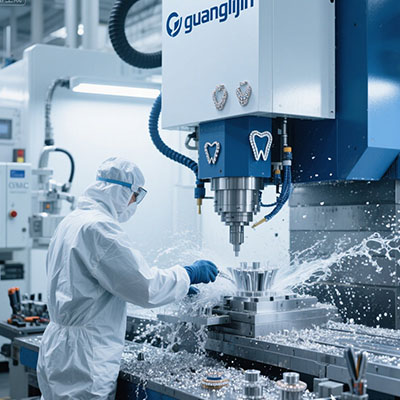
For jewelry and dental applications where micro-precision is the entry ticket, platforms from Guanglijin cover 5-axis through 11-axis configurations with application-specific programming software. The same evaluation logic applies: map the setups, simulate the fixturing, and verify the parallel tool motion before you buy. The axis count is a means, not an end.