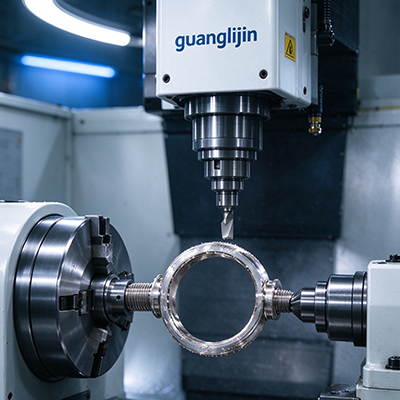
What separates a $60,000 shaping router from a $470,000 industrial platform? The answer lives in the frame, the spindle, and the controller. Buyers hunting for a shaping machine often compare sticker prices alone. That approach hides the real cost drivers.
This guide examines the 5 axis cnc router price landscape for industrial shaping work. You will see actual market tiers, a side-by-side project comparison, and a step-by-step evaluation path. We also expose the mechanical choices that quietly determine whether a machine can handle your parts.
What Does an Industrial Shaping Router Really Cost in 2026?
The shaping segment spans a wide band. Entry-level imported machines for light 3D carving and foam prototypes sit between $22,000 and $45,000 . These units often rely on a trunnion table. The workpiece moves. For large molds or dense wood blanks, that design creates inertia problems.
Mid-tier production routers land between $85,000 and $145,000 . This is the working range for composite tooling, marine molds, and architectural sculpting. Swivel-head configurations dominate here. The spindle tilts while the vacuum table holds the blank flat.
Heavy industrial platforms from SCM, Biesse, and custom builders like Shandong Honsiron climb past $250,000. A fully loaded HSR-5S series with a 24kW Hiteco spindle and Siemens 840DSL controller lists near $470,000 [citation:2][citation:7]. These machines shape large 3D models, casting molds, and boat hulls daily.
So the price question has one honest answer: it depends on the blank size and the surface complexity. A shop shaping 3-meter boat plugs needs different rigidity than a studio carving 300mm prototypes.
Swivel Head vs. Trunnion Table: The Shaping Divide
⚠ Attention: Many budget routers under $50,000 use a tilting trunnion table. Place a 200-pound MDF block or a foam mold on that table and the rotary bearings take the load. Backlash appears within months. Tooling breaks. Surface finish suffers. If your shaping blanks exceed 2×4 feet or weigh more than 50 pounds, you need a swivel-head machine. Budget accordingly.
Project A vs. Project B: A Shaping Cost Comparison
Abstract price ranges only tell part of the story. Real cost depends on setup count and finishing time. Five-axis machining carries a higher hourly rate than three-axis work. Chinese five-axis shops bill $50–$80 per hour for baseline equipment, while three-axis sits at $15–$40 [citation:8].
However, that premium buys something specific. Five-axis wins when it eliminates multiple setups on complex geometry [citation:3].
| Factor | Project A: Large Marine Mold (Foam/Resin) | Project B: Flat Signage Panel (MDF) |
|---|---|---|
| Geometry | Deep 3D contours, undercuts, compound curves | Flat 2D cutouts and shallow engraving |
| 3-Axis Setups Needed | 5+ (plus custom angle fixtures) | 1 |
| 5-Axis Setups Needed | 1 (swivel head reaches all faces) | 1 (overkill) |
| Hourly Rate (5-axis) | $60–$80/hr | $60–$80/hr |
| Total Time (1 mold) | 5-axis wins: 8 hrs vs. 22 hrs | 3-axis wins: 0.5 hrs vs. 0.8 hrs |
| Verdict | 5-axis pays back through setup elimination | 3-axis is the correct tool |
Project A justifies the shaping premium. Five setups on a three-axis mill mean five alignment checks and five chances for tolerance drift. One setup on a five-axis swivel-head machine removes that stack-up entirely [citation:3]. Project B does not need that capability. Flat panels belong on a three-axis router.
We saw this play out in our 2025 case with a theme-park fabrication shop. They bought a heavy-frame five-axis router for sculpted foam characters. Their flat plywood backing panels stayed on a three-axis table. Splitting the work by geometry protected their capital investment.
Step-by-Step Guide: Evaluating an Industrial Shaping Router
Buying a shaping machine requires more than comparing spec sheets. Follow these steps to avoid a mismatch between capability and cost.
Step 1: Measure Your Largest Blank and Heaviest Cut
Write down the maximum dimensions and weight of the material you will shape. A machine with a 3500x6500mm table and a 24kW spindle exists for a reason [citation:2]. If your blanks stay under 2×4 feet, a smaller platform saves money without sacrificing capability.
Step 2: Confirm the Rotary Axes Live on the Spindle
Ask one direct question: does the table tilt, or does the spindle tilt? For shaping large molds and sculptures, the answer must be the spindle. A stationary vacuum table preserves hold-down force on heavy stock. A tilting table turns your workpiece into a lever arm.
Step 3: Budget for Multiaxis CAM and Post-Processor Development
Standard CAM cannot generate simultaneous five-axis toolpaths for complex surfaces. You need software like Mastercam Multiaxis, HyperMill, or UG NX [citation:2]. Licenses and post-processor tuning add real cost. The 2026 total cost of ownership for a five-axis router frequently exceeds the purchase price by 140% over five years when software, tooling, and workholding enter the calculation .
Step 4: Demand a Test Cut on Your Actual Material Density
Send a sample of your foam, resin board, or hardwood. Ask for a video of the test cut with the toolpath visible. A machine that glides through EPS foam may chatter on dense polyurethane tooling board. Spindle torque and frame rigidity reveal themselves only under load.
Step 5: Verify the Controller Supports RTCP and Collision Avoidance
Shaping work involves the tool approaching from steep angles. Without RTCP (Rotational Tool Center Point) management, the tool tip drifts as the head tilts. Siemens 840DSL and Syntec controllers with RTCP handle this correctly [citation:2]. Ask for the controller model and confirm its five-axis interpolation features in writing.
Common Misunderstandings About Industrial Shaping Router Pricing
Misunderstanding 1: “The machine price is the project budget.” A $95,000 shaping router can carry a true year-one cost of $112,000 to $119,000 once you add CAM software, HSK tooling, dust collection upgrades, and electrical work. Ancillary costs typically add 18–25% on top of the purchase price [citation:4].
Misunderstanding 2: “More axes always mean more capability for shaping.” A poorly built five-axis machine with a weak frame and a tilting table shapes worse than a rigid three-axis router with a good fixture. The geometry must justify the kinematics. Complex organic surfaces and deep undercuts justify it. Flat signs do not.
Misunderstanding 3: “Industrial means it cuts everything fast.” A 24kW spindle on a 10-ton frame delivers rigidity and thermal stability. That does not automatically translate to faster feed rates on foam. It translates to cleaner surfaces, fewer finishing passes, and the ability to hold tolerance across a 6-meter mold. The value is in the finish and the setup reduction, not raw speed alone.
Frequently Asked Questions
What is the price range of an industrial 5 axis CNC router for shaping?
Entry-level shaping routers start near $22,000. Mid-tier production machines for composite molds and wood sculpture range from $85,000 to $145,000. Heavy industrial platforms with large work envelopes and high-power spindles exceed $250,000 and can reach $470,000 for custom configurations [citation:2].
Is a 5 axis CNC router worth it for mold and sculpture shaping?
Yes, when the geometry requires tool access from multiple angles without re-fixturing. Deep undercuts, compound curves, and large 3D surfaces justify the investment. Flat panels and simple 2.5D cuts do not.
How much does five-axis shaping software add to the total cost?
Multiaxis CAM licenses range from roughly $1,000 per year for entry tools to several thousand for advanced collision-avoidance modules. Post-processor development for your specific controller may cost extra. Budget for both before committing to the machine.
Can an industrial 5 axis router shape large foam molds in one setup?
A swivel-head machine with a large work envelope can shape a full mold in one setup. The spindle reaches around the workpiece while the table stays fixed. This eliminates the multiple repositioning steps required on a three-axis machine and reduces alignment error.
Checklist: Before You Approve an Industrial 5 Axis Router Price
Use this checklist to validate any shaping machine quote or configuration.
- ☐ Confirmed rotary axes are on the spindle (swivel head), not a tilting table
- ☐ Work envelope matches your largest shaping blank with clearance
- ☐ Controller supports RTCP and five-axis interpolation for your toolpaths
- ☐ Multiaxis CAM software and post-processor costs included in year-one budget
- ☐ Spindle power (kW) and torque curve verified for your densest material
- ☐ Test-cut video provided using your material or a close equivalent
- ☐ Dust collection and chip evacuation capacity matched to shaping volume
- ☐ HSK tooling holders and initial cutter set priced
- ☐ Five-year total cost model built (machine + software + tooling + maintenance)
- ☐ Part geometry audit confirms five-axis is necessary for at least 30% of shaping work
The industrial 5 axis CNC router price for shaping work is never just a number on a purchase order. It reflects frame mass, spindle torque, controller intelligence, and fit for your specific molds and sculptures. Buy the machine that matches your blank size and surface complexity, not the one with the lowest sticker.