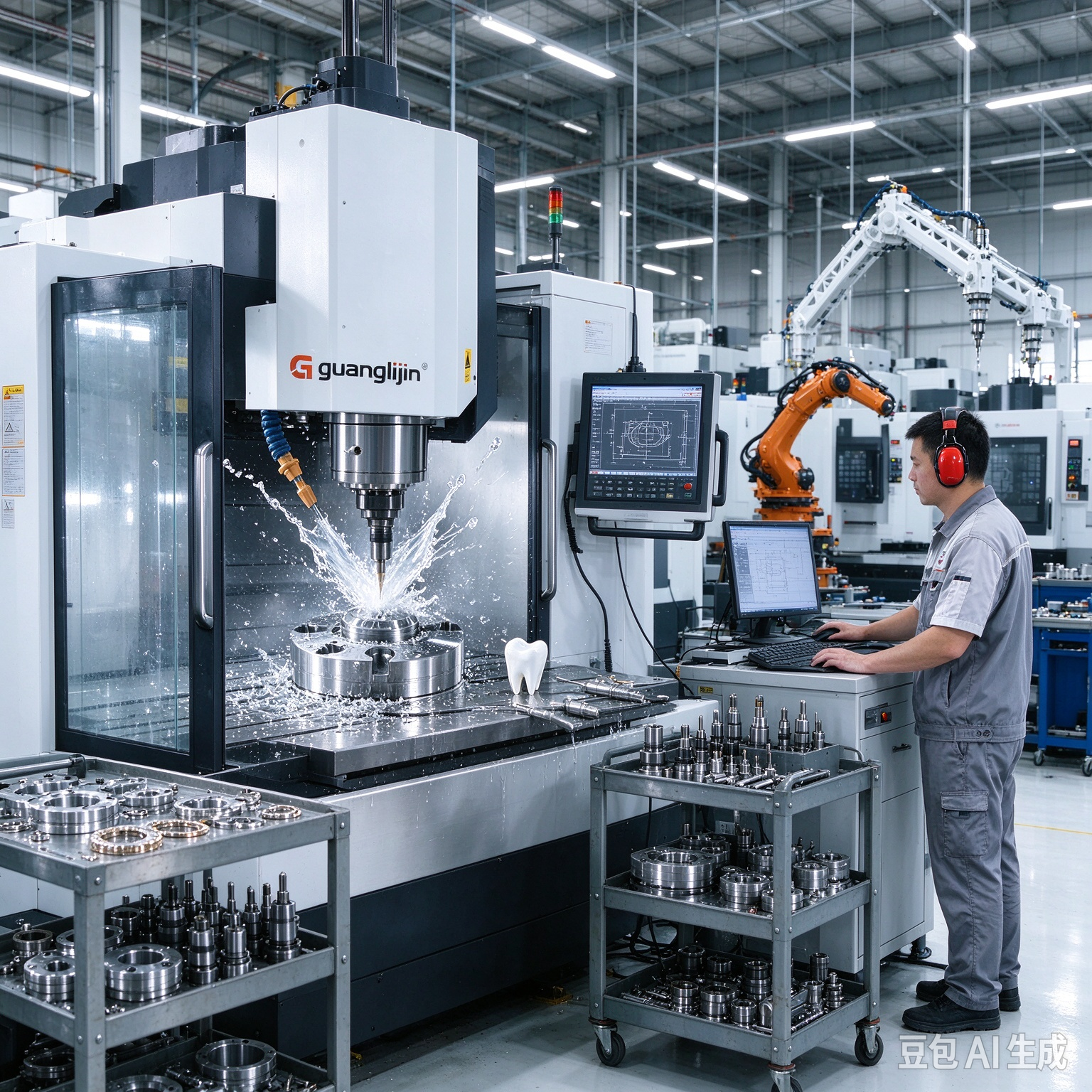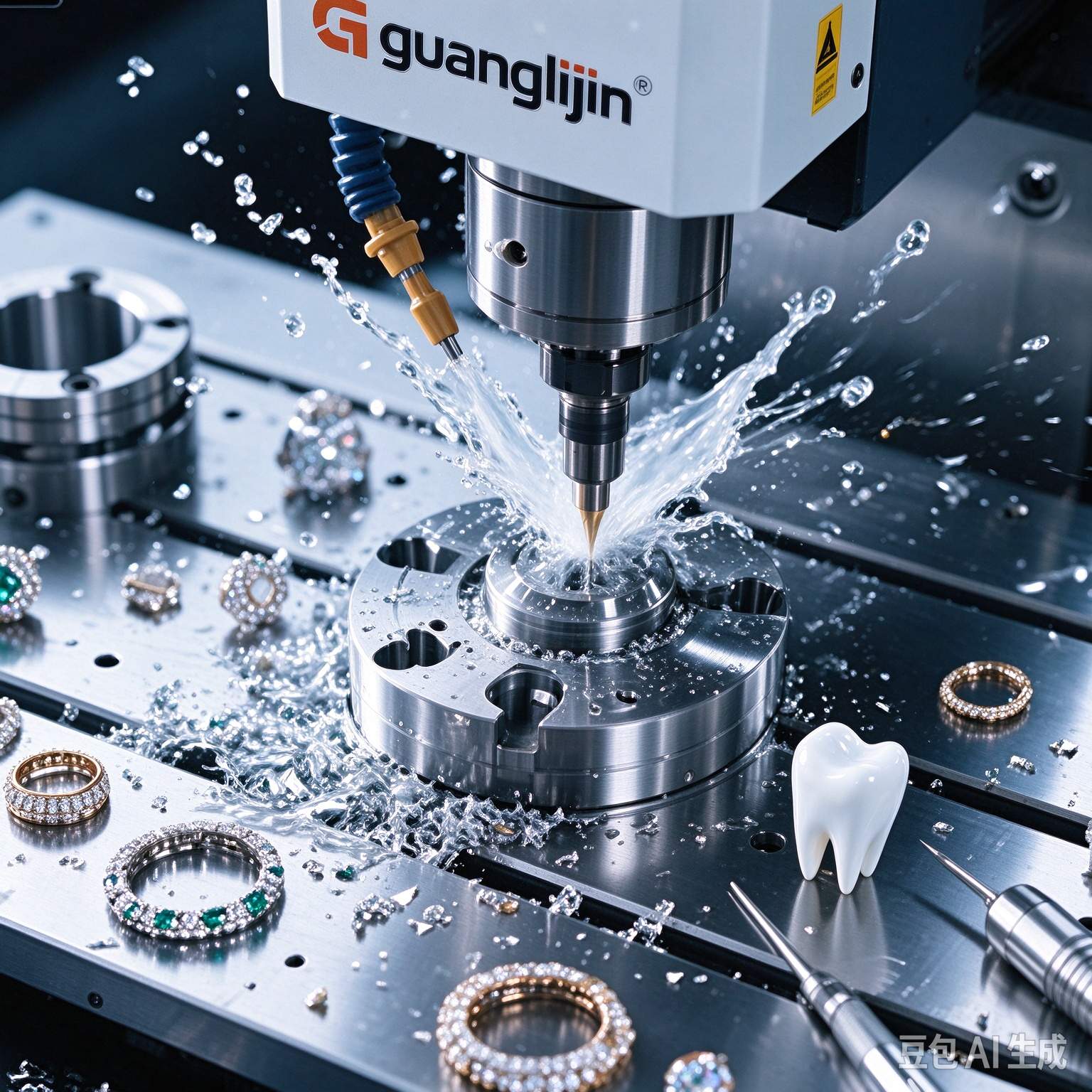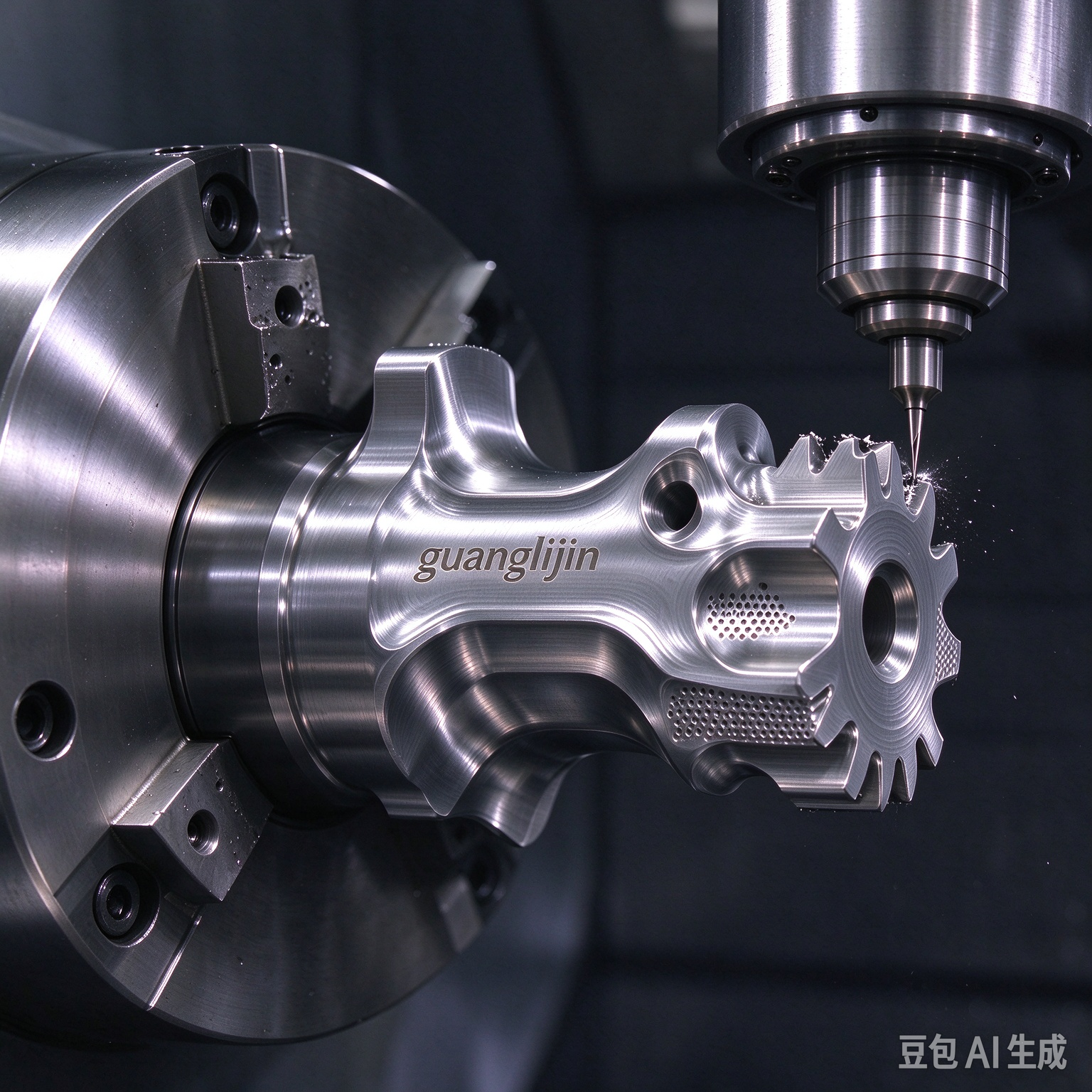
What parts actually belong on a compact five-axis mill? That question decides whether a purchase pays back or gathers dust. Compact 5 axis desktop cnc machines shine on small, intricate, multi-face components. They struggle on large slabs and heavy stock removal. The trick is matching the part family to the frame before the invoice clears.
Which Parts Fit a Compact Five-Axis Envelope
Think small and complex. Dental frameworks, jewelry masters, RC components, small impellers, and instrument housings all suit this class. Each needs multiple faces or curved surfaces. Each fits inside a benchtop work cube.
Now think about the opposite. Large mold bases, long shafts, and heavy steel billets do not fit. The work envelope caps part size. Spindle torque caps material removal rate. A compact frame is a finishing tool, not a roughing beast.
So how do you screen a part? Ask three questions. Does it need more than two setups on a three-axis mill? Does it carry angled features or curved walls? Does it fit inside the stated travel envelope with fixture clearance? Three yes answers point toward five-axis work.
Part Accuracy Depends on More Than Axis Count
Global shipments of desktop five-axis machine tools reached roughly 21,000 units in 2025. Average pricing sat near US$25,000 per unit across the category. Those numbers describe a growing market. They do not describe part quality. Accuracy comes from stiffness, thermal stability, and probe discipline.
Consider a small aluminum housing with ports on four faces. On a three-axis mill, that part needs four setups. Each reclamp adds position error. On a compact five-axis mill, one setup covers every face. The rotary axes index the part. The probe confirms the datum. Error sources collapse.
However, axis count alone guarantees nothing. A flexy frame with belt-driven rotaries will chatter on the same part. Therefore, part accuracy tracks frame mass and drive quality more than brochure axis count.
Our team saw this in a 2025 prototype run. A small shop milled curved instrument brackets on a compact five-axis unit. The first batch held tolerance. The second batch drifted on the angled faces. The cause was a loose rotary belt and a skipped warm-up. Re-tensioning plus a fixed warm-up cycle restored the finish. The machine was capable. The routine was missing.
Project A vs Project B: Part Strategy Compared
Two shops can buy the same compact mill and get different results. The difference sits in part strategy. One shop picks parts that suit the frame. The other forces the frame to chase unsuitable work.
| Factor | Project A — Part-Fit Strategy | Project B — Force-Fit Strategy |
|---|---|---|
| Part selection | Small, multi-face, finishing passes | Large slabs, heavy stock removal |
| Setup plan | Single setup with probing | Multiple reclamps and manual zeroing |
| Tooling | Small ball nose and tapered cutters | Large face mills beyond torque budget |
| Cycle outcome | Stable finish, low scrap | Chatter, drift, frequent rework |
| Best fit | Prototypes, dental, jewelry, small impellers | Not recommended for compact frames |
The table is blunt on purpose. Compact five-axis mills are precision finishing platforms. Pushing them into roughing duty burns tools and patience.
A Five-Step Guide to Planning Parts for a Compact Mill
Part planning starts before CAM. Follow a fixed sequence. Each step removes a class of failure.
Step 1: Map Every Feature to an Axis Orientation
List each feature and the tool approach it needs. Confirm the rotary axes can reach it without collision. Mark any feature that demands simultaneous motion. That list drives your CAM strategy.
Step 2: Choose Fixtures That Preserve Access
Pick low-profile vises or custom soft jaws. Tall clamps block rotary travel. Check clearance through the full tilt range. A fixture collision mid-cut ruins the part and the tool.
Step 3: Select Cutters for the Torque Budget
Match cutter diameter to spindle torque, not to ambition. Small ball nose tools suit finishing passes. Long reach cutters flex. Keep tool overhang short and stepover modest.
Step 4: Simulate the Full Five-Axis Toolpath
Run machine simulation with the actual holder and fixture models. Check for collisions at every tilt angle. Verify tool-center-point behavior on curved segments. Simulation is cheaper than scrap.
Step 5: Probe the Part and Verify the Datum In-Process
Probe the stock before cutting. Probe key features after the first pass. Compare against the model. Stop and correct if deviation exceeds budget. In-process probing catches drift early.
⚠ Attention: Three mistakes ruin parts on compact five-axis mills. First, pushing heavy stock removal through a finishing frame. Chatter and thermal drift follow. Rough elsewhere and finish here. Second, ignoring fixture clearance through the rotary travel. A clamp that clears at zero degrees can strike the spindle at sixty. Simulate the full tilt range. Third, skipping in-process probing on multi-face parts. A small datum shift on face one compounds on face four. Probe early and probe often.
Tooling and Workholding That Suit Small Five-Axis Work
Tooling choice follows part geometry. Curved walls favor ball nose cutters with small stepover. Deep pockets favor tapered tools with long reach and short flute length. Angled ports favor chamfer mills and drills reached through rotary indexing.
Workholding follows access. A standard vise blocks the underside. A low-profile five-axis vise or a dovetail fixture keeps the part clear. Soft jaws machined in place hold irregular shapes without distortion.
Coolant or air blast matters too. Small cutters clog chip pockets fast. Directed air blast clears chips without flooding a benchtop workspace. Mist cooling works for aluminum and brass. Harder alloys reward through-tool coolant where the spindle supports it.
Frequently Asked Questions
What parts are best suited to compact 5 axis desktop CNC machines?
Small multi-face components fit best. Dental frameworks, jewelry masters, small impellers, instrument housings, and RC parts all suit the class. Each needs angled features or curved surfaces inside a benchtop envelope. Large slabs and heavy stock removal do not fit.
Can a compact five-axis desktop mill hold tolerance on multi-face parts?
Yes, when the frame is stiff and the routine is disciplined. Single-setup machining removes reclamp error. Probing confirms datums. Warm-up cycles control thermal drift. Belt-driven rotaries and skipped warm-ups degrade results.
How much do compact 5 axis desktop CNC machines cost in 2026?
The average global price sat near US$25,000 per unit in 2025, with roughly 21,000 desktop five-axis units shipped. Entry frames cost less. Units with torque-motor rotaries and integrated probing cost more.
What workholding is best for small five-axis parts?
Low-profile five-axis vises, dovetail fixtures, and in-place machined soft jaws work well. They preserve rotary access and hold irregular shapes without distortion. Tall clamps block tilt travel and cause collisions.
Do I need simultaneous five-axis CAM for small parts?
Only when geometry demands continuous tool tilt. Angled flats and holes work fine with indexed 3+2 programming. Curved walls, undercuts, and impeller blades need simultaneous toolpaths with tool-center-point management.
Checklist: Part Readiness on a Compact Five-Axis Mill
- ☐ Part fits the travel envelope with fixture clearance
- ☐ Every feature mapped to an axis orientation
- ☐ Fixture clears the full rotary tilt range
- ☐ Cutters matched to spindle torque budget
- ☐ Full five-axis simulation passed with holder models
- ☐ Probe calibrated and datum scheme confirmed
- ☐ Warm-up cycle completed before tight-tolerance cuts
- ☐ In-process probe check scheduled after first pass
- ☐ Chip clearance verified with air blast or coolant
- ☐ First article measured with independent metrology