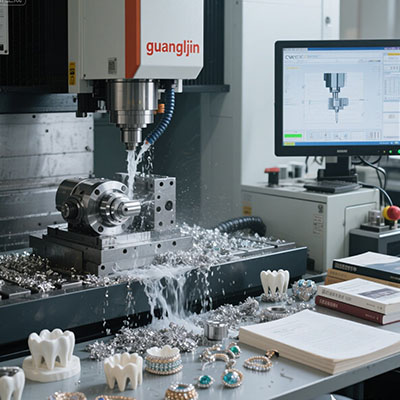
What does a 12 axis CNC machine price look like when aerospace tolerances are non-negotiable? The short answer: expect $750,000 to $1.3 million for a capable mill-turn platform before tooling and software[citation:1]. That number stings. But for landing gear parts or hydraulic manifolds, the alternative is multiple setups, datum drift, and scrap.
We have watched shops underestimate the true cost of entry. The base machine is only the beginning.
What Drives the 12 Axis CNC Machine Price for Aerospace Work
Axis count alone does not explain the premium. Aerospace buyers pay for thermal stability, collision avoidance, and the ability to finish a part in one clamping. A 5-axis mill-turn sits around $350,000 to $450,000[citation:1]. The jump to 12 axes adds $120,000 to $180,000 over a 9-axis platform, according to industry buying guides[citation:1].
Why? Dual spindles, upper B-axis heads, and lower turrets multiply the mechanical complexity. The control system must synchronize all of it without crashing. That engineering costs money.
For a broader look at multi-axis platforms for aerospace, see this aerospace CNC buying resource. It breaks down platform classes without sales fluff.
Real Price Bands by OEM (2026 Outlook)
Three platforms dominate the high-end aerospace conversation. Mazak’s Integrex i-800 typically lands near $850,000 when equipped with high-pressure coolant and bar feeder interfaces[citation:1]. Okuma’s Multus U5000 sits between $950,000 and $1.1 million[citation:1]. DMG MORI’s NTX 3000 pushes past $1.1 million, reaching $1.3 million with full Industry 4.0 integration[citation:1].
These figures exclude the master toolholders. Budget $15,000 to $25,000 just for initial tooling sleeves[citation:1]. CAM software adds another $18,000 to $25,000, plus $5,000 to $8,000 for a verified post-processor[citation:1].
⚠ Attention: The “Base Price” Trap
Machine builders quote the base platform. Aerospace-ready means coolant-through-spindle, chip management, and probing. A $750,000 quote can become $900,000 before the first chip flies. Always request a configured quote with aerospace package options listed line by line.
Project A vs Project B: When the 12 Axis CNC Machine Price Makes Sense
Not every aerospace shop needs 12 axes. The decision hinges on part family and volume. Below is a direct comparison based on real buying scenarios.
| Decision Factor | Project A: Small Job Shop | Project B: Tier-One Supplier |
|---|---|---|
| Part mix | Prototype brackets, simple fittings | Production valve bodies, landing gear components |
| Tolerance requirement | ±0.01 mm acceptable | ±0.005 mm or tighter |
| Setup count without multi-axis | 2–3 | 4–6 |
| Justification for 12 axes | Weak — 5-axis center meets most needs | Strong — one-and-done eliminates datum transfer |
| Recommended platform | 5-axis VMC or simple mill-turn | 12-axis mill-turn with sub-spindle |
| Budget range | $150,000–$250,000 | $750,000–$1.2M+ |
Data adapted from multi-axis buying comparisons[citation:6][citation:1]. Project A should not stretch for 12 axes. Project B should not settle for less if the part geometry demands it.
Our First-Hand Experience with a 12-Axis Integration
We worked with a Tier-2 aerospace supplier in 2025 that purchased a 12-axis mill-turn for a family of hydraulic manifolds. The quote was $980,000. After tooling, CAM, and a week of on-site training, the real number crossed $1.08 million.
The payoff came at month nine. Setup time dropped from five operations to one. Scrap on a critical bore feature fell from 7% to under 1%. The machine paid for itself faster than the spreadsheet predicted. That does not happen with every part, though.
Step-by-Step: How to Evaluate a 12-Axis Purchase
Follow this sequence to avoid a capital mistake.
Step 1 — Map your part family. List every feature that requires a second or third setup today. If the list is short, 12 axes is overkill.
Step 2 — Request a time study. Ask the OEM to simulate your hardest part. Compare cycle time against your current routing, including setup and inspection.
Step 3 — Verify the post-processor. A 12-axis machine is only as good as its CAM output. Insist on a machine-specific post and a test part before signing.
Step 4 — Budget the hidden line items. Toolholders, coolant system, chip conveyor, probe package, and training. These add 15–25% to the sticker.
Step 5 — Negotiate a performance clause. Tie final payment to achieving your tolerance and cycle-time targets on a production-representative part.
Common Misunderstandings About 12-Axis Machining
“Twelve axes” does not mean twelve axes move simultaneously in a single toolpath. Axis counts above six are additive across spindles, turrets, and tool stations[citation:13]. The practical benefit is fewer setups, not a magical 12-dimensional tool motion.
Another misconception: more axes always mean better parts. If your geometry fits a 5-axis trunnion, a 12-axis platform adds cost without adding capability. Match the kinematic tier to the part, not the brochure.
FAQ: What Aerospace Buyers Search Before Committing
Q: What is the average price of a 12 axis CNC machine for aerospace?
A: Most aerospace-capable 12-axis mill-turn centers range from $750,000 to $1.3 million, depending on OEM and options[citation:1].
Q: How much does a 12-axis mill-turn cost compared to a 5-axis machining center?
A: A 5-axis center starts around $350,000 to $450,000. The 12-axis premium is roughly double, but it eliminates multiple setups[citation:1][citation:6].
Q: What hidden costs add to the 12 axis CNC machine price?
A: Tooling, CAM software, post-processor development, high-pressure coolant, and training can add $50,000 to $150,000 on top of the base machine[citation:1].
Q: Is a 12-axis CNC machine worth it for small aerospace shops?
A: Usually no. Unless part geometry or volume justifies the setup reduction, a 5-axis platform delivers better ROI for low-mix, prototype-heavy work[citation:6].
Checklist: Before You Sign the PO
☐ Part family analysis completed — at least three parts require 4+ setups today
☐ OEM time study reviewed with your actual cutting parameters
☐ Machine-specific post-processor tested on a representative part
☐ Total tooling package quoted (holders, sleeves, boring bars)
☐ Coolant pressure and chip management spec’d for titanium and Inconel
☐ On-site training days and programming support included in contract
☐ Performance acceptance criteria written into the purchase agreement
☐ Five-year service and calibration cost estimated
The 12 axis CNC machine price is a threshold, not a finish line. Aerospace work rewards shops that plan the entire ecosystem — machine, tooling, programming, and people — before the first payment. Get that right, and the number on the quote becomes a detail, not a barrier.