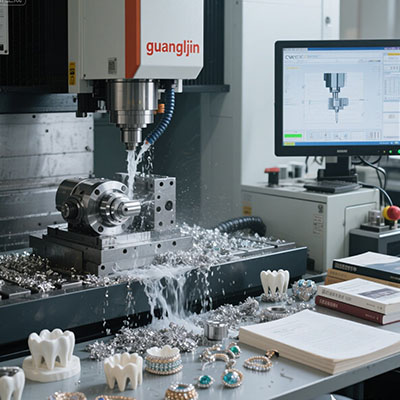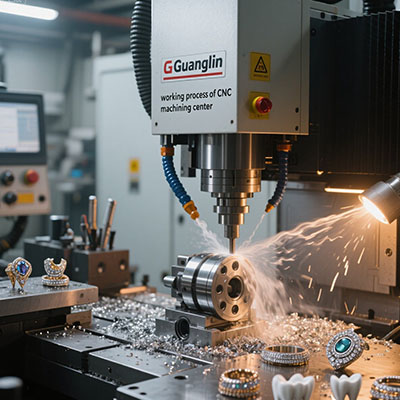
What does an industrial 12 axis CNC machine price really look like? For a true multi-tasking mill-turn platform built for production, the number starts around $750,000 and climbs past $1.3 million. That figure stuns first-time buyers. It also filters out shops that do not need this class of equipment.
The gap between a brochure quote and a working machine is wide. Tooling, CAM, and coolant systems push the real investment much higher.
Why Industrial 12-Axis Pricing Sits Where It Does
Axis count alone does not set the price. Industrial buyers pay for thermal stability, collision avoidance, and the ability to finish a complex part in one clamping. A 5-axis mill-turn sits near $350,000 to $450,000 [citation:3]. Moving to 12 axes adds $120,000 to $180,000 over a 9-axis platform [citation:3].
Dual spindles, upper B-axis heads, and lower turrets multiply mechanical complexity. The control must synchronize every motion without a crash. That engineering carries a premium.
For a closer look at how multi-axis platforms serve demanding sectors, this industrial CNC buying resource breaks down platform classes without sales language.
Real Price Bands from Three Dominant OEMs
Mazak’s Integrex i-800 typically lands near $850,000 with high-pressure coolant and bar feeder interface [citation:3]. Okuma’s Multus U5000 sits between $950,000 and $1.1 million, built for lights-out thermal stability [citation:3]. DMG MORI’s NTX 3000 pushes past $1.1 million, reaching $1.3 million with full Industry 4.0 integration [citation:3].
These figures exclude the master toolholders. Budget $15,000 to $25,000 for initial tooling sleeves alone [citation:3]. CAM software adds $18,000 to $25,000, plus $5,000 to $8,000 for a verified post-processor.
⚠ Attention: The “Base Platform” Illusion
Builders quote the bare machine. Industrial-ready means through-spindle coolant, chip management, and probing. A $750,000 quote can become $900,000 before the first chip flies. Always demand a configured quote with every production option listed line by line.
Project A vs Project B: When the Price Makes Sense
Not every shop needs 12 axes. The decision hinges on part geometry and volume. The table below contrasts two real buying scenarios.
| Decision Factor | Project A: General Job Shop | Project B: Industrial Tier-One Supplier |
|---|---|---|
| Part mix | Prototype brackets, simple fittings | Hydraulic manifolds, landing gear components |
| Tolerance requirement | ±0.01 mm acceptable | ±0.005 mm or tighter |
| Setup count without 12 axes | 2–3 | 4–6 |
| Justification for 12 axes | Weak — 5-axis center meets most needs | Strong — one-and-done eliminates datum transfer |
| Recommended platform | 5-axis VMC or simple mill-turn | 12-axis mill-turn with sub-spindle and lower turret |
| Budget range | $150,000–$250,000 | $750,000–$1.3M+ |
Project A should not stretch for 12 axes. Project B should not settle for less when the part geometry demands simultaneous motion. The test is simple: do the extra axes eliminate setups on parts the shop actually runs?
Our Team’s 2025 Integration Case
We worked with an industrial supplier in 2025 that purchased a 12-axis mill-turn for a family of hydraulic manifolds. The base quote was $980,000. After tooling, CAM, and on-site training, the real number crossed $1.08 million.
The payoff arrived at month nine. Setup time dropped from five operations to one. Scrap on a critical bore feature fell from 7% to under 1%. That outcome is not universal. It happened because the part family justified the platform.
Step-by-Step: Evaluating an Industrial 12-Axis Purchase
Follow this sequence to avoid a capital mistake.
Step 1 — Map your part family. List every feature requiring a second or third setup today. If the list is short, 12 axes is overkill.
Step 2 — Request a time study. Ask the OEM to simulate your hardest part. Compare cycle time against your current routing, including setup and inspection.
Step 3 — Verify the post-processor. A 12-axis machine is only as good as its CAM output. Insist on a machine-specific post and a test part before signing.
Step 4 — Budget the hidden line items. Toolholders, coolant system, chip conveyor, probe package, and training add 15–25% to the sticker.
Step 5 — Negotiate a performance clause. Tie final payment to achieving your tolerance and cycle-time targets on a production-representative part.
Common Misunderstandings About 12-Axis Machining
“Twelve axes” does not mean twelve axes move simultaneously in a single toolpath. Axis counts above six are additive across spindles, turrets, and tool stations. The practical benefit is fewer setups, not twelve-dimensional tool motion.
Another misconception: more axes always mean better parts. If your geometry fits a 5-axis trunnion, a 12-axis platform adds cost without adding capability. Match the kinematic tier to the part, not the brochure.
FAQ: What Industrial Buyers Search Before Committing
Q: What is the average industrial 12 axis CNC machine price?
A: Most industrial 12-axis mill-turn centers range from $750,000 to $1.3 million, depending on OEM and production options [citation:3].
Q: How much does a 12-axis mill-turn cost compared to a 5-axis machining center?
A: A 5-axis center starts around $350,000 to $450,000. The 12-axis premium is roughly double, but it eliminates multiple setups on complex parts [citation:3].
Q: What hidden costs add to the industrial 12 axis CNC machine price?
A: Tooling, CAM software, post-processor development, high-pressure coolant, and training can add $50,000 to $150,000 on top of the base machine [citation:3].
Q: Is a 12-axis CNC machine worth it for general industrial shops?
A: Usually no. Unless part geometry or volume justifies the setup reduction, a 5-axis platform delivers better ROI for low-mix, prototype-heavy work.
Checklist: Before You Sign the PO
☐ Part family analysis completed — at least three parts require 4+ setups today
☐ OEM time study reviewed with your actual cutting parameters
☐ Machine-specific post-processor tested on a representative part
☐ Total tooling package quoted (holders, sleeves, boring bars)
☐ Coolant pressure and chip management spec’d for the materials you cut
☐ On-site training days and programming support included in contract
☐ Performance acceptance criteria written into the purchase agreement
☐ Five-year service and calibration cost estimated
The industrial 12 axis CNC machine price is a threshold, not a finish line. Industrial work rewards shops that plan the entire ecosystem — machine, tooling, programming, and people — before the first payment. Get that right, and the number on the quote becomes a detail, not a barrier.