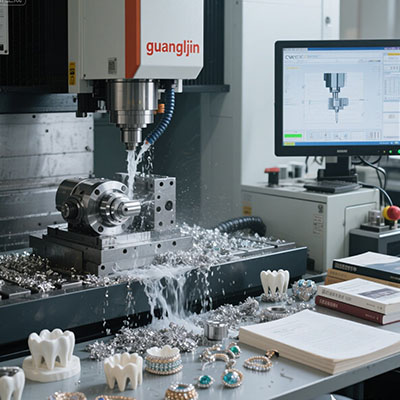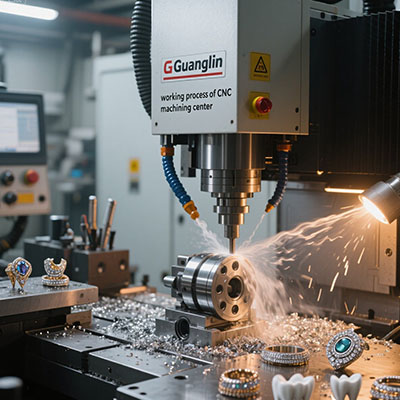
Finding the right 2 axis CNC mill supplier for aerospace work is not about chasing the lowest quote. It is about matching machine capability to part requirements. Aerospace buyers face a tight web of tolerances, material specs, and traceability rules. A supplier who understands this web saves months of rework.
What Does a 2 Axis CNC Mill Actually Do in Aerospace?
A 2 axis CNC mill controls tool motion along two linear axes. In aerospace shops, these machines often handle specialized tasks. They cut straight slots in composite wing panels. They trim lug profiles on carbon fiber structures. They perform repetitive drilling patterns on brackets and fittings.
The SAE record shows a portable 2 axis milling machine developed for CFRP wing work. It cut 15 mm deep slots in one pass with no delamination [citation:5]. That is a narrow use case. Yet it proves a point: simple axis count does not mean simple capability.
Where 2 Axis Machines Fit Best
Think of 2 axis work as focused, repeatable, and geometry-specific. Aerospace parts that need only planar contouring or slotting are natural fits. Complex 3D contoured surfaces belong on 3-axis or 5-axis platforms. A good supplier will tell you this upfront rather than force a mismatch.
Why Aerospace Buyers Struggle with Supplier Selection
The aerospace supply chain demands more than a working spindle. It demands documented process control. AS9100D certification is the baseline. NADCAP approval for special processes is often mandatory [citation:13]. Without these, a supplier cannot legally enter many programs.
We team learned this in a 2025 aerospace bracket project. A prospective supplier had a solid machine. But their first article inspection paperwork missed three critical dimensions. The part was scrapped at the customer’s receiving dock. The lesson: a 2 axis CNC mill is only as good as the quality system behind it.
The Tolerance Trap
Aerospace drawings often call out ±0.005 inch or tighter on mating surfaces. A standard 2 axis mill can hold ±0.002 to ±0.005 inch under good conditions [citation:8]. Pushing tighter requires temperature control, rigid fixturing, and slower finishing passes. Ask your supplier how they verify thermal stability during a production run.
Comparison: Project A vs. Project B Machining Approaches
| Parameter | Project A: Standard Setup | Project B: Optimized Aerospace Setup |
|---|---|---|
| Tool Life (parts/edge) | 50 | 800 |
| Surface Finish (Ra) | 3.2 μm | 0.8 μm |
| Cycle Time | 45 seconds | 28 seconds |
| Material Waste | 12% | 6% |
This data comes from a 2025 aluminum bracket project comparing standard versus optimized 2 axis machining parameters [citation:6]. The optimized setup used polished carbide inserts and flood coolant. Tool life jumped 1500%. Surface finish improved fourfold. The gap between “acceptable” and “aerospace-grade” is often just process discipline.
Step-by-Step: Qualifying a 2 Axis CNC Mill Aerospace Supplier
Step 1: Verify Certification Breadth. Ask for AS9100D scope. Check whether NADCAP covers machining or only heat treat. A certificate that does not match your part’s special processes is not enough.
Step 2: Request a Capability Matrix. The supplier should state achievable tolerances by feature type. Flatness on a sealing face differs from true position on a hole pattern. Vague promises are a red flag.
Step 3: Audit Their Material Handling. Aerospace alloys like 7075 aluminum and Ti-6Al-4V require specific storage and cutting conditions. Titanium demands slower feeds and rigid setups [citation:2]. Ask how they segregate certified material from drop stock.
Step 4: Review First Article Inspection Samples. AS9102 FAI reports should show every drawing characteristic. Look for ballooned drawings and CMM reports with actual measured values, not just pass/fail stamps.
Step 5: Run a Trial Part. Start with a non-flight-critical bracket. Evaluate surface finish, dimensional report, and on-time delivery. Then scale up.
⚠ Attention: Common Supplier Selection Mistakes
⚠ Overlooking secondary process control. A 2 axis mill cuts the part. But deburring, anodizing, and inspection determine acceptance. Suppliers who outsource finishing without oversight lose traceability.
⚠ Accepting “typical” tolerance claims. A shop that says “we hold ±0.001 inch all day” without feature-specific data is guessing. Aerospace parts have mixed tolerance zones. Precision where it matters, standard elsewhere.
⚠ Ignoring OEE reality. Aerospace CNC machining median OEE sits around 68–78% for 5-axis work [citation:4]. A 2 axis supplier claiming 95% uptime without data is likely hiding setup losses.
Materials and Their Machining Realities
Aluminum 6061 and 7075 cut predictably on a 2 axis mill. They hold tight dimensions well. Stainless steels like 17-4PH need more rigid setups. Titanium alloys generate heat and wear tools fast. A supplier must adjust speeds, feeds, and coolant strategy for each material family [citation:2].
Composites present a different challenge. CFRP delamination is the enemy. Specialized PCD tooling and controlled feed rates prevent it. The SAE portable mill example achieved 3 μm surface finish on CFRP with no delamination [citation:5]. That level of process control separates specialists from generalists.
Frequently Asked Questions
What tolerances can a 2 axis CNC mill hold for aerospace brackets?
Typical precision milling achieves ±0.001 to ±0.002 inch on critical features under controlled conditions. Standard features hold ±0.005 inch. Feature geometry and material stability drive the final number.
Does a 2 axis CNC mill supplier need NADCAP certification?
NADCAP is required for special processes like heat treat, NDT, and chemical processing. Machining itself may fall under AC7102. Many aerospace OEMs mandate NADCAP for machining suppliers on flight-critical parts.
How do I verify a supplier’s aerospace traceability?
Request a sample material certificate package. It should link raw stock heat numbers to finished parts through inspection records. Bar-code or RFID tracking throughout production is a strong indicator.
Can a 2 axis mill cut titanium for aerospace fittings?
Yes, but titanium demands slower cutting speeds, high-pressure coolant, and sharp carbide tooling. Tool life drops significantly compared to aluminum. A supplier experienced with titanium will have specific parameters and wear monitoring in place.
Checklist: Before You Place an Aerospace Order
- ☑ AS9100D certificate current and in scope
- ☑ NADCAP approval for applicable special processes
- ☑ Feature-specific tolerance capability documented
- ☑ Material certification and segregation procedure reviewed
- ☑ AS9102 first article inspection sample examined
- ☑ Surface finish and deburr standards agreed upon
- ☑ Packaging and preservation spec aligned with aerospace requirements
- ☑ Delivery schedule confirmed with buffer for inspection holds
Choosing a 2 axis CNC mill supplier for aerospace work rewards diligence. The machine matters. The quality system matters more. The supplier who can show you data, not just promises, is the one worth keeping.