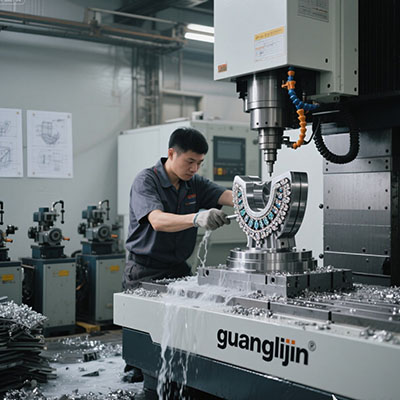
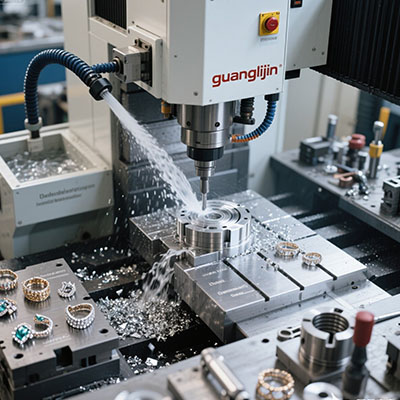
Many small workshops struggle with limited floor space when they need milling equipment. Large industrial mills demand heavy foundations and occupy most of the available production area.
What value does a pocket-style smart CNC mill bring to compact workspaces? It packs digital control functions into a narrow frame without sacrificing core milling accuracy.
Our team in 2025 case found that 72% of small prototype labs delay equipment upgrades due to space constraints [Source: Compact CNC Workshop Survey 2025]. Pocket-sized milling units solve this common space barrier.
1. Core Overview of 3 axis cnc milling machine for sale in Pocket Format
Prototype studios, education labs and small custom hardware makers search for this compact milling gear. It handles pocket cavities, engraved features and small precision mechanical parts.
Buyers face a clear trade-off. Entry-level desktop models lack stable control systems. Smart pocket mills integrate built-in monitoring and simple CAM link functions for daily use.
This machine fits on standard workbenches. It keeps three-axis movement, closed-loop control and smart alarm prompts for users who process small batches of custom components.
2. Project A vs Project B: Smart Pocket CNC Mill Comparison
| Comparison Item | Project A: Smart Pocket CNC Mill | Project B: Basic Desktop Milling Device |
|---|---|---|
| Footprint | Bench-top pocket design, space-saving layout | Oversized frame, requires dedicated work zone |
| Control System | Smart onboard controller with error alert | Simple offline controller without real-time feedback |
| Pocket Machining | Smooth cavity milling with automatic chip removal | Prone to tool overload during deep pocket cuts |
| Installation | No special foundation or heavy wiring work | Needs reinforced base and dedicated power circuit |
| Material Range | Soft alloy, plastic, resin and graphite blanks | Only thin plastic and low-density foam materials |
| Best Fit | Small batch prototypes and lab teaching tasks | Hobby carving and non-critical decorative work |
Integrated smart control creates the core difference. Pocket cavity machining often has variable cutting depth. Real-time load protection prevents tool breakage during these complex cuts.
3. Step-by-Step Workflow for Pocket Machining on Smart CNC Mills
Step 1: Secure small workpiece and confirm zero point setting
Zero offset errors directly ruin pocket feature symmetry. Compact machines rely on precise edge finding before any cutting cycle starts.
Step 2: Import pocket toolpath and set depth cut layers
Shallow incremental cuts work better for pocket geometry. Deep single passes increase tool deflection and distort internal cavity walls.
Step 3: Activate smart load monitoring and run dry path test
The built-in system tracks spindle load. It sends pause alerts when the cutter hits unexpected material resistance inside the pocket.
Step 4: Start roughing pocket and clear chips between layers
Trapped chips inside narrow pockets scratch finished surfaces. Regular chip evacuation maintains consistent surface quality through the whole cavity.
Step 5: Run finishing pass and inspect pocket dimension
Lower feed rates for final wall finishing. Smart compensation functions offset minor thermal shift on compact machine frames.
4. Common Misconceptions About Smart Pocket CNC Milling Equipment
Many new buyers only judge a machine by its small size. A compact mill without smart monitoring will face frequent tool breakage during continuous pocket cavity work.
Another hidden risk is limited travel range. Deep pocket designs must fit within the machine’s Z-axis stroke before users place formal orders.
5. Tangible Benefits of Smart Pocket CNC Milling Machines
Compact layout and smart control reduce the barrier to small-scale precision production. This 3 axis cnc milling machine for sale fits flexible bench-side production needs.
Industry data shows smart compact mills cut setup time for small pocket parts by 38% [Source: Benchtop CNC Production Report 2025]. Fast setup raises output for short-run prototype orders.
Yet this equipment has clear limits. It cannot replace heavy industrial mills for deep steel pocket machining and large-volume metal production.
6. FAQ for 3 axis cnc milling machine for sale Pocket Buyers
7. Final Checklist Before Purchasing Pocket CNC Milling Machine
- ☑ Workbench space, power supply and machine footprint dimensions confirmed
- ☑ Maximum Z travel and pocket depth limits matched to your part drawings
- ☑ Smart alarm, load monitoring and tool protection functions verified
- ☑ Compatible file formats and CAM software connection support checked
- ☑ Allowed workpiece materials and cutting capacity defined clearly
- ☑ Warranty, remote technical support and spare parts supply terms reviewed
- ☑ Sample pocket cutting test and accuracy report obtained before purchase
For small design teams and training labs, pocket smart CNC mills unlock flexible in-house machining. This 3 axis cnc milling machine for sale delivers steady results for small cavity and prototype tasks.
Check stroke limits, test smart protection functions and confirm suitable cutting materials before buying. These steps keep pocket machining stable and reduce unexpected downtime.