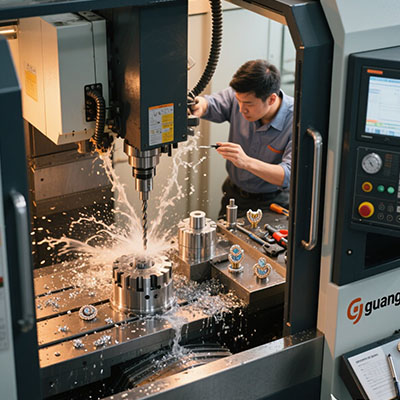
A router package looks like a shortcut to production. One price. Spindle included. Maybe a vacuum table and a set of holders. But the gap between a “complete pack” and a machine that actually holds tolerance comes down to three things: spindle condition, frame rigidity, and what the seller left out. This guide covers all three.
Router vs. Mill: Why the “Expert Router” Label Matters
Routers and mills both move in three axes. They are not the same animal. A router uses a gantry structure. It spins fast and covers wide sheets. A mill uses a rigid column and base. It cuts deeper and holds tighter tolerances on hard materials [citation:9].
An expert router pack sits in the middle. It targets aluminum, composites, and hard plastics. The gantry is heavier than a wood router. The spindle is water-cooled for sustained cuts. That combination can work well—if the machine is set up right.
Here is the trap. Many listings advertise a router as a “3 axis CNC for sale” without explaining the limits. A 2.2 kW water-cooled spindle cuts aluminum fine at moderate depths [citation:2]. Push it like a mill and you burn bearings, break tools, and wreck surface finish.
Project A vs. Project B: Two Router Pack Outcomes
Two shops bought similar router packs last year. One is running three shifts. The other is chasing vibration issues. The difference was not the machine brand.
| Factor | Project A: Price-First Buyer | Project B: Verification-First Buyer |
|---|---|---|
| Pack Price | $6,800 | $9,400 |
| Spindle Check | Listened for 30 seconds | Measured runout: 0.0004″ |
| Frame Inspection | Visual only | Checked welds, pulled way covers |
| Test Cut | None | Aluminum pocket, measured finish |
| Included Tooling | Two worn collets | Full ER11 set, new pump |
| Hidden Costs (6 months) | $2,100 (spindle rebuild) | $280 (coolant, filters) |
| Status | Running at 60% capacity | Running full production |
Project A saved $2,600 upfront. Then spent more than that on a spindle rebuild and lost a week of cutting. The math rarely favors skipping the checks.
Step-by-Step: Inspecting an Expert Router Pack
Our team inspected a 2024 router pack that looked clean. The gantry was tight. The spindle spun quietly. Then we pulled the way covers. The linear rails were dry and scored. That machine would have eaten itself within months. Here is the sequence we use now.
Step 1: Ask for the spindle runout number
Do not accept “it sounds fine.” Mount a dial indicator on the table and sweep the spindle taper. Runout above 0.0005″ means bearing wear or a crash. A water-cooled spindle that has overheated will show runout and discoloration [citation:4].
Step 2: Run the spindle hot and listen
Cold spindles lie. Run the spindle at maximum RPM for at least five minutes. Listen for a growl that changes with speed. Feel the housing for vibration. A healthy spindle hums. A dying one complains.
Step 3: Check the linear rails and lubrication
Pull the way covers if the seller allows it. Clean rails with fresh grease are a good sign. Dry, scored, or rusted rails tell you the lube system failed. Router gantries flex under load. Worn rails turn that flex into chatter and poor finish [citation:4].
Step 4: Measure backlash on all three axes
Command micro-jogs and watch an indicator. Backlash beyond 0.0005″ points to worn ballscrews or nuts. On a router, backlash shows up as fuzzy corners and inconsistent pocket walls. It is fixable, but it costs money and downtime.
Step 5: Perform a test cut in the material you plan to run
Static checks miss dynamic problems. Cut a simple pocket or face pass in aluminum or the composite you use. Check the surface finish and measure the dimensions. A router that cuts clean aluminum at moderate parameters is a working machine. One that chatters or leaves marks is not.
Step 6: Confirm the control and included accessories
Boot the control. Confirm it homes and holds position. Check what software options are active. Then list every accessory: collets, wrenches, pump, vacuum table, clamps. Missing items add up fast. A full ER11 collet set and a spare pump are worth real money [citation:1].
⚠ Attention: Three Router Pack Traps
⚠ Attention: “Water-cooled” does not mean the pump works. Many used router packs come with a coolant pump that has sat dry or clogged. Run the pump before you buy. A dead pump means the spindle overheats on the first long cut. Replacement pumps are cheap, but a cooked spindle is not.
⚠ Attention: Fresh paint on the gantry hides flex cracks. Router frames take stress at the joints. Repainting can mask cracks or loose welds. Inspect the welds directly. Push on the gantry and watch for movement that should not be there.
⚠ Attention: The “complete pack” rarely includes the bits you need. Listings show a router and a spindle. They rarely include the AlTiN-coated end mills that actually cut aluminum well [citation:2]. Budget $300 to $600 for a starter set of quality tooling. Cheap bits break and ruin finish.
Real Data: What Routers Actually Deliver
Published performance figures help set expectations. An aerospace case study reported 98.7% first-pass yield on cabin panels using a 3-axis router with vacuum fixturing [citation:6]. That is a well-set-up machine running the right parameters.
A separate aluminum routing project cut processing time by 58% using high-speed strategies and carbide tooling [citation:12]. Surface finish reached Ra 0.8µm. Those numbers are achievable—on a machine with tight rails, a healthy spindle, and proper workholding.
The variable is not the router. It is the setup. A $6,000 pack with worn rails will not hit those numbers. A verified pack with a solid frame and a good spindle can.
Answering the Questions Buyers Actually Search
Q: What should I check first on a used 3 axis CNC router for sale?
Start with spindle runout and linear rail condition. These are the two most expensive wear items. A spindle with runout above 0.0005″ needs a rebuild. Dry or scored rails mean the lube system failed. Both are negotiating points, not automatic dealbreakers.
Q: Can a 3-axis router pack cut aluminum reliably?
Yes, with the right spindle and parameters. A water-cooled spindle of 2.2 kW or higher handles aluminum at moderate depths [citation:2]. Use AlTiN-coated carbide tools and keep chip evacuation strong. The router will not match a mill on deep pockets or thick stock, but for panels and brackets it works well.
Q: How much should I budget beyond the pack price?
Plan for 20–30% on top of the purchase price. That covers rigging, a quality collet set, end mills, coolant, and any immediate repairs. A $7,000 pack often needs $1,500 to $2,000 before it runs production parts.
Q: Is a router pack better than a used mill for a small shop?
It depends on the parts. Wide, flat aluminum panels and composites favor a router. Deep pockets, tight tolerances, and steel favor a mill [citation:9]. Buy the machine that matches your hardest requirement, not the one with the lowest price.
Checklist: Before You Pay for the Router Pack
☐ Spindle runout measured — under 0.0005″
☐ Spindle run at max RPM for 5+ minutes — no growl or vibration
☐ Coolant pump tested — flow is steady, no leaks
☐ Linear rails inspected under covers — clean, greased, no scoring
☐ Backlash checked on X, Y, Z — under 0.0005″
☐ Gantry welds and joints inspected — no cracks or flex
☐ Control booted and homed — holds position, no faults
☐ Test cut performed — dimensions and finish verified
☐ Included accessories listed in writing — collets, pump, clamps
☐ Total cost calculated — pack price plus rigging plus tooling