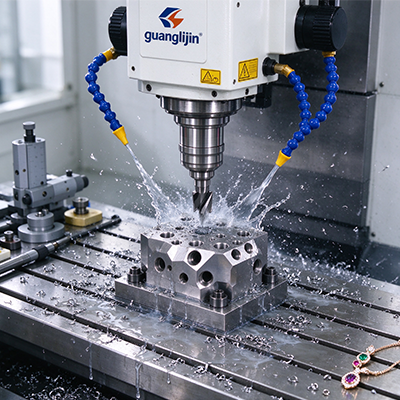
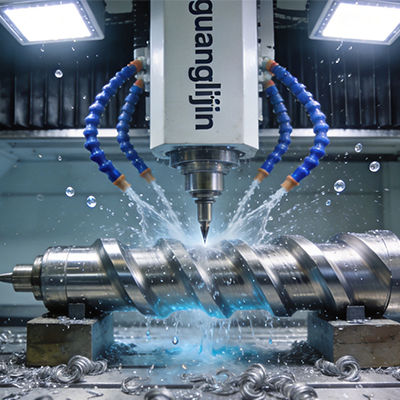
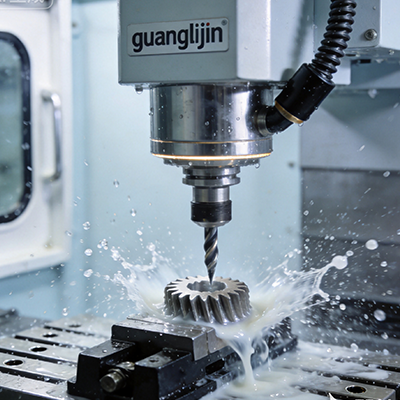
Two machines can share the same axis count and deliver wildly different results. One holds ±5 µm on compound-angle features all day. The other drifts after four hours. Why? The answer lives in the system architecture, not the brochure. A precision 8 axis cnc machine is an integrated package of mechanics, thermal control, and motion software.
Buyers who evaluate only axis count and spindle speed miss the decisive variables. Therefore, this guide focuses on system-level selection. It covers structure, calibration, and the setup discipline that turns hardware into precision.
What Defines a Precision 8-Axis System?
Axis count is the headline. Structural rigidity is the foundation. An 8-axis platform carries two extra rotary elements compared to a 5-axis center. Each element adds mass and heat. Each element also adds a path for vibration.
Precision systems address this through cast-in damping, symmetrical gantry design, and active thermal compensation. The rotary tables use direct-drive torque motors instead of worm gears. Direct drive removes backlash entirely. That single design choice separates precision platforms from commodity machines.
Motion control matters equally. A true 8-axis system interpolates all axes simultaneously with sub-micron look-ahead. The CNC must process thousands of blocks per second without stalling. Otherwise, rotary motion stutters and leaves witness marks.
Project A vs Project B: Two System Architectures Compared
Consider a real purchasing decision. A shop needs to machine titanium structural brackets with five angled faces and thin walls. Two system configurations are on the table. The table below compares them across the metrics that matter.
| Metric | Project A: Worm-Gear Rotary, No Thermal Compensation | Project B: Direct-Drive Rotary, Active Thermal Control |
|---|---|---|
| Rotary positioning repeatability | ±12 arc-seconds | ±2 arc-seconds |
| Thermal drift over 8-hour run | 18 µm | 4 µm |
| Max simultaneous axes | 6 (limited interpolation) | 8 (full interpolation) |
| Surface finish on angled faces (Ra) | 1.6 µm | 0.4 µm |
| Tool life on titanium | Baseline | +28% |
| Scrap rate on thin-wall parts | 9.5% | 1.8% |
Project B wins decisively. The direct-drive rotary eliminates backlash. Active thermal control holds dimensions through long runs. Consequently, thin-wall distortion drops and tool life extends. The higher purchase price pays back within months on titanium work.
How to Commission a Precision 8-Axis System: 5 Steps
Installation is where precision either solidifies or evaporates. Follow this sequence to protect your investment from day one.
- Foundation and leveling verification. Pour an isolated foundation with vibration-damping pads. Level the machine to within 0.02 mm/m across the full bed. Re-check after 72 hours of settling.
- Geometric accuracy calibration. Use laser interferometry to verify all linear axes. Use autocollimators for rotary squareness. Document every reading against the manufacturer’s acceptance criteria.
- Rotary axis backlash and thermal mapping. Run a thermal soak test for 8 hours. Map drift on both rotary tables. Program compensation curves into the CNC before any production run.
- Kinematic simulation and postprocessor validation. Load the digital twin into CAM. Cut a test part with extreme compound angles. Verify that the postprocessor output matches the simulated toolpath within tolerance.
- In-process probing and SPC baseline. Install spindle probes and establish a statistical process control baseline. Run 30 consecutive parts and record Cp/Cpk for critical features. Accept the machine only when Cpk exceeds 1.67.
We commissioned an 8-axis platform in early 2025 for a fuel nozzle housing program. The first thermal soak revealed 14 µm of rotary drift over six hours. We mapped the curve and programmed compensation. After that, drift stayed under 3 µm across a full shift. Without the soak test, we would have shipped scrap for weeks before noticing.
Where Precision Systems Fail: Thermal and Dynamic Errors
Static geometry is easy to measure. Dynamic errors are the silent killers. Heat from the spindle and rotary motors expands the structure unevenly. The tool tip moves relative to the workpiece even when no axis commands change.
Precision 8 axis cnc machine platforms fight this with multiple strategies. They use cooled rotary motors. They mount temperature sensors on critical structural points. The CNC adjusts compensation in real time based on sensor feedback.
Vibration is the second dynamic enemy. Extra rotary axes create cantilevered masses. At high speeds, these masses resonate. Precision systems use tuned mass dampers and stiffened housings to push resonance frequencies above the operating range. Cheaper machines skip these measures, and the surface finish reveals it.
Common Selection Mistakes That Destroy Precision
Another quiet failure involves workholding integration. Precision machines need precision fixtures. Zero-point clamping systems with sub-micron repeatability preserve the machine’s capability. Reusing worn 5-axis fixtures drags the whole system down to their accuracy level.
Frequently Asked Questions
Practical Checklist for System Acceptance
Precision 8-Axis Machine Commissioning Checklist
- Verify foundation isolation and leveling within 0.02 mm/m.
- Run laser interferometry on all linear axes and document deviations.
- Perform an 8-hour thermal soak and map rotary axis drift.
- Confirm the CNC executes true 8-axis simultaneous interpolation, not 3+2 positioning.
- Validate the postprocessor against simulation on a compound-angle test part.
- Measure rotary repeatability with an autocollimator or ballbar.
- Install in-process probing and establish a Cpk baseline across 30 parts.
- Confirm active thermal compensation is running and sensor feedback is logged.
- Check fixture clearance through the full rotary travel range.
- Document every acceptance reading against the manufacturer’s specification.
System precision is engineered, not purchased off a spec sheet. The right 8 axis cnc machine combines direct-drive rotary mechanics, active thermal control, and disciplined commissioning. Buyers who audit those three layers protect their tolerance budgets for years. Buyers who count axes alone learn the difference the hard way.